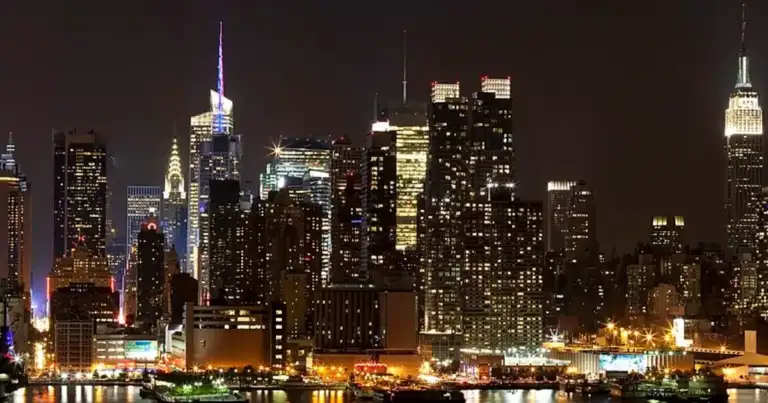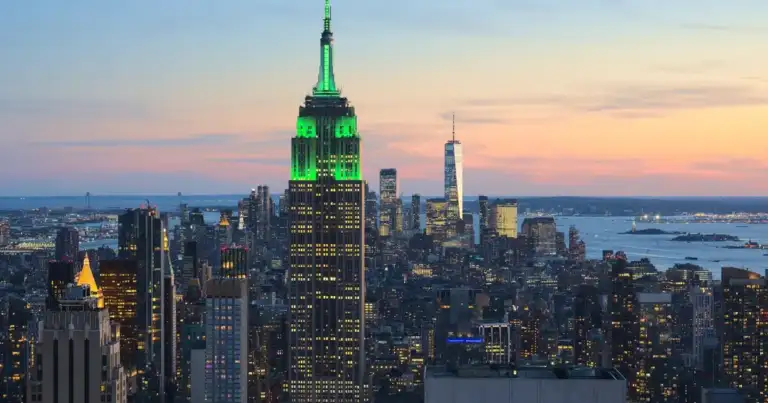

New York, a city that always plays for keeps, is now eyeing a different kind of prize: the Winter Olympics. The recent announcement that Lake Placid and New York City have formed an exploratory committee to study a joint bid for a future Games—targeting 2038 or 2042—is being pitched as either a stroke of genius or a colossal fiscal fantasy wrapped in a snowsuit. For those of us who scrutinize the bottom line and understand the true cost of prestige, the details are far more compelling, and frankly, more concerning, than any distant dream of torch-lighting ceremonies.
A Grand Unveiling, A Grander Ambition
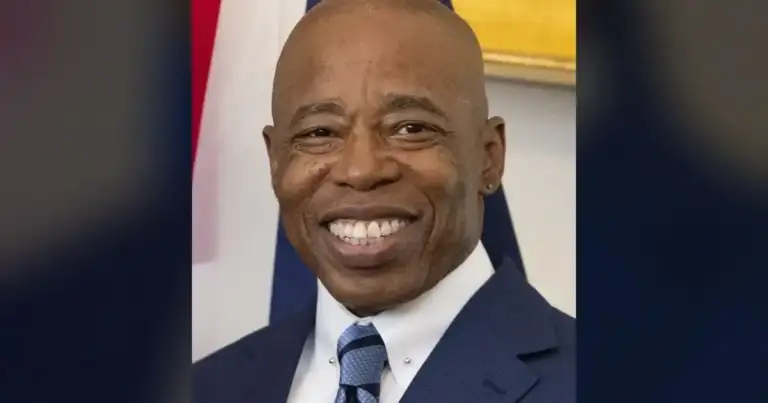
On June 20, 2026, the “New York Olympic Exploratory Committee” officially launched, spearheaded by NYC Mayor Eric Adams and Lake Placid Mayor Art Devlin. The official narrative is meticulously polished, almost too perfect. Lake Placid’s historic venues, which famously hosted in 1932 and 1980, would manage snow and ice events.

New York City’s colossal infrastructure—its 120,000 hotel rooms, unparalleled transportation, and undeniable media might—would absorb everything else. This, they claim, is an ingenious “hybrid model,” specifically designed to sidestep the obscene, budget-busting costs that have plagued nearly every Olympic host city in recent memory. Mayor Adams, ever the showman, framed it as showcasing “our vibrant urban center and our breathtaking natural beauty.”
It sounds utterly idyllic, doesn’t it? Like a carefully curated, premium experience designed for a glossy brochure, rather than a realistic budget.
The Price of Prestige: Who Pays?
But let’s strip away the polished rhetoric and confront the elephant in the room. The burning question on every discerning New Yorker’s mind is stark, unwavering:
“Given the massive costs of past Olympics, how would New York fund this without burdening taxpayers?”
The committee’s mandate is to “conjure” a financial plan, one that conveniently leans on public-private partnerships, federal funding, broadcast rights, and sponsorships. The strategy, they insist, is to leverage existing assets, minimizing new construction to avoid the infamous “white elephant” venues that have become costly monuments to Olympic ambition in former host cities.
It’s a compelling talking point, especially when juxtaposed with the relatively modest 1980 Lake Placid Games, which cost $110 million (approximately $400 million in today’s dollars)—a mere pittance compared to Sochi’s staggering $51 billion in 2014. Even the more recent Beijing Games, officially estimated at $3.9 billion, saw its figures widely debated and likely understated.
The International Olympic Committee’s much-touted “New Norm” reforms are supposedly designed to champion sustainability and cost-effectiveness. This is the official line, the comforting lullaby sung to skeptical taxpayers.
But let’s be clear: the true allure of hosting isn’t merely about athletic glory or international goodwill. It’s about unlocking a massive, state-backed investment in real estate, tourism infrastructure, and unparalleled global brand visibility.
The preliminary projections, even in their most conservative forms, whisper of tens of billions of dollars and promise hundreds of thousands of jobs. For the developers, the hospitality titans, and the state’s coffers, this isn’t just an opportunity; it’s pure, unadulterated gold.
The Red Marker Verdict
Let’s be brutally honest and call this what it is: a masterclass in leveraging a beloved global spectacle to unlock substantial public and private capital. The lofty talk of “sustainability” and “legacy” is merely the elegant wrapping paper.
The real gift inside? A potentially massive injection of state and federal funds, cleverly dressed up as an economic boom for all. This “exploratory committee” isn’t primarily about exploring feasibility; it’s about meticulously laying the groundwork for a formidable fundraising and lobbying effort, cementing political will and public support.
The undeniable beneficiaries will be the large-scale developers, the construction firms, and the hospitality industry across both regions, all strategically poised to capitalize on the guaranteed influx of infrastructure spending and global attention. The “losers,” as history consistently shows, will inevitably be the everyday taxpayers who, despite all promises of public-private partnerships, will invariably carry the risk of cost overruns and unforeseen liabilities.
And let’s not forget the pristine natural beauty of the Adirondacks: talk of environmental preservation often takes a back seat, or worse, is conveniently forgotten, when billions are on the table. This isn’t just a bid for the Olympics; it’s a strategic, calculated move to funnel capital into New York State under the guise of international prestige. The game has just begun, and the stakes couldn’t be higher.
So, while this committee deliberates, remember that beneath the snow and ice, the real estate market is already heating up, and the political maneuvering is well underway. What kind of New York do we truly want to build with this once-in-a-generation opportunity? Or, perhaps more pointedly, what kind of New York will be built for us—its citizens—regardless of whether the Olympic torch ever graces our shores?
Source: Google News