

The Battle for the Back Forty
The tension has been palpable, simmering for years but now boiling over with alarming regularity. Just this past week, on June 19th, Plainfield Township in Kent County hosted a contentious public hearing, openly drafting amendments to zoning ordinances aimed squarely at “event venues” on agricultural land. Farmers, who have poured their lives, sweat, and capital into these diversified operations, argued passionately against these crippling restrictions. They know, with chilling certainty, that without the vital supplementary income from hosting weddings or festivals, many would be forced to sell their land – paving the way for yet another wave of soul-crushing, cookie-cutter subdivisions. Is this the ‘progress’ we truly want? Then, Crain’s Grand Rapids Business dropped its comprehensive report on June 20th, painting a truly stark picture of this statewide crisis. We’ve already seen Ottawa County farms have their wedding permits unceremoniously revoked, while an Allegan County operation faced punitive fines for simply hosting a well-attended fall festival. Let’s be clear: these aren’t isolated incidents. They are symptomatic of a deeper misunderstanding, or perhaps a blatant, willful disregard, of the economic realities crushing our farmers. The Michigan Department of Agriculture and Rural Development (MDARD) has acknowledged these escalating disputes, offering guidance on the Right to Farm Act – a law designed to protect farmers. But the local battles rage on, township by agonizing township. It’s a death by a thousand cuts.The “Rural Character” Mirage
The counter-argument, often cloaked in the noble guise of “preserving rural character,” rings increasingly hollow. Residents near these burgeoning agritourism sites voice concerns about increased traffic, noise from events, and light pollution. While these are legitimate considerations, we must question the underlying motive. When these residents decry “commercialization” and “noise,” are they truly safeguarding an authentic rural character, or simply preserving a meticulously curated aesthetic for their own enjoyment, at the direct expense of their neighbors’ livelihoods? Do they truly want the idyllic postcard view of a farm without the necessary economic hum of a working, evolving business? Or do they just want the quiet convenience of a backyard view, subsidized by someone else’s struggle? The Michigan Right to Farm Act, explicitly amended in 2014 to include agritourism, was designed to protect these vital operations. Yet, the interpretation of what’s “consistent with” agricultural practices remains a bureaucratic and legal quagmire, allowing local ordinances to relentlessly chip away at farmer autonomy. This isn’t just about preserving quiet nights or pristine views; it’s about the very economic viability – the lifeblood – of agriculture in Michigan. And if we lose that, we lose a piece of ourselves.Malik Johnson’s Red Marker Verdict:
The unvarnished truth? This isn’t about preserving some pristine, nostalgic vision of “rural charm.” It’s about raw control and selfish convenience. It’s about a vocal segment of the populace wanting the idea of a farm – a picturesque backdrop – without the reality of a working business that needs to adapt, innovate, and generate revenue to survive. The townships, caught squarely between vocal residents and their agricultural heritage, are too often choosing the path of crippling restriction, stifling the very enterprises that keep our fields green and our local economies vibrant. This isn’t protecting rural Michigan; it’s slowly, deliberately, strangling it.So, for discerning Michiganders seeking authentic, premium experiences, our agritourism destinations offer a direct, vital connection to the land and the hardworking people who steward it. Next time you’re planning an event, considering a weekend escape, or simply craving unique, local flavor, look to Michigan’s working farms. Taste the difference. Hear the stories. And most importantly: invest in the future of our state’s true gems. Because if we don’t stand up for them now, these irreplaceable cornerstones of our heritage will be legislated, regulated, and developed out of existence. And then, what will be left of Michigan’s soul?
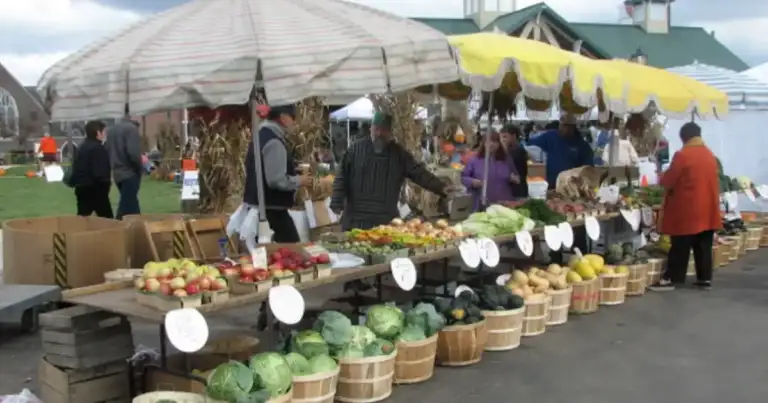
Photo: Wikimedia Commons (query: Michigan farmers)
Source: Google News