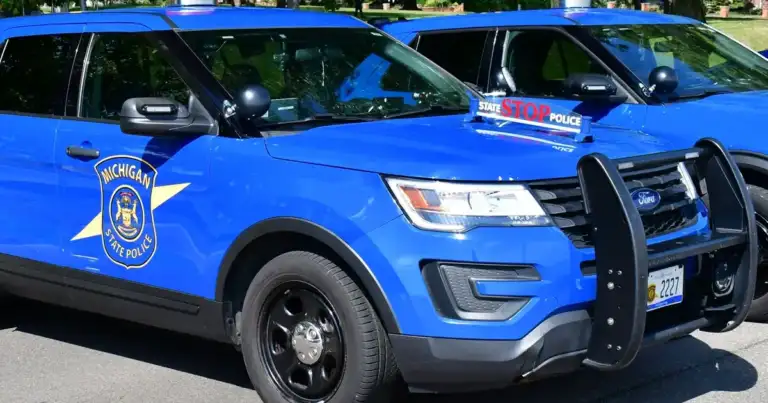

Michigan drivers, listen up: The rules of the road just changed, and you might not even see it coming. The Michigan State Police have unleashed “Operation Ghost Rider” across our state, and this isn’t your grandma’s traffic enforcement. This is stealth, targeted, and if you’ve been pushing the limits – or just checking that phone – consider this your official, and very expensive, wake-up call.
The Invisible Eye on Michigan Highways
Forget spotting the traditional patrol car in your rearview mirror. Now, every sedan, pickup, or SUV around you could be an officer in disguise.

These aren’t just unmarked vehicles; they’re “ghost” cars, blending seamlessly into traffic. Their mission is clear: hunt down aggressive, distracted, and impaired drivers that highly visible cruisers often miss.
They’re looking for egregious speeders, tailgaters, lane weavers, and drivers glued to their phones. The moment a ghost car spots a violation, they radio it in.
Then, seemingly from thin air, those familiar flashing lights materialize. Your commute just became a whole lot more inconvenient – and a lot more expensive.
MSP Colonel Joe Gasper isn’t mincing words. He’s on record stating,
“Our primary goal with Operation Ghost Rider is to save lives. By utilizing unmarked vehicles, we can more effectively identify and address the dangerous driving behaviors that contribute to serious crashes…”
While the intention to “save lives” is undeniably crucial, let’s be blunt. Michigan saw a disturbing spike in traffic fatalities in 2023.
Aggressive and distracted driving were starring villains in over 30% of those fatal crashes. The message is clear: if drivers won’t self-regulate, the state will regulate them, with a heavy hand and an invisible presence.
Beyond the ‘Safety’ Pitch: The Unspoken Truth
But let’s peel back the layers and talk cold, hard reality. While MSP leadership champions “saving lives” and “changing behavior,” historical data tells a financially impactful story.
We’re not talking about a subtle shift; we’re talking about a significant spike in citations. Past Ghost Rider operations saw up to a 25% increase in speeding tickets and a staggering 40% jump in distracted driving stops.
This isn’t just a gentle reminder to drive safely. This is a direct assault on dangerous habits, and more importantly, a reckoning for your wallet. Are you prepared for that hit?
The public response, predictably, is split down the middle. Frustrated citizens cheer the crackdown, fed up with the Wild West mentality on our interstates.
They see it as a necessary evil, a way to reclaim some order. On the other side, grumbles about “gotcha” tactics persist.
Many feel enforcement has become less about visible deterrence and more about revenue generation through hidden traps. Drivers question the system’s transparency when officers are invisible until lights flash.
Regardless of where you stand, the chilling message is undeniable: every vehicle around you could be watching. Your neighbor in the minivan or fellow commuter in the sedan just might be the law.
Malik Johnson’s Verdict: The Unvarnished Truth
Let’s strip away the public relations polish and face facts. While the MSP’s stated intent is unequivocally to make our roads safer, a goal we all share, Operation Ghost Rider serves a powerful dual purpose.
Yes, it’s designed to deter dangerous driving, which *should* lead to fewer crashes. But let’s not be naive: it also quite effectively generates substantial revenue.
Every single citation issued, every fine paid, funnels critical funds into state and local coffers. When officials declare, “it’s not about issuing tickets,” they’re only telling half the story.
The state’s balance sheet tells the other, more lucrative, half. It’s an incredibly efficient system.
Drivers engaging in risky behavior are not only punished, but they inadvertently become contributors to the very system enforcing their punishment. Call it a win-win for the state: safer roads and a fatter budget, all on the backs of those who fail to fall in line.
So, don’t mistake the rhetoric. The financial incentive, while perhaps not the *only* driver, is an undeniable, beneficial, and frankly, quite convenient consequence for the state. Is that truly the primary motivation, or just a very welcome side effect?
So, what’s the ultimate takeaway for every Michigander who gets behind the wheel? It’s brutally simple: drive like you’re always being watched.
Because right now, you probably are. Those moments of carelessness, those split-second decisions to speed or glance at your phone?
They’re no longer just risks; they’re invitations for a “ghost” to appear, turning your bad habits into instant, very expensive lessons. The choice is yours: adapt to the invisible eye, or pay the price.
And trust me, the state is more than ready to collect.
Source: Google News