

Sedona Hills Fire: “Accident” or Avoidable Negligence? Colorado Deserves Answers, Not Excuses
Another fire. Another “accident.” While Larimer County Sheriff Justin Smith labels the Sedona Hills blaze an “accidental ignition” and Poudre Fire Authority Chief Mark Azara lauds “inter-agency cooperation,” 1,200 acres of our Colorado landscape lie scorched. Millions in taxpayer dollars are up in smoke, all because of a “malfunctioning catalytic converter.” Is this truly an accident, or a predictable failure we keep excusing? “Accidental” is the word of the week. But for those of us watching Colorado burn year after year, it sounds more like a convenient shrug. This wasn’t a lightning strike. This wasn’t an act of God. This was a mechanical failure on a vehicle. A failure that absolutely could have been prevented.The Public Pays, The Driver Walks
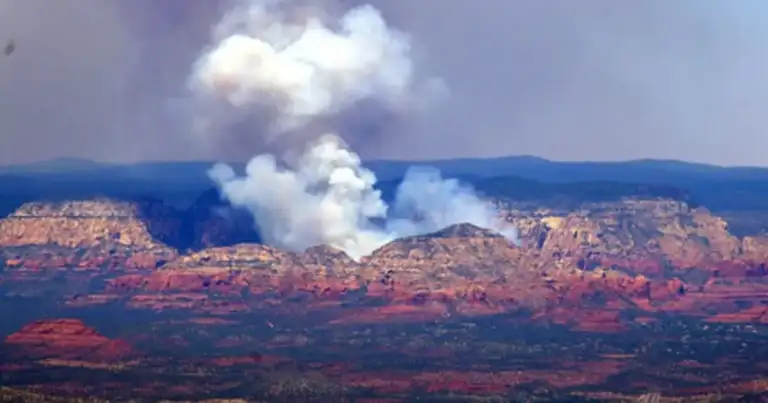
On May 10, 2026, sparks flew from a passing vehicle, igniting the Sedona Hills Fire near Carter Lake. By May 14, investigators declared the cause: a faulty catalytic converter. Over 500 homes faced mandatory evacuation, their residents gripped by terrifying uncertainty. No structures were lost, thankfully, but the collective anxiety was palpable, a chilling reminder of our vulnerability. Sheriff Smith quickly emphasized the “accidental nature” of the ignition, praising the “swift, coordinated response.” But where’s the accountability for the spark itself? The Larimer County Sheriff’s Office indicates no criminal charges are expected. None. This, despite the fire burning 1,200 acres. This, despite initial firefighting costs running into the millions, a bill the public will inevitably foot.“This was a challenging fire, but thanks to the rapid response of multiple agencies, we were able to prevent significant structural loss. The investigation was thorough, and we now have a clear understanding of how this fire began,” said Larimer County Sheriff Justin Smith.A “clear understanding” that conveniently sidesteps consequences? Tell that to Sarah Jenkins, a Sedona Hills resident, whose family packed emergency bags in terrifying fear. Her community lives under the constant, choking threat of wildfire. This “accident” doesn’t just reinforce it; it screams that nothing truly changes.
The Red Marker Verdict: A Convenient Narrative
Let’s be blunt: The official narrative emerging from the Sedona Hills Fire is a carefully constructed dodge. Calling it “accidental” lets everyone off the hook. It shifts the blame from a preventable mechanical issue, landing squarely on the “unforeseen” and “unavoidable.” This isn’t a search for justice; it’s a public relations triumph designed to minimize responsibility. Why no criminal charges? Because proving negligence for a mechanical failure is “complex.” That’s the boilerplate excuse we hear repeatedly. But is “complex” truly an excuse for injustice? The burden of proof shouldn’t be a free pass. When a vehicle’s known defect causes millions in damage and threatens entire communities, someone should pay. Not just the taxpayers. Not just the insurance companies after protracted civil suits. This isn’t about blaming one individual for an “accident.” It’s about a broken system. A system that consistently downplays human-caused fires. A system that doesn’t enforce stricter vehicle maintenance. A system that lets “accidental” become synonymous with “no one is responsible.” It’s cheaper to fight fires than to prevent them, apparently. Especially when the public foots the bill for both the disaster and the cleanup.When Will Colorado Demand More?
Colorado faces increasingly severe wildfire seasons, a stark reality we can no longer ignore. The Cameron Peak Fire in 2020 burned over 208,000 acres, also in Larimer County. These are not isolated incidents; they are the “new normal.” Yet, the response remains stubbornly reactive, focused on mitigation after the fact rather than robust prevention. We need more than “public awareness campaigns” about catalytic converters. We need real accountability. We need stringent vehicle inspections that actually catch these preventable failures. We need consequences for negligence, even when it’s conveniently labeled “accidental.” Otherwise, we’ll keep watching our state burn, our air choked with smoke, and our communities living in fear. And we’ll keep footing the bill for someone else’s “oops.” We can’t afford to keep shrugging our shoulders and labeling these disasters “accidents.” It’s time Colorado demands more than platitudes and post-fire cleanups. It’s time we demand real prevention, real accountability, and real consequences. Because the next spark isn’t just waiting; it’s practically guaranteed if we continue down this complacent path.Photo: Wikimedia Commons (query: Sedona Hills Fire)
Source: Google News