
Forget the Mother’s Day brunch plans, Montana. This weekend, our state isn’t just celebrating; it’s staring down a double-barreled disaster.
While families envision leisurely outdoor excursions, we’re under an urgent, two-front assault. Rapid snowmelt threatens devastating floods, and bone-dry conditions ignite an early wildfire season.

Don’t let the Hallmark cards fool you – this weekend could be a complete washout, or far worse, a tinderbox ready to explode.
Mother’s Day Meltdown: A Race Against the Sun
In a dizzying 48 hours, our spring forecasts haven’t just changed; they’ve detonated into a summer scorcher. We’re talking 70s and 80s across much of the state by May 10-11 – a staggering 15-20 degrees above average.
The cruel irony? April kept things stubbornly chilly, preserving a hefty snowpack in the mountains. Now, those same basins are still showing Snow Water Equivalent (SWE) at a dangerous 105% to 130% of average.
That’s not just a lot of frozen water; it’s a ticking time bomb, poised to unleash a raging torrent.
The National Weather Service isn’t whispering polite warnings; they’re sounding the alarm. Urgent flood watches are issued for the Flathead, Clark Fork, and Yellowstone River systems.
Rapid melt, combined with localized thunderstorms, means riverbanks could collapse. Fields will be submerged, and critical roads may become impassable.
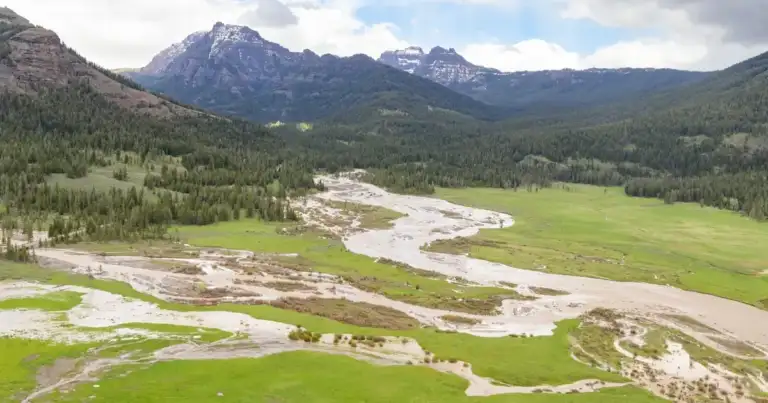
Just two years ago, the Yellowstone experienced unprecedented, devastating flooding that crippled communities and shut down the park. Is Montana truly ready for a repeat, or worse, an even more catastrophic deluge?
From Flood to Fire: The Perilous Pivot
But hold on, Montanans – the nightmare doesn’t end with water. While our rivers swell, the lower elevations are baking dry, faster than a politician’s promise.
The Montana Department of Natural Resources and Conservation (DNRC) has already aggressively cranked up fire danger ratings across western and central Montana. Fuel moisture levels are plummeting like a stone.
This lays the groundwork for what could be an absolutely brutal, record-setting wildfire season. Remember 2017? Over 1.3 million acres burned, costing hundreds of millions.
This year isn’t just “shaping up” to follow that devastating script; it’s accelerating towards it. We face the added, terrifying kick of concurrent flood threats.
“We’re seeing a classic Montana spring, but with an accelerated timeline,” stated John Smith, a meteorologist with the National Weather Service in Missoula. “The rapid jump in temperatures means the snow will melt quickly, and the ground will dry out just as fast, setting the stage for both flood and fire concerns.”
Emergency managers, like Sarah Jenkins from Gallatin County, aren’t just “on high alert” – they’re stretched thin. They are pre-positioning every available resource and practically begging residents to prepare.
They know, with gut-wrenching certainty, the sheer nightmare of coordinating wildfire suppression efforts. This happens while simultaneously deploying sandbags to save homes from rising floodwaters.
It’s a logistical horror show no community should face.
Your Move: Immediate Actions to Take
- Monitor Local Alerts: This isn’t optional. Sign up for CodeRED or Nixle RIGHT NOW. Do NOT rely on your neighbor’s cousin’s Facebook post or the rumor mill. Get direct, official National Weather Service forecasts for your specific area. Your life could depend on it.
- Flood Preparedness: If your property is anywhere near a river or known flood zone, don’t wait – acquire sandbags. Clear your gutters and storm drains of any debris. Move irreplaceable valuables to higher ground. And for heaven’s sake, actually review that flood insurance policy you probably haven’t glanced at since you bought it.
- Wildfire Defensible Space: This is your first line of defense. Aggressively clear out dry grass, dead leaves, and any flammable debris at least 30 feet around your home. Prune low-hanging branches that could act as ladder fuels. Make it undeniably easy for firefighters to defend your property, should the unthinkable happen.
- Outdoor Fire Restrictions: Before you even think about lighting a campfire or burning yard waste, check for current bans and restrictions. A single, careless spark is all it takes to ignite a catastrophe that will ruin everyone’s weekend, and potentially, their entire year – or worse, their lives.
- Emergency Kit & Evacuation Plan: Get your “go-bag” ready and accessible. Stock it with water, non-perishable food, a well-stocked first-aid kit, and all essential medications. Crucially, know exactly where you’ll go and how you’ll communicate with loved ones if you’re forced to evacuate in a frantic hurry.
Red Marker Verdict
Let’s be brutally clear: this isn’t merely “unpredictable weather.” This is Montana on the raw, unforgiving front lines of a rapidly changing climate.
Our communities are being forced to prepare for two diametrically opposed disasters simultaneously, with perilously minimal time to react. The “preparedness paradox” isn’t some academic theory; it’s a crushing, immediate reality for every Montanan.
While officials issue stern, often inadequate warnings, the overwhelming burden falls squarely on individual Montanans – on you – to protect your property and lives. This often comes with little tangible support beyond a hollow call to “be vigilant.”
The true cost of these increasingly frequent, extreme events isn’t just measured in acres burned or homes flooded. It’s measured in strained state budgets, utterly exhausted emergency services, and the perpetual, gnawing anxiety of a population constantly on edge.
So, don’t expect a government bailout. Expect to fend for yourselves, because the stakes have never been higher.
Category: Local News & Crime
Photo: Dietmar Rabich
Source: Google News