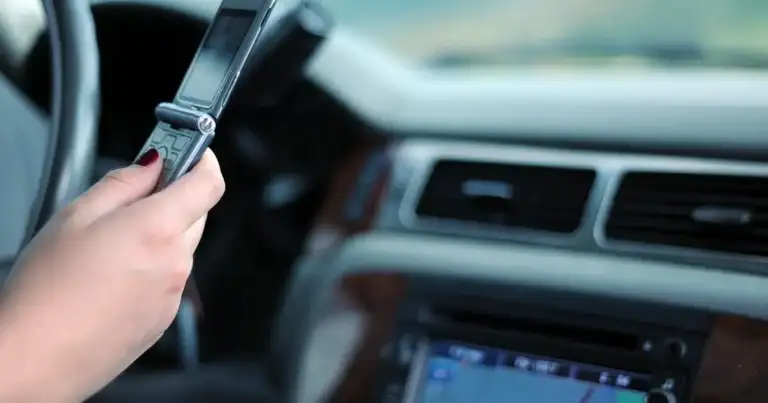

Michigan, listen up: The ghosts are back, and they’re not here to haunt your dreams. They’re here to bust you for texting behind the wheel.
As of April 25, 2026, Operation Ghost Rider has unleashed unmarked “ghost” patrol cars across our state, from the bustling streets of Monroe to the quiet stretches near Marquette.

If your eyes are glued to that screen instead of the road, consider yourself targeted. They’ll spot you, radio it in, and a marked unit will be on your tail before you can even hit send.
This isn’t some new initiative; it’s the same tired old play in Michigan’s ongoing, infuriating battle against drivers who seemingly cannot pry their fingers from their phones.
Despite our state enacting a “hands-free” law back in 2023, the carnage continues. Last year alone, distracted driving fueled over 14,000 crashes, tearing through lives and leaving more than 50 fatalities in its wake.
Think about that: Fifty human beings, gone forever, because someone couldn’t resist a fleeting notification or a quick scroll.
Colonel James Grady of the Michigan State Police isn’t mincing words, calling it a “critical tool” to enforce the law. And Sergeant Maria Rodriguez of the Detroit Police Department cuts right to it: they’re out there to catch you when you’re at your worst, when you think no one’s watching. And frankly, she’s absolutely right.
The “Gotcha” Game: Legal or Just Low?
Now, I can already hear the collective groan. “Gotcha” tactics, you’re thinking. “Is this even legal?”
Let’s cut through the whining right now: Yes, it is. Absolutely, unequivocally legal.
Our state police and local departments deploy unmarked units constantly, precisely because they’re designed to expose the behaviors drivers conveniently hide when a marked cruiser is in sight. They want to observe you in your natural, phone-clutching habitat.
Their official line? It’s all about public safety, not padding the state’s coffers. A convenient narrative, perhaps, but let’s be brutally honest: the state treasury is undoubtedly doing a happy dance over the predictable influx of fines heading its way. Don’t fall for the ‘pure safety’ spin entirely.
“Distracted driving continues to be a serious problem on Michigan roads, leading to preventable crashes and fatalities,” stated Colonel James Grady, Director of the Michigan State Police. “Operation Ghost Rider is a critical tool in our efforts to enforce the hands-free law and remind drivers that their full attention is required behind the wheel.”
Your Wallet Will Feel It
And let’s talk about the real sting: your wallet. These aren’t just slaps on the wrist; they’re direct hits to your bank account.
Your first offense? A cool $100, immediately followed by points on your license. Get caught again – and trust me, they’re looking for repeat offenders – and you’re staring down a $250 fine, plus even more points.
But the pain doesn’t stop there. Your insurance company is always watching, and these infractions will send your premiums skyrocketing faster than a poorly-timed text message can cause a collision. We’re not just talking about an immediate hit; this is long-term financial bleeding.
Safety advocates, like our friends at AAA Michigan, are rightly applauding this crackdown. And honestly, who can blame them? Fewer crashes mean fewer shattered lives, less property damage, and less of a drain on our collective resources. So, is that text really worth hundreds, potentially thousands, of dollars?
RED MARKER VERDICT
They’ll preach about public safety, and yes, absolutely, no one wants a distracted driver careening into their lane. But let’s strip away the platitudes.
While the genuine desire for safer roads is undoubtedly part of the equation, the relentless, year-after-year deployment of “Operation Ghost Rider” reveals a more cynical truth.
It screams two things: First, Michigan drivers, despite every warning, every law, every tragic statistic, simply refuse to disconnect from their devices behind the wheel.
Second, those hefty fines – $100 for a first offense, $250 for a second – aren’t just deterrents; they’re a goldmine. This isn’t merely a public safety campaign; it’s a meticulously crafted, utterly predictable revenue stream for the state, cashing in on our collective screen addiction.
While the mainstream media will dutifully highlight the ‘danger,’ the cold, hard reality is this: the state has found an ingenious, self-perpetuating way to profit from our bad habits. Don’t hold your breath for this “problem” to vanish; it’s far too lucrative to ever truly solve. The ghosts will keep riding, and your wallet will keep paying.
Photo: Wikimedia Commons (query: Operation Ghost Rider died)
Source: Google News