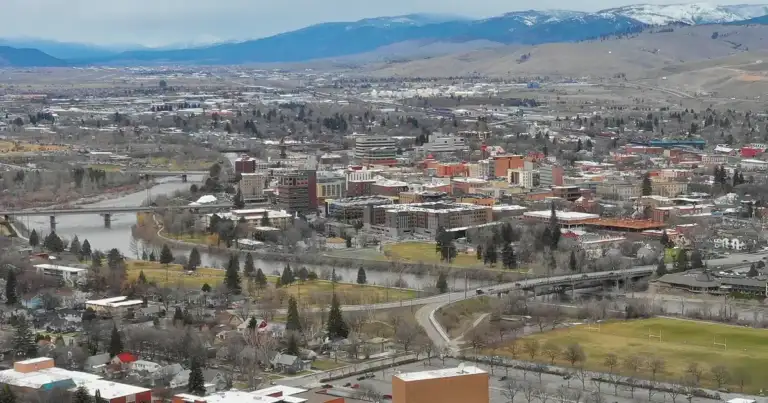
The rumble from the Seeley-Swan Valley isn't just the distant growl of logging trucks anymore; it's the defiant roar of a community demanding independence – a demand Missoula County officials would be catastrophic to ignore. This isn't some quaint community kerfuffle; it’s a direct, uncompromising challenge to how power and resources are wielded in one of Montana's most rapidly changing counties.

A Familiar Tune, Louder This Time
For decades, the idea of the Seeley-Swan carving its own path has simmered beneath the surface. This desire for autonomy, whether as a new county or with significantly greater independence, is a classic Montana tale. The urban core, with its progressive politics, increasingly clashes with resource-dependent rural communities. These rural areas feel overlooked, underserved, and outvoted by Missoula's burgeoning population.


No formal papers were filed yesterday to redraw maps. However, the chatter is now a full-blown conversation, not just louder whispers. Community meetings are erupting with debate.

Local leaders are openly, even defiantly, discussing what a Missoula County without the Seeley-Swan would look like. This isn't idle talk; it's a blazing signal of deep-seated frustration that Missoula County has chosen to ignore for too long.

The Urban-Rural Divide Hits Home
What’s fueling this renewed push? It's brutally simple: power and money. Rural residents in the Seeley-Swan know their hard-earned tax dollars are being siphoned into Missoula's shiny urban projects. Their own roads crumble, vital services lag, and their voices are drowned out by the city's political clout.

They watch, exasperated, as county commissioners rubber-stamp decisions that disproportionately benefit the urban center. These decisions often clash violently with the valley's traditional values and economic realities.

This isn't an abstract concept; it's about reclaiming local control over their land use, development, and community soul. They demand to call their own shots, not have them dictated from 50 miles away by bureaucrats.

These city planners wouldn't last a day in a logging camp or on a ranch. This isn't about being "left behind"; it's about being actively mismanaged and dictated to from afar by an agenda that simply doesn't align with their own.

Missoula County: A Choice Looms
Let's be clear: this isn't just a local squabble. It's a potent symptom of a larger, festering statewide issue.

Montana's rural-urban divide isn't just widening; it's a chasm. Missoula County is feeling the brutal, sharp edge of that wedge more acutely than most.

If county leadership doesn't immediately and seriously address the Seeley-Swan's legitimate grievances, this push for autonomy will become unstoppable. They need tangible, measurable shifts in resource allocation and genuine representation, not empty platitudes.

Ignoring it now isn't just kicking the can down the road. It's a deliberate act of political negligence, and that can is now a boulder ready to crush any politician in its way.

Let's be brutally honest: the mainstream narrative will try to paint this as a mere 'disagreement' or 'healthy dialogue.' Don't fall for that soft-pedaled nonsense.

This isn't about polite conversation; it's about raw leverage. The Seeley-Swan isn't just asking nicely.

They are reminding Missoula County, in no uncertain terms, that they contribute significantly to the tax base. Their distinct identity and economic interests are being willfully ignored.

The real motive for Seeley-Swan leadership isn't just 'autonomy' in some abstract sense. It's about forcing Missoula County to the negotiating table to get a better deal, plain and simple.

They want more control over their destiny and their dollars. They are absolutely willing to threaten separation to get it.

Missoula's power brokers better wake up and realize that the good ol' boy system won't hold this together forever. The threat isn't just real; it's imminent, because the frustration has reached a boiling point.
Photo: Wikimedia Commons (query: Missoula County swan)