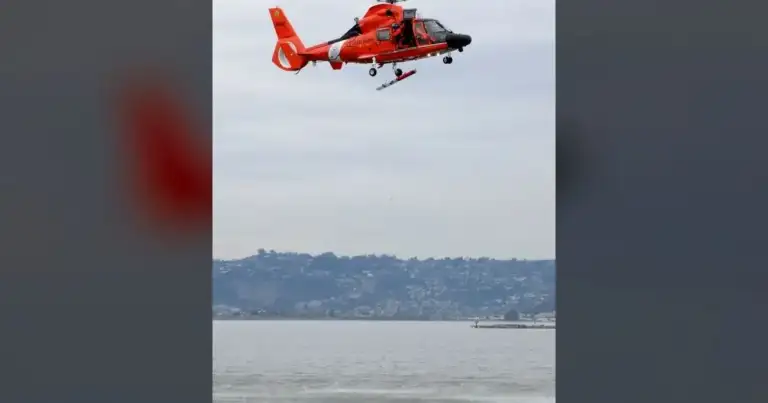

The twisted metal of a U.S. Coast Guard MH-60 Jayhawk now scars the remote Alaskan wilderness near Cordova. This grim scene is a stark reminder of the price paid to keep our state alive.
Four crew members were injured, two seriously, after their helicopter plummeted during a routine hoist training exercise on June 21st. The official line from the brass? “Investigation underway. Our thoughts are with the crew.”
Sounds about right, doesn’t it? But for Alaskans, this isn’t some distant headline; it’s a gut punch to the very lifeline we depend on, a direct hit to our protective shield.
When The Lifeline Snaps
The Coast Guard isn’t just some distant federal agency here; it’s often the only damn thing standing between life and death in our vast, unforgiving landscape. Their relentless daily grind includes search and rescue, medical evacuations, and keeping our maritime lanes safe.
An MH-60 Jayhawk isn’t just a helicopter; it’s a workhorse, a multi-million-dollar asset critical for these life-saving operations. So when one goes down, and its crew is sidelined, the ripple effect isn’t some theoretical Washington D.C. talking point.
It’s real. It means slower response times for a stranded fisherman, or a longer, agonizing wait for emergency medical help in an isolated village. Can we truly afford that delay?
The official word, predictably, is that a safety board is heading to the crash site. They’ll pick through the wreckage, analyze every nut and bolt, every weather report, and issue a report with recommendations.
All good and proper, as the books say. But what about the immediate, chilling impact? You lose a critical asset and four trained personnel, even temporarily.
That means remaining air stations, like Kodiak or Sitka, are stretched thinner, their crews pushed harder. This isn’t just about a single incident; it’s a tangible reduction in our protective shield, a weakening of the safety net we rely on.
The Real Cost of Readiness
A single MH-60 Jayhawk costs tens of millions of taxpayer dollars. Repairing or replacing it will be a significant expense, buried far from the public eye in a sprawling federal budget.
But the true cost isn’t just the hardware. It’s the human element, the life-threatening risks these men and women face daily, flying into Alaskan weather and traversing treacherous terrain to save others.
The Coast Guard will, of course, talk about “thorough investigations” and “preventing future incidents,” and “safety of personnel.” All true, to a point, but it’s a narrative that conveniently sidesteps the elephant in the room.
Let’s be brutally honest. When the Coast Guard brass talks about “operational readiness” and “safety,” what they’re *actually* managing is a constant, brutal tug-of-war with budget allocations back in Washington.
Every crash, every maintenance issue, every injured crew member, is a direct consequence of the perpetual underfunding of critical infrastructure and personnel. This is especially true for operations in extreme, unforgiving environments like Alaska.
They’ll review training and check procedures, but the deeper truth is they’re often doing more with less, pushing equipment and people to their limits. The “investigation” will find a cause, but it won’t address the systemic pressure that makes these incidents tragically inevitable.
We pay billions for fancy jets and distant wars, yet essential, life-saving capabilities right here at home often run on fumes. This crash isn’t just an accident; it’s a flashing red light on the balance sheet of our national priorities, screaming for attention.
So, what will it take for Washington to truly understand? Another helicopter down? More injured crew? A lost life that could have been saved?
This isn’t just about a single incident near Cordova; it’s about the very fabric of safety and survival in Alaska. It’s time for our federal leaders to stop issuing platitudes.
They must start funding the Coast Guard for the realities of our state, not for some sanitized budget projection. Our lives depend on it. Don’t let this crash be just another statistic; let it be the wake-up call we desperately need.
Photo: Loumania Stewart
Source: Google News