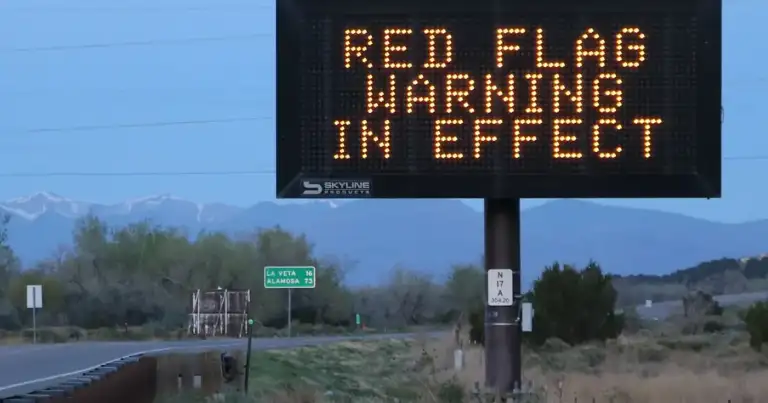

Arizona isn’t just bracing for another fire season; it’s staring down a hellish countdown to disaster. As a Red Flag Warning blankets much of central and northern Arizona through Tuesday evening, let’s be blunt: our state is a tinderbox, and the winds are about to fan the flames into an inferno. This isn’t some nuanced weather pattern; it’s a stark, terrifying reality.
The Perfect (Terrible) Storm
The National Weather Service isn’t mincing words, and neither should we: sustained winds of 20-30 mph, with gusts screaming up to 40-50 mph in some areas. Pair that with relative humidity levels plummeting into single digits, and you’ve got the perfect, terrible storm for a wildfire to not just start, but explode. We’ve suffered through a historically dry spring, leaving every bush, every blade of grass, parched, bone-dry, and ready to ignite at the slightest spark.

This isn’t a theoretical risk; it’s a blazing gun pointed squarely at our communities.
The Arizona Department of Forestry and Fire Management (ADFFM) has already slapped Stage 2 fire restrictions on state-managed lands across Yavapai, Coconino, and Gila counties. That means no campfires, no outdoor smoking, no fireworks – essentially, a ban on any activity that could betray an ounce of common sense and throw a spark.
Call it what it is: this isn’t an overreaction; it’s a desperate, last-ditch measure to keep the whole state from going up in smoke. And frankly, it shouldn’t have to be this way.
Living on the Edge, Literally
Residents in the wildland-urban interface, like Maria Rodriguez in Prescott Valley, know this drill all too well. It’s a cruel annual ritual. She told me:
“You clear your yard, you pack your bags, and you just pray.”
That’s the raw, terrifying truth of living in Arizona during fire season. Fire Chief David Johnson talks about crews being “fully staffed and ready,” and we absolutely appreciate their sacrifices, their bravery.
But let’s be honest: even the best-equipped crews are fighting a losing battle when Mother Nature unleashes 50 mph winds on acres of dried-out scrub. “Prevention is a community effort,” they say, and it is.
But the anxiety is palpable because everyone knows how quickly things can spiral out of control, turning homes into ash and lives upside down.
This isn’t just about homes; it’s about livelihoods, about the very fabric of our state. Outdoor recreation businesses are seeing their crucial early summer season evaporate like a puddle in the desert sun.
National parks and forests, the crown jewels of our tourism, are closing down. The “natural beauty” Arizona promotes so heavily is now a massive, recurring liability, choking off tourism and local economies.
And for what? For a problem that keeps coming back, stronger, more destructive every single year. Haven’t we learned anything?
We’ve seen this movie before, a horrifying triple feature: the Bush Fire in 2020, the Telegraph Fire, and the Mescal Fire in 2021, all causing widespread evacuations and destruction under these identical, predictable conditions. When will the credits roll on this disaster?
The U.S. Drought Monitor indicates that over 80% of Arizona is currently experiencing moderate to severe drought conditions as of early June 2026, exacerbating the fire risk.
The Red Marker
Let’s cut through the official platitudes about “investing heavily” in prevention and suppression. The numbers don’t lie, and they paint a grim picture: Arizona has already seen 350 wildfires burn 25,000 acres this year, slightly above the five-year average.
“Investment” sounds great on paper, a comforting buzzword, but when 80% of the state is in drought and extreme fire warnings are becoming the agonizing norm, it’s crystal clear we’re not truly getting ahead of the problem. Environmental groups are absolutely right to link this to long-term climate trends, but the real, cynical takeaway is this: we keep building further into these high-risk areas, the state responds with reactive measures and temporary restrictions, and then we all cross our fingers and pray for rain.
The economic impact on tourism and property values isn’t just a recurring hemorrhage; it’s a gaping wound that refuses to heal. The “community effort” is real, it’s vital, but the systemic failure to adapt beyond just fighting the fires after they start, year after year, leaves taxpayers footing a bill that only gets bigger.
We’re managing the symptoms, not curing the disease, and everyone knows it. How much more will it take before we demand real, lasting solutions?
Photo: Wikimedia Commons (query: Red Flag Warning faces)
Source: Google News