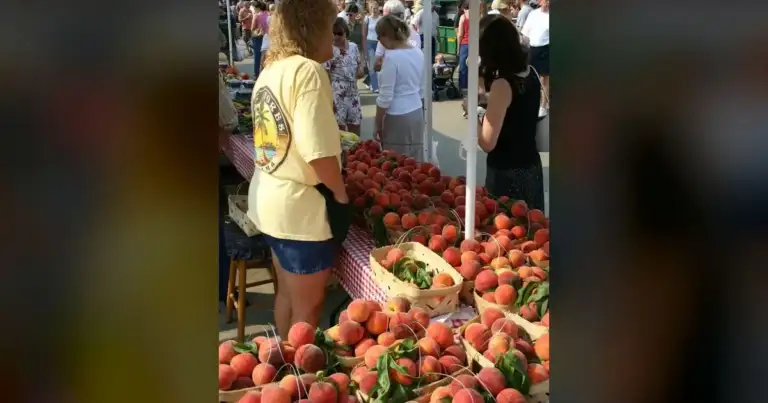

Maryland’s fields aren’t just drowning; they’re rotting. The sweet scent of spring harvest has been replaced by the bitter smell of ruin.
It’s not just Mother Nature to blame. Our agricultural backbone, the very farms that put food on our tables, are caught in a bureaucratic chokehold.

They watch their livelihoods wash away while official channels drag their feet. This isn’t just about the price of peaches and corn.
It’s about the cold, hard reality of rural Maryland’s future. Do we truly value those who feed us?
The Harvest of Despair: A Gut-Wrenching Reality
Walk the fields of Washington County or the Eastern Shore right now. The vibrant promise of a spring harvest has been replaced by a gut-wrenching sight.
Unseasonably cold snaps in late May, followed by relentless heavy rainfall and hailstorms into early June, have decimated crops.
We’re talking up to 70% loss for early peach varieties. Sweet corn and vegetables in the hardest-hit regions face a brutal 50-60% loss.
This isn’t just a number on a spreadsheet; it’s a family’s entire year, wiped out. John Miller, a third-generation peach farmer, whose hands are as calloused as his resolve, put it plainly:
We’ve done everything right, but you can’t fight Mother Nature. Every day that passes without that declaration, we’re sinking deeper. We need help, and we need it now. Our farms are more than businesses; they’re our heritage, our lifeblood.
This isn’t some quaint country problem that can be ignored. It’s a direct hit to the pulse of Maryland’s economy.
These aren’t just crops; they are family legacies and mortgage payments. They represent the very land values that underpin our rural real estate market.
When farms face millions of dollars in lost revenue, who do you think ultimately pays the price?
The ripple effect will be felt far beyond the dirt roads. It will hit local businesses, suppliers, and ultimately, your grocery bill.
The Bureaucratic Bottleneck: A System in Slow Motion
The Maryland Farm Bureau, acting for hundreds of struggling operations, urgently requested a federal disaster declaration from Governor Wes Moore on June 4, 2026.
Governor Moore’s office, on June 5, 2026, confirmed they are “actively working” to compile data for the USDA.
“Actively working.” While the rain keeps falling, bills keep piling up. Farmers watch their investments literally dissolve into mud.
Does “actively working” pay the bills?
As of June 7, 2026, that declaration still hasn’t materialized. Farmers don’t need platitudes about “due diligence”; they need action.
They need swift, decisive intervention. Their business is as vital to the state as any tech startup or waterfront development.
The USDA, with its “multi-week or even multi-month review process,” stands as a glacial wall between immediate need and actual relief.
It’s a classic case of the system failing those it purports to protect. Our most essential workers are left twisting in the wind.
The Red Marker Verdict: Maryland Deserves Better
Here’s the unfiltered truth: state officials pat themselves on the back for “actively working.” Yet, the actual leverage lies with the federal bureaucracy.
It moves at the speed of a snail in molasses. The mainstream narrative will focus on the weather, “unpredictable patterns,” and “commitment to farmers.”
But the real story is about the glacial pace of aid. It’s about procedural hoops designed to delay rather than deliver.
It’s a disgrace.
The hypocrisy is stark: we champion “local food” and “supporting Maryland businesses.” Yet, when the very foundations of that system crumble, the response is a data-gathering exercise.
The financial motive isn’t to save farmers. It’s to delay federal payouts, ensuring every T is crossed before a dime is released.
This happens even if it means individual farms go under. This isn’t about protecting taxpayers.
It’s about protecting the federal budget from immediate strain, pushing the burden onto those who can least afford it. Is this the Maryland we claim to be?
Without this declaration, farmers face loan defaults, crushing debt accumulation, and the terrifying prospect of not being able to plant next season. This isn’t just a tough year; it’s an existential threat to Maryland’s agricultural footprint. It’s a slow-motion collapse disguised as “due process,” and it’s happening on our watch.
This isn’t just about the price of your peaches. This is about the resilience of Maryland itself, about the very fabric of our rural communities.
Do we stand by and watch our essential industries wither on the vine? The gears of government turn at their own indifferent, agonizing pace.
Or do we demand that the urgency of this crisis be met with an equally urgent, decisive response?
The future of Maryland’s fields, and the families who work them, hangs not just in the balance, but on the brink.
It’s time for Governor Moore and federal officials to stop “actively working.” They must start acting before it’s too late.
Photo: Bruce Dupree
Source: Google News