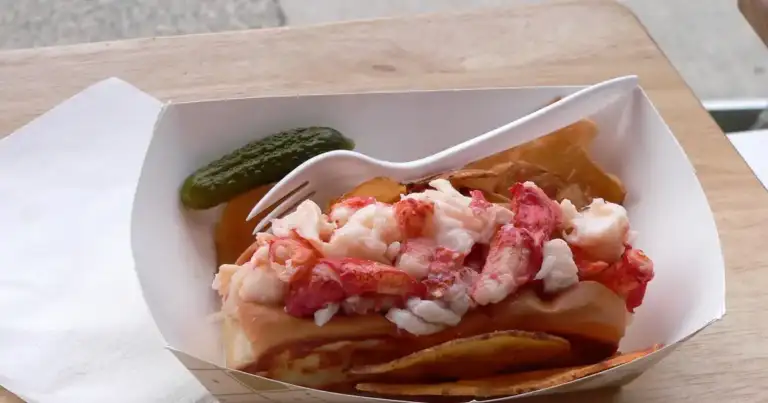

Forget summer blockbusters; Connecticut’s real seasonal drama is the “lobster roll war.” This culinary arms race is exploding across our shoreline. Every local eatery, from swanky bistros to humble shacks, vies for the “best” title. Locals are eating it up, literally.
Social media and food blogs overflow with new pop-ups and established spots boasting the “ultimate” lobster roll. Coastal towns are awash in buttered buns and sweet meat, each trying to outdo the next. The buzz is a roaring inferno, and demand is absolutely insatiable.

The Fading Sound of Local Lobster
Here’s the inconvenient truth nobody wants to talk about: while the lobster roll market explodes, the actual source of our “Connecticut classic” is vanishing. The Long Island Sound’s lobster population plummeted 90% since the late 1990s. Marine biologists documented this collapse, and generations of local fishermen lament it.
Commercial lobstermen, once a staple of our shoreline economy, have watched their livelihoods dwindle for years. Their traps come up emptier, reflecting an ecosystem in distress. This is a stark, heartbreaking contrast to the booming business of the very product they once supplied.
So, where is all this lobster actually coming from? That inconvenient question hangs heavy in the salty air, conveniently ignored by eager queues and PR machines. If Connecticut’s waters aren’t producing, these “local” rolls are increasingly filled with lobster from Maine, Canada, or further afield.
Let’s be clear: the “Connecticut classic” has become a cruel misnomer. It increasingly means a roll prepared in Connecticut, not necessarily from Connecticut. It’s a geographical designation, not a statement of local provenance.
Authenticity vs. Market Demand
This isn’t merely about semantics; it’s a gaping chasm between perception and reality. We’re enthusiastically celebrating a cultural icon while willfully ignoring ecological devastation and economic hardship at its true origin.
The “lobster roll war” doesn’t reflect Connecticut’s abundant seafood. Instead, it clearly shows clever marketing, a relentless consumer desire for perceived luxury, and a collective blind eye to true provenance.
Restaurants are simply meeting market demand. If that means sourcing from hundreds of miles away, so be it. The average customer isn’t demanding a DNA test; they’re craving warm, buttery comfort, and businesses happily oblige.
The “Connecticut classic” increasingly means a roll prepared in Connecticut, not necessarily from Connecticut.
The irony, frankly, is stomach-churning. We’re witnessing a fierce, almost grotesque, competition over a product that, in its truly authentic local form, is becoming a ghost story. This isn’t a culinary boom; it’s a speculative bubble built on a foundation of scarcity, cynically papering over the very real, very human struggles of those who once made the “classic” genuinely local.
Red Marker Verdict
Let’s be blunt: this “lobster roll war” isn’t some quaint celebration of Connecticut’s marine bounty. It’s a cynical grab for pure profit, a relentless, unthinking trend-chase.
Every new eatery jumping into this feeding frenzy knows our local waters are tapped out, barren. They’re banking on the nostalgic cachet of the “Connecticut lobster roll” name. They ruthlessly source from wherever is cheapest and most plentiful – overwhelmingly from Maine, Canada, or even farther afield.
The mainstream narrative, fueled by glossy food blogs and social media hype, conveniently ignores this inconvenient truth. It focuses instead on the latest ‘must-try’ spot and its Instagrammable offerings. This isn’t about tradition or local sustainability.
It’s about selling a comforting dream, one buttered bun at a time, and making an absolute killing. Meanwhile, our actual local fishing industry – and the marine ecosystem it depends on – slowly, tragically drowns.
Photo: Wikimedia Commons (query: Lobster roll)
Source: Google News