
On May 21, 2026, Oklahoma City leaders finally broke ground on a mental health crisis center. And they want us to celebrate. Don’t be fooled by the back-patting; this “monumental step” is a decade overdue, a long-promised solution to a crisis that has left thousands suffering without adequate care.
For years, we watched thousands of Oklahomans in crisis end up in cuffs or tied to gurneys, not getting the help they desperately needed. Police Chief Wade Gourley isn’t just seeing it; his officers are forced to deal with it firsthand, responding to thousands of mental health calls annually with absolutely nowhere appropriate to take people. Yet, Mayor David Holt and County Commissioner Carrie Blumert now expect a parade for finally addressing a systemic failure that has plagued our city for far too long.
“Today is more than just a groundbreaking; it’s a promise kept to our community,” stated Mayor David Holt. “This center will be a beacon of hope…”
A promise kept? Or a long-overdue admission of neglect? Up to 20% of Oklahoma County ER visits are mental health-related – a staggering, unacceptable burden on our emergency services.
This center projects serving 10,000-12,000 individuals annually. Think about that number: how many lives could have been positively impacted if this facility had opened a decade ago?
The price tag for this belated intervention? A cool $25 million. MAPS 4, funded by our tax dollars, shouldered $17 million, with state and private pockets covering the rest.
It’s a significant investment, yes. But the true, unquantifiable cost is the immeasurable human toll – the shattered lives, the lost potential, the families torn apart – from years of criminal inaction.
The Real Battle: Staffing and Sustainability
While officials are popping champagne, the real fight — the one that determines if this building is a solution or just another empty promise — is just beginning.
The center aims for a late 2027 or early 2028 opening, but the crucial question remains: who will staff this round-the-clock operation?
We’re talking over 100 full-time, highly specialized positions: psychiatrists, counselors, social workers, nurses, and peer support specialists. This isn’t just a challenge; it’s a monumental hurdle in a state that has always grappled with a chronic, debilitating shortage of mental health professionals.
The vague “plan” to “engage” local universities like OU Health Sciences and OCU sounds reassuring on paper, a neat bullet point in a press release.
But “developing pipelines” and “offering internships” are not magic spells. They won’t conjure the hundreds of qualified, dedicated individuals needed to make this facility function. We’ve heard these platitudes before.
City leaders are talking about “competitive compensation” and “student loan forgiveness.” Let’s be clear: “talking” is not “doing.” These are not concrete, funded incentives; they are discussions.
Until those discussions transform into fully funded, aggressive recruitment packages, this $25 million center risks becoming nothing more than a beautifully constructed, tragically empty shell.
You can build the most state-of-the-art facility in the world, but without qualified, well-paid staff, it stands as a monument to good intentions, not effective care. It’s a fundamental flaw in the rollout that demands immediate, decisive action, not just hopeful rhetoric.
Red Marker Verdict
Let’s be brutally honest: this isn’t a “beacon of hope” until it’s fully operational, adequately staffed, and sustainably funded for the long haul. It’s a necessary step, yes, but it’s a decade late – and we won’t forget that. The real test isn’t the photo op at the groundbreaking; it’s whether Oklahoma City can actually attract and, more importantly, retain the professionals needed to make this more than an expensive, empty gesture.
So, don’t cheer yet. Don’t fall for the political spin.
Instead, keep your eyes fixed on the budget. Scrutinize the hiring numbers.
That’s where the rubber meets the road, long after the politicians have moved on to their next “promise.” The people of Oklahoma deserve more than delayed action and empty rhetoric. They deserve real, consistent, and timely care.
It’s time for the city to put its money where its mouth is, beyond just the concrete and steel. Prove us wrong, Oklahoma City. Prove that this isn’t just another broken promise.
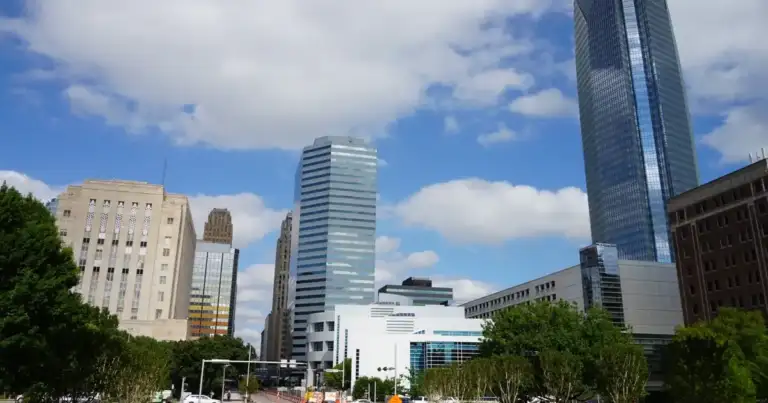
Photo: Wikimedia Commons (query: Oklahoma City mental)
Source: Google News