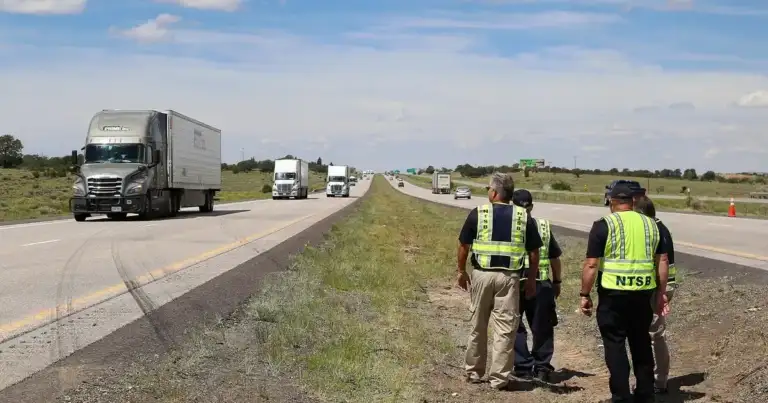

The story of Peelander-Z isn’t a heartwarming tale of resilience; it’s a brutal collision with reality. In May 2017, the Austin-based Japanese punk outfit Peelander-Z slammed into a semi-truck on I-40 near Grants, New Mexico, after a blown tire.
This wasn’t merely an accident; it was a stark, unvarnished look at the brutal, unglamorous truth for countless touring musicians. Seven years later, the silence on “new developments” is deafening.

There are none. Once the GoFundMe money dries up, who gives a damn about the working-class artist?
This incident, far from being an isolated tragedy, rips open the flimsy curtain hiding the precarious existence of independent artists. It exposes a system that champions their creativity but offers almost no safety net when disaster strikes.
When Disaster Strikes on I-40
The facts from May 22, 2017, were beyond grim, painting a picture of devastation. Peelander-Yellow, frontman Kengo Hioki, bore the brunt of the impact: multiple broken bones including an arm and ribs, and a terrifying punctured lung. His bandmate, Peelander-Red (Akira Ito), wasn’t spared, suffering a broken arm himself.
Only Yumiko Kanazawa, Peelander-Green, escaped with relatively minor injuries, showing sheer luck in the face of such chaos.
Their van was totaled, a twisted wreck of metal. The trailer, reduced to junk. Equipment, merchandise—the very tools of their trade, the fruits of their labor—all gone in an instant.
They were en route to Phoenix, deep into their “Metalander-Z” tour, a journey that literally died on New Mexico asphalt, leaving behind only shattered dreams and debris.
These aren’t rock stars with private jets. They’re road warriors. Their livelihood disappeared in a moment.
The Charity Band-Aid
So, what happens when a touring band, far from the glitz of major labels, loses everything? The answer is as predictable as it is infuriating: they pass the hat. Friends and loyal fans, stepping up where the industry wouldn’t, swiftly launched a GoFundMe campaign.
The initial goal of $50,000 for staggering medical bills and essential equipment replacements was quickly surpassed, reaching over $65,000. While it showed community spirit, it also highlighted a glaring symptom of a broken system.
This is not a feel-good story about community. This is a damning indictment. Why must artists rely on charity to survive a catastrophic accident? Where are the robust safety nets? Where is the industry support? Nowhere. They’re on their own, always.
The music industry profits off these bands. But when disaster hits, it’s the fans who pay.
The System’s Silence
Seven years later, the research confirms what we already knew, and what should outrage us: no new developments since 2017, no follow-up reports, no lingering presence in New Mexico news cycles. The incident, and the band’s struggle, simply faded from the public consciousness.
The band, with incredible grit, recovered and continued touring. But the incident itself? A mere blip on the radar, another forgotten statistic swallowed by the endless stream of interstate tragedies.
New Mexico authorities dealt with the crash. Emergency services did their job. Then everyone moved on. The systemic issues that leave artists vulnerable? Ignored.
The crash showed the fragility of a career built on the road. The lack of follow-up shows the system’s indifference.
RED MARKER VERDICT
The mainstream narrative might smugly pat itself on the back for the GoFundMe success, highlighting “resilience” as if it were a virtue. But that’s a convenient, dangerous lie. The reality is that the Peelander-Z crash exposed the gaping void in support for independent artists. These bands are cultural assets, yet they operate without a safety net.
One blown tire, one distracted driver, one unforeseen event, and their entire livelihood hinges on the kindness of strangers. There’s no big label insurance policy, no union backing them up. The “power” in this equation isn’t some shadowy corporate entity; it’s the sheer, brutal power of precarity itself, forcing passionate individuals to beg for survival. Don’t call it resilience; call it desperation.
This crash wasn’t just a physical collision on I-40; it was a devastating collision with the brutal economics of being an independent artist in America. And frankly, seven years later, nothing has fundamentally changed.
Unless we demand better, unless we build genuine safety nets, this isn’t a cautionary tale; it’s a grim forecast. Expect more bands, more artists, to crash and burn—financially and literally—on our roads, forgotten as quickly as the tire marks fade.
Source: Google News