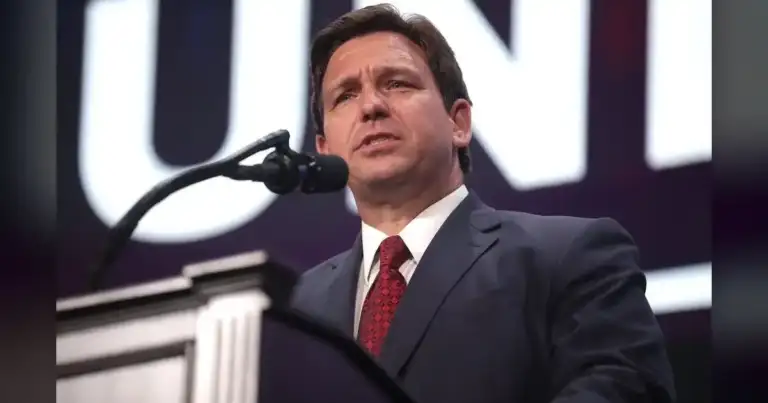

Let’s be clear: there’s no such thing as a free lunch, especially when it comes to taxes. So when Governor Ron DeSantis dusts off his perennial proposal to eliminate property taxes across Florida, every homeowner and taxpayer in the state should brace themselves.
This isn’t a magic wand for affordability; it’s a fiscal shell game with multi-billion-dollar stakes. If property taxes vanish, the state’s essential services don’t just magically fund themselves.

Someone, somewhere, is going to pay. The critical question isn’t if, but who, and what will Florida truly look like when they do?
The Sunshine State’s Fiscal Tightrope Walk
DeSantis frames this as a win for affordability and economic freedom, a way to lift the burden from homeowners, particularly retirees on fixed incomes. On the surface, who wouldn’t want to shed thousands in annual taxes?
But dig even an inch deeper, and you hit bedrock. Florida’s local governments – your county, your city, your school district – currently rake in tens of billions of dollars from property taxes.
This isn’t pocket change; it’s the fuel for police cars, the salaries for firefighters, the books for public schools, and the asphalt on your roads. It’s the very foundation of local community services.
So, if that massive revenue stream dries up, how does Florida keep the lights on? The most-talked-about “solution” is a massive spike in the state’s sales tax.
We’re not talking a modest bump from 6% to 7%. To replace property tax revenue, economic analyses consistently project increases that could push Florida’s sales tax well past 10%, potentially even into the 15% range.
Imagine paying that on every purchase, every single day – from your morning coffee to your weekly groceries, to a new appliance. That’s a staggering burden on every single transaction.
The Real Cost: Centralization and Shifting Burdens
Beyond the sales tax shock, there are other less palatable alternatives: new statewide fees on everything imaginable, or perhaps even the forbidden fruit of a state income tax (currently banned by our constitution, but never say never when Tallahassee gets desperate). The very discussion of such drastic measures underscores the immense financial hole property tax elimination would create.
The biggest unspoken consequence? Local control would be gutted. Shifting funding from locally controlled property taxes to a state-managed revenue source means Tallahassee dictates how your local police department, fire rescue, and schools are funded.
Your city council, your county commission – their power over local priorities diminishes drastically. It’s a direct, undeniable transfer of financial power from your community to the state capital.
And let’s not forget who disproportionately feels the pinch of a higher sales tax: lower-income households and, critically, our tourists. The wealthy homeowner might celebrate the end of their property tax bill, but the family struggling to make ends meet will see a significant chunk of their budget eaten up by a higher sales tax on every necessity.
Renters, often overlooked in this debate, also typically see property tax costs factored into their rent. A new tax structure could easily pass different, often higher, burdens onto them.
Governor DeSantis has previously stated: “We want to continue to find ways to provide property tax relief. Ultimately, I’d like to get rid of property taxes entirely.”
A goal that, while sounding appealing, ignores the fundamental realities of funding a state as vast and growing as Florida. It’s a vision that conveniently overlooks the financial bedrock of our communities.
Let’s be brutally honest. This isn’t just about “affordability”; it’s a power play.
Eliminating property taxes and replacing them with a statewide revenue source like a dramatically inflated sales tax centralizes immense financial control in Tallahassee. This makes local governments more dependent on state coffers.
It’s also a clever shell game: you eliminate a highly visible annual tax (property tax) and replace it with a less visible, incremental tax (sales tax). People pay this bit by bit, day by day, often without realizing the cumulative burden.
It looks like “relief” on paper for some, but it’s a massive shift in who controls the purse strings and who ultimately foots the bill. The most economically vulnerable are likely bearing the heaviest, most regressive load.
This isn’t fiscal wizardry; it’s a political sleight of hand. When Tallahassee offers you a tax ‘break’ with one hand, be sure to check what they’re taking with the other – because for most Floridians, the bill always comes due, and it’s rarely cheaper.
Source: Google News