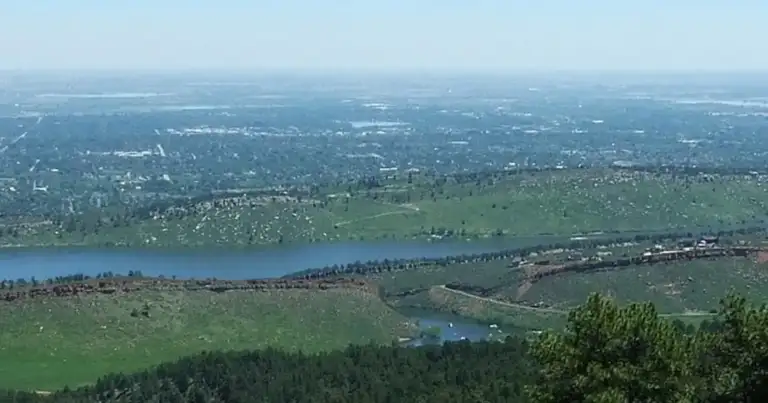

Fort Collins, CO – Brace yourselves, Northern Colorado. Another summer is already going bone dry, and our cherished Horsetooth Reservoir, a supposed jewel of Larimer County, just slammed the door on new boating permits starting May 2, 2026. This vital waterway is sitting at a pathetic 65% of its normal capacity for early May.
Don’t for a second buy the Larimer County Department of Natural Resources (LCDNR) spin that this is a “tough decision” for “public safety.” This isn’t a sudden crisis; it’s a predictable, annual failure, and frankly, it’s an insult to our intelligence.
Crisis? Or Predictable Failure?
The LCDNR claims they’re prioritizing “public safety and resource management.” Their official statement rings hollow:
“We understand this is disappointing for many, but public safety and resource management are our top priorities. The current levels make it unsafe for additional boating traffic and put undue stress on the ecosystem.” — Larimer County Department of Natural Resources spokesperson
Oh, really? Did they just wake up on May 2nd? Colorado’s statewide snowpack for 2025-2026 was a joke, especially in the northern basins that feed into Horsetooth. Anyone paying attention knew this was coming.
The U.S. Drought Monitor already paints huge chunks of Western Colorado in “severe” to “extreme” drought categories. This isn’t some isolated local hiccup; it’s a glaring symptom of a region-wide water deficit that has left giants like Lake Powell and Lake Mead gasping for air. So, forgive us if we’re not exactly shocked when Horsetooth looks less like a vibrant recreation hub and more like a sad, receding bathtub ring.
Who Gets Gutted?
While existing permit holders get to keep their fun, these new restrictions absolutely gut local businesses. Boat rental companies, bait shops, lakeside restaurants – they’re all staring down a lean summer, if not outright disaster. One local marina owner, too scared to be named for fear of bureaucratic retaliation, already reported seeing cancellations, lamenting,
“This is going to hit us hard. Summer is our bread and butter, and without new boaters, we’re looking at a very lean season. We might not even make it through.”
This isn’t pocket change; this industry pumps an estimated $15-20 million annually into our local economy through tourism and recreation. Those vital dollars are now directly at risk, not because of an act of God, but because bureaucrats once again waited until the eleventh hour to acknowledge the obvious, entirely predictable truth.
Meanwhile, agricultural communities in eastern Colorado are already bracing for even harsher water restrictions. Farmers, the ones who actually feed people, are facing reduced allocations from river systems, threatening livelihoods and food security.
Recreation is, predictably, always “first to go” when the water runs low – a cynical truth echoed by countless frustrated locals on social media and at community meetings. It’s a convenient, almost surgical way to protect other, far more politically powerful water users, leaving the smaller players and public access in the dust.
The Red Marker: Optics Over Action
Let’s be clear: this isn’t some sudden environmental crisis. Larimer County officials have watched the snowpack dwindle all winter. Their “public safety” line is a convenient, flimsy cover.
The real play here, transparent as a dry riverbed, is protecting established interests – those who already hold permits and wield influence – while ruthlessly sacrificing the smaller, seasonal businesses and the general public’s basic access. This isn’t just a predictable political maneuver; it’s a cynical strategy to manage optics, not actual water, and our local economy is left to bleed out from their delayed, inadequate “action.”
This isn’t about saving the ecosystem from a few boat wakes. It’s about a government reacting to a predictable shortfall with performative, last-minute measures that disproportionately punish the most vulnerable parts of our local economy.
They knew this was coming. They watched the snowpack melt away. And they did absolutely nothing until it was too late.
How many more summers will we endure this staged scarcity across Colorado before our leaders stop punting and deliver actual, long-term water solutions? Or are we content to simply watch our reservoirs shrink and our local businesses wither, year after predictable year?
Photo: Wikimedia Commons (query: Horsetooth Reservoir)
Source: Google News