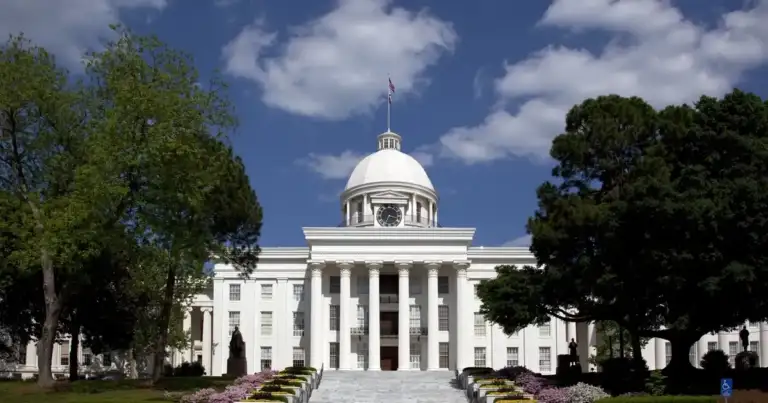

Alabama’s public universities run on the backs of their lowest-paid workers, and those workers are done playing nice. The United Campus Workers of Alabama (UCWA) just ignited “wage justice” rallies across the state’s major campuses on Friday, April 25, 2026. Their message is blunt, unwavering: pay us a living wage, or face the noise.
From Tuscaloosa to Birmingham and Huntsville, UCWA members, alongside students and community allies, hit the streets.
Their core demand? A minimum of $18 an hour for every single campus employee. That’s a stark, necessary jump from the $10-$14 many entry-level staff currently scrape by on.
Alabama’s federal minimum wage of $7.25 still tragically sets the floor. These are the groundskeepers, the dining hall heroes, the administrative staff – the indispensable people without whom these billion-dollar institutions would simply grind to a halt.
How can we expect excellence from our universities when the very hands that build and maintain them are struggling to survive?
The University’s Grotesque Double Standard
The spotlight, naturally, fell hard on the University of Alabama System. Protesters at the flagship Tuscaloosa campus didn’t just walk; they marched right up to the administration building, delivering a petition packed with hundreds of signatures.
Their point is simple, yet brutally clear: the UA System boasts an endowment north of $1.5 billion. Let that sink in: One point five billion dollars.
Yet, while administrative salaries climb and tuition fees keep rising, the people doing the essential grunt work are stuck fighting for basic economic survival. It’s a grotesque double standard.
“We are here because we deserve to be able to live in the communities we serve,” stated Maria Rodriguez, a dining hall worker and UCWA organizer, during the protest. “The university thrives because of our labor, and it’s time our wages reflect that value.”
University officials, in their usual carefully worded, utterly predictable statements, claim to be “committed to fair compensation” and “regularly review salary structures,” all while balancing “fiscal responsibilities.” This isn’t a commitment; it’s the classic institutional sidestep: acknowledge the problem, then punt to nebulous budget constraints. But when your budget includes a multi-billion-dollar cushion – a cushion fattened by the very labor they underpay – that excuse doesn’t just wear thin; it evaporates.
More Than Just Wages: Dignity and Justice
This isn’t just about a number on a paycheck; it’s about the fundamental dignity of labor. It’s about being able to look your child in the eye and know you can provide for them without working yourself to exhaustion.
Many campus workers are forced to juggle multiple jobs or rely on public assistance just to keep their families afloat in cities where the cost of living keeps creeping up. This makes a mockery of the idea of a “full-time” job providing a “full” life.
As Dr. John Davis, a UAB faculty member and UCWA supporter, powerfully put it: “Our members are struggling to make ends meet, even with full-time jobs at institutions that claim to be pillars of our community. This isn’t just about wages; it’s about dignity and economic justice.”
Students, recognizing that the well-being of staff directly impacts their own learning environment and the moral fabric of their institutions, have thrown their full weight behind the movement. They see, with clear eyes, the glaring disconnect between the wealth accumulated by their educational institutions – often in their name – and the poverty wages paid to the people who quite literally make those institutions run. It’s a lesson in hypocrisy they won’t soon forget.
The Red Marker Verdict: A Choice, Not a Constraint
Let’s be brutally, unequivocally clear: the University of Alabama System absolutely has the money. Their $1.5 billion endowment isn’t some phantom fund or a distant dream; it’s cold, hard cash, readily available.
So when officials trot out the tired line about “fiscal responsibilities,” what they’re really saying is that paying their lowest-wage workers enough to live on isn’t their top fiscal responsibility.
It’s a conscious, deliberate choice. They choose to prioritize other things—new buildings, bloated administrative salaries, prestige projects designed to burnish their image—over the basic economic security and human dignity of the very people who clean their classrooms, cook their food, and maintain their sprawling campuses.
There’s no legal gun to their head forcing them to negotiate with UCWA, and the state government certainly isn’t stepping in to mandate a living wage.
Therefore, unless public pressure makes it financially or reputationally too costly to ignore, expect incremental crumbs, not a full, dignified meal.
This isn’t about capacity; it’s about political will, pure and simple. And the people of Alabama are watching.
Photo: Wikimedia Commons (query: Maria Rodriguez universities)
Source: Google News