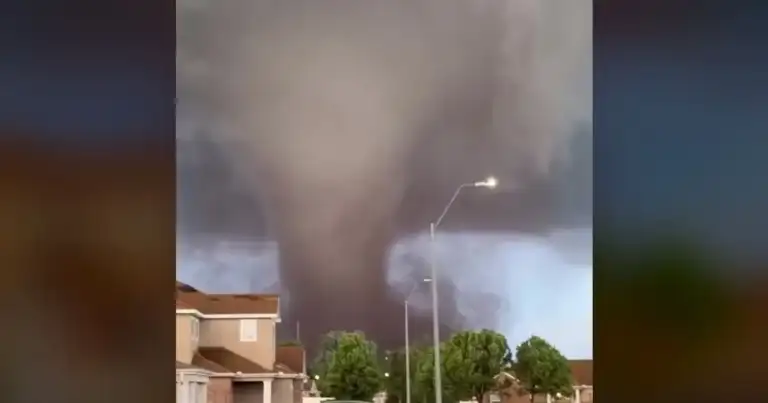

The roar came first, then the sickening crunch of a town being torn apart. Enid, Oklahoma, now wears the fresh scars of a monster tornado, and once again, we’re left to pick up the pieces.
This wasn’t just another weather report. It was a devastating estimated EF-3 twister that ripped through the heart of our community, leaving an estimated 200 homes destroyed or severely damaged, and dozens of businesses in ruins.

While the national media might glance at a weather map and move on, the reality on the ground here is always the same: utter devastation, followed by the grinding, thankless work of recovery. Residents are now sifting through the destruction, piece by agonizing piece.
The Familiar Path of Destruction
The picture emerging from Enid isn’t just grim; it’s gut-wrenching. This wasn’t a glancing blow; it was a direct hit. An estimated EF-3 tornado carved a wide swath through the city, leaving nothing but splintered wood and twisted metal in its wake.
Residential areas bore the brunt, with over 200 homes reduced to rubble. Roofs were ripped away, and personal belongings scattered for miles. Imagine your entire life, your memories, your security, suddenly strewn across fields you can barely recognize.
Emergency services, already stretched thin across the state with this relentless spring storm season, are working tirelessly. The overwhelming scale of the damage, estimated at tens of millions of dollars, means their initial focus remains on search and rescue, securing dangerous structures, and clearing major roadways. Every minute counts.
Damage assessment teams are now fanning out, meticulously mapping the destruction zone and attempting to quantify the financial hit. But let’s be brutally honest: the numbers will only ever tell half the story.
The true cost isn’t just measured in dollars. It’s in the displaced families, the lost memories that can never be replaced, and the psychological scars that will linger long after the last piece of debris is hauled away.
Dozens of local businesses, many already operating on razor-thin margins, now face an agonizing decision: rebuild from scratch, or shut their doors for good? This isn’t just about brick and mortar; it’s about the livelihoods of our neighbors, the fabric of our community, torn apart in an instant.
Beyond the Headlines: The Long Haul
The immediate aftermath of a storm like this is chaotic, heartbreaking, and undeniably dramatic. It’s what makes the news cycles for a day or two, maybe even three if the footage is particularly devastating.
But the actual story, the one that truly impacts Oklahoma, is the excruciatingly long haul that follows — the months, the years, the endless fight. It’s the soul-crushing insurance battles, the predatory contractor scams, the agonizingly slow crawl of federal aid, and the sheer, exhausting human effort required to restore some semblance of normalcy. Are we truly prepared for this marathon, or just the sprint?
Local volunteers will show up. Neighbors will help neighbors. That’s the Oklahoma way, a spirit of resilience forged through these predictable disasters. It’s a spirit that makes us proud, a refusal to be broken.
But even the strongest community, even the most resilient people, need more than just goodwill and a pat on the back. They need sustained, tangible support – not just the fleeting attention of a news crew, but real, consistent resources to rebuild lives, not just structures. When the cameras leave, who stays?
RED MARKER VERDICT: Here’s the unvarnished truth from where I stand: Every spring, Oklahoma gets hammered. Every spring, we see the pictures, hear the stories, and maybe a politician flies in for a quick photo op promising “all available resources.”
But the resources that matter most — the long-term, consistent, bureaucratic-free support needed to genuinely rebuild lives and towns — are always slower than the wind that ripped through Enid.
The mainstream narrative focuses on the immediate spectacle, the “shock and awe” of nature’s fury. The real story, the inconvenient truth, is the predictable, often inadequate, struggle of recovery that follows, far from the cameras.
It’s a cycle we know all too well, and it’s one that leaves too many Oklahomans feeling like just another statistic in an endless storm season. The financial and political machines will churn, eventually, but for the folks in Enid right now, it’s just them and the wreckage. And that, my friends, is a tragedy we should never accept as normal.
Source: Google News