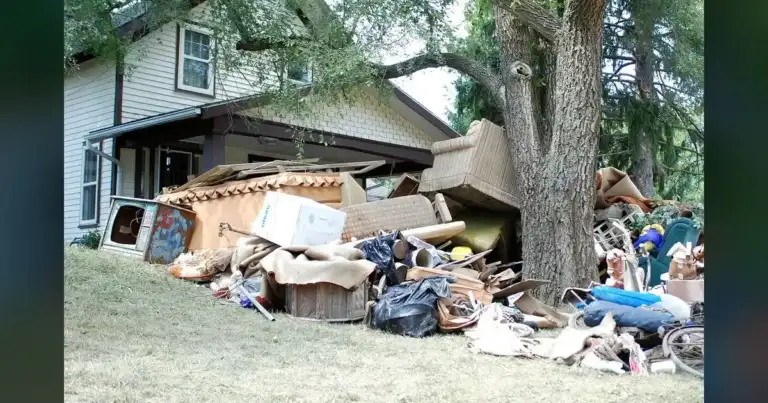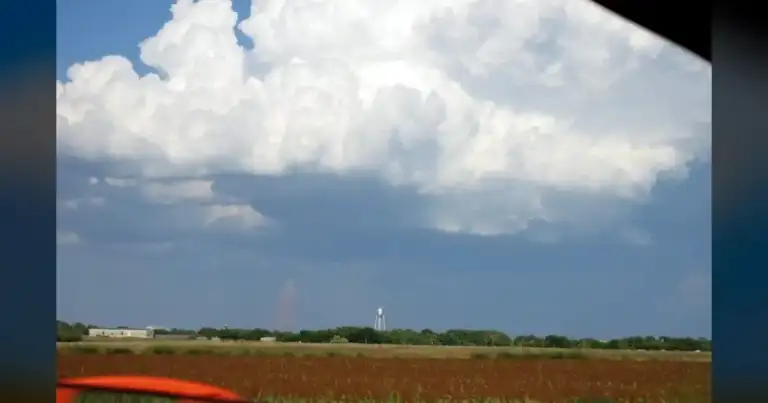

Another tornado, another round of hollow “preparedness” platitudes. On April 18, 2026, an EF-1 ripped through Hancock County, near Findlay, tearing up outbuildings, trees, and power lines. No serious injuries were reported.
This isn’t some isolated incident. This is Ohio’s new reality, and anyone pretending otherwise is either blind or selling you something.

Ohio isn’t just seeing a “notable uptick” in severe weather; it’s experiencing a full-blown climate shift. WFIN and local reports highlight the suddenness and surprise of these events. But for anyone paying attention, the numbers don’t lie.
Ohio averages around 19 tornadoes a year. In 2024, that jumped to 28 confirmed tornadoes. By April of 2026, we’ve already hit 10 across the state, including the recent Hancock swipe and an earlier EF-1 in Defiance.
This isn’t a statistical anomaly; it’s a trend demanding real action, not just a pat on the back for “early warnings.”
The Illusion of Preparedness
Local officials, like Sarah Jenkins, Director of Hancock County Emergency Management Agency, are quick to credit “top-notch” warning systems. She told WFIN:
“We’re seeing these systems develop with incredible speed… the sheer unpredictability of these events keeps us on our toes.”
Good for them for staying on their toes. But what about the rest of us?
While the Ohio EMA touts “enhanced warning systems” and “Severe Weather Awareness Week,” the state’s actual defense against escalating damage remains a dangerous patchwork.
Some municipalities, often those hit hardest, might consider stricter building codes. However, there’s no statewide mandate, leaving countless communities vulnerable.
Infrastructure hardening? “Costly and implemented incrementally,” they admit – a bureaucratic euphemism for “too slow and too little.” Burying power lines, a demonstrably effective measure, is done piecemeal, leaving vast swathes of our grid exposed.
This isn’t a strategy; it’s a slow-motion retreat. It ensures that when the next storm rips through, the damage will be uneven, and the recovery unnecessarily prolonged.
The Real Cost of Incrementalism
The Hancock County tornado caused “hundreds of thousands of dollars” in initial damages. Remember the 2019 Memorial Day tornadoes? They cost $200 million statewide.
Who pays for this? You do. Insurance companies are already “closely monitoring these trends,” which is code for “your premiums are going up.”
They profit from the increased risk while state and local governments drag their feet on comprehensive, resilient infrastructure.
Dr. Mark Thompson, a climatologist at Ohio State University, isn’t sugarcoating it:
“The patterns we’re observing—warmer springs, increased moisture, and shifts in atmospheric shear—are consistent with what models predict for a changing climate in our region.”
This isn’t a debate among scientists; it’s a consensus. The “Tornado Alley” is expanding eastward, right into Ohio’s backyard.
Red Marker Verdict
The real story here isn’t whether tornadoes are on the rise in Ohio – they demonstrably are. The mainstream narrative, even when reporting the facts, misses the cynical truth. The public is already resigned to this new normal.
You see it in the “pragmatic bitching” online about endless drills and warnings. They’re not calling WFIN “fearmongering”; they’re saying, “Stock up on generators.” This isn’t a failure of media; it’s a failure of governance.
The true scandal is the systemic inaction. Our state knows the threat is growing, yet it settles for “incremental” infrastructure hardening and “varied” building code reviews.
Why? Because comprehensive, statewide action costs money upfront. It’s cheaper for politicians to let insurance companies hike your rates and for communities to clean up the mess after the fact than to invest in real, preventative resilience.
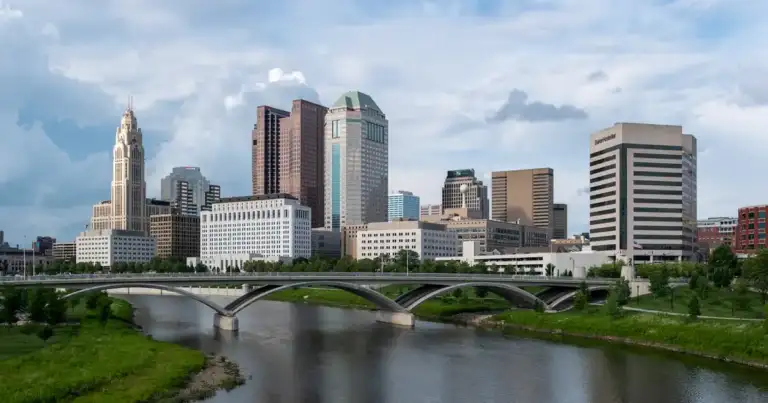
The “preparedness” facade simply deflects blame when the next storm hits. Prepare your basements, Ohio. Don’t expect Columbus to save you.
Photo: Photo by emdurso on Openverse (flickr) (https://www.flickr.com/photos/69641014@N00/2103271487)
Source: Google News