
The whir of an approaching e-bike, once a novelty, has become the soundtrack of urban anxiety in New York City. Our streets, always a brutal gauntlet, now feel like a full-contact sport where the rules are optional and the stakes are life and limb.
Nowhere is this chaotic reality more brutally evident than in our city’s emergency rooms. Bellevue Hospital, long a grim bellwether for urban trauma, is utterly swamped. A recent study, published in the Journal of Urban Health, confirms what anyone on these sidewalks already knows: e-bike injuries are surging by an alarming 70% over the past two years, and these aren’t just minor scrapes; they’re catastrophic.
The Human Cost of the Gig Economy
Forget scraped knees and twisted ankles. We are talking about devastating trauma: shattered bones, traumatic brain injuries, internal hemorrhages – the kind of life-altering damage that demands intensive care, complex surgeries, and lengthy, expensive rehabilitation.
This isn’t about a leisurely spin through Central Park gone awry. This is the brutal, unforgiving reality of the gig economy, playing out in blood and broken bones on our asphalt and concrete, while our already strained public hospitals are left to foot the astronomical bill.
The culprits, statistically speaking, aren’t joyriders. They are the tireless army of delivery riders, the backbone of our city’s convenience culture, who brave all weather to keep us fed and functioning.
They operate under immense, often inhumane pressure, constantly racing against unforgiving app algorithms and the ticking clock. Their e-bikes, often pushed to their mechanical limits and sometimes illegally modified for breakneck speeds, become their only chance at making a living. For them, safety isn’t a priority; it’s a luxury they can’t afford.
When your next meal, your rent, your family’s well-being hinges on that next drop-off, you weave through gridlock, you jump curbs, you bend – or break – traffic laws. This isn’t born of malice; it’s a desperate necessity, dictated by a predatory system that demands relentless, often reckless, efficiency.
A City Playing Catch-Up – Or Just Falling Behind?
Our city’s infrastructure, charmingly antiquated in some respects, is utterly unprepared for this micro-mobility revolution. It’s a system designed for horse-drawn carriages, then cars, certainly not for silent, 30 mph projectiles.
Bike lanes are a joke: a disconnected patchwork, often abruptly ending, frequently shared with bewildered pedestrians, or, infuriatingly, used as convenient parking for delivery trucks and private cars. And enforcement? It’s not just inconsistent; it’s practically non-existent.
Our elected officials love to preen about “green initiatives” and “sustainable transportation,” but the practical reality on the ground is a dangerous, chaotic free-for-all. Pedestrians, drivers, and riders are all perpetually on edge, forced to contend with a landscape where silent, fast-moving hazards can appear from anywhere, at any moment.
Every time this issue flares up, the conversation inevitably circles back to the convenient, toothless mantra of “shared responsibility.” Let’s be unequivocally blunt: this isn’t about shared responsibility.
This is about a city government that has been criminally slow to adapt, and predatory tech companies that have built empires on the backs of exploited labor, bearing virtually none of the direct costs of the inevitable collisions and catastrophic injuries. They rake in billions from the speed and convenience; we, the public, absorb the crushing risks, the medical expenses, and the collective trauma.
Let’s strip away the pleasantries and the PR spin. This isn’t some noble, evolving pursuit of sustainable transportation.
This is the stark, brutal outcome of unchecked corporate demand for cheap, rapid labor colliding head-on with criminally inadequate urban planning and utterly feckless enforcement. The “spike” in e-bike injuries at Bellevue isn’t some unforeseen anomaly; it’s a tragically predictable consequence of a system designed to prioritize profit over people.
The real motive? Billions for food delivery apps, and a city government that talks a good, green game about pedestrian safety but has consistently, shamefully, failed to provide the fundamental infrastructure and consistent enforcement needed to make its streets truly safe for everyone.
The people paying the ultimate, agonizing price are the riders themselves, the innocent pedestrians caught in the crossfire, and our overburdened hospital staff and taxpayers. When will we demand more than just platitudes? When will we make our streets safe again?
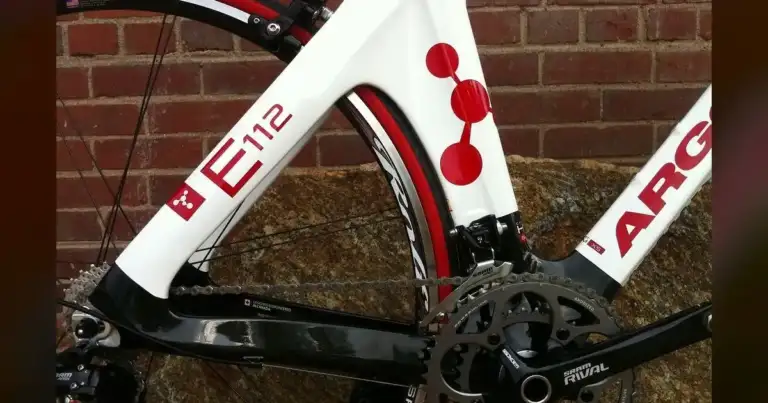
Photo: Photo by Glory Cycles on Openverse (flickr) (https://www.flickr.com/photos/29558127@N06/6059814519)
Source: Google News