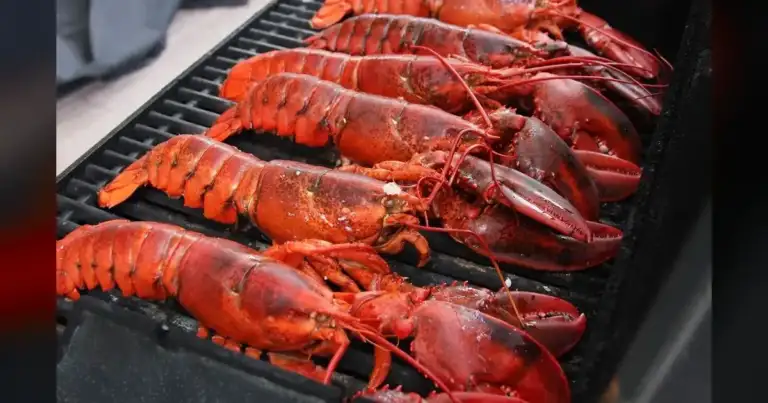

Maine isn’t just a state; it’s a way of life, irrevocably tied to the salty tang of the sea and the iconic red shell of its most famous resident: the lobster. These aren’t just seafood; they are the pulsing heart of our coastal economies, a cultural touchstone, and a multi-billion-dollar industry that defines us.
So when you hear about studies examining lobster predators, don’t dismiss it as mere “academic curiosity.” Understand it for what it truly is: an existential threat.
While the University of Maine’s October 2023 announcement of a study into exactly what’s eating our lobsters in these rapidly shifting waters certainly made headlines, let’s cut through the polite academic language. This isn’t a new discovery; it’s a scientific confirmation of a slow-motion crisis our lobstermen have been battling for years, largely out of the spotlight of polite society and the mainstream media’s often-too-gentle narratives. This isn’t a one-off issue that a single study will neatly package and resolve; it’s a battle on multiple fronts, and the stakes couldn’t be higher.
The Gulf of Maine’s Seismic Shift
This isn’t just a slight temperature increase; it’s a seismic shift. The Gulf of Maine is warming faster than 99% of the world’s oceans. That’s not speculation; it’s a terrifying reality.
With warming waters come new, aggressive dynamics. Predators like green crabs, cod, and other bottom dwellers aren’t just adapting; they’re migrating, multiplying, and yes, feasting with alarming efficiency.
A UMaine study to identify these specific threats is a necessary piece of the puzzle, sure. But it’s also a stark, undeniable reminder that the stable ecosystem our lobstermen have relied on for generations is fundamentally changing beneath their boats, threatening to capsize an entire way of life.
Every data point, every observation of a new predator or a shifting population, chips away at the certainty of an industry already under immense pressure. We’re talking about livelihoods, about family businesses passed down for centuries, all facing an onslaught from forces both natural and regulatory. The real story isn’t just what is eating the lobster, but what happens next when the foundational elements of an entire industry are eroding and the very definition of “Maine” hangs in the balance.
Beyond the Laboratory Walls
While scientists meticulously count stomach contents and track migrations in sterile labs, the true experts – the men and women on the water – are living the brutal, real-time consequences. They’re seeing the changes firsthand, adapting their traps, their seasons, their very existence to an environment that’s increasingly unpredictable and hostile. These studies are crucial, no doubt, but they also serve as a stark, often clinical, confirmation of what the working fishermen already know in their bones: things are profoundly different, and the fight is getting harder, more desperate, with each passing season.
The broader implications stretch far beyond the traps. This isn’t just an ecological problem; it’s an economic earthquake waiting to happen.
Lobster isn’t just a product; it is Maine’s brand, a multi-billion-dollar industry that supports thousands of jobs. It drives tourism, exports, and restaurant menus across the globe.
Any significant threat to the lobster population ripples through every sector of our state’s economy, threatening to dismantle the very fabric of our prosperity. While we wait for the results of one study, the clock keeps ticking, loudly, on the larger, more complex challenges that demand immediate, decisive action.
Clara Dunlop’s Verdict
Here’s the rub: studies like the UMaine predator examination, while scientifically valid, often serve as a carefully managed narrative. They allow officials and academics to say, “We’re doing something,” while the clock ticks on. But the hard truth is that while we’re cataloging crabs, the real money and power players are grappling with the bigger picture: how to manage an industry in decline, how to shift resources, and who will bear the brunt of the inevitable changes. The predator study is a necessary diagnostic, but it doesn’t solve the underlying disease of an ecosystem in flux and an industry fighting for its life. The real “predator” isn’t always something with claws; sometimes, it’s the relentless march of environmental change combined with political inertia and the slow erosion of a cherished way of life.
The time for polite studies and incremental responses is over. Maine’s lobster industry, and the very soul of our coast, demands bolder action, a unified front against the true predators: apathy, inaction, and a changing world we can no longer afford to ignore. Our future, quite literally, hangs in the balance.
Photo: Photo by Dana Moos on Openverse (flickr) (https://www.flickr.com/photos/32870650@N08/5918161762)
Source: Google News