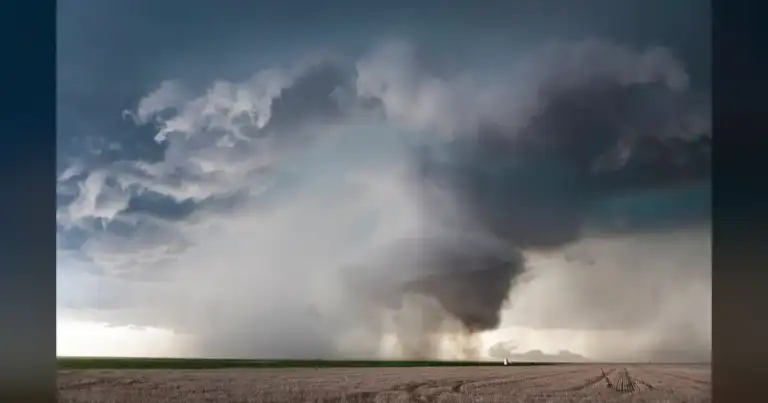

The sirens screamed on April 12, 2026, as a tornado touched down near Paola. Warnings blared across the Kansas City metro, yet the overwhelming response wasn’t panic; it was a chilling apathy. This isn’t a success story about preparedness. Instead, it’s a damning indictment of a populace worn down and desensitized to constant threats.
The National Weather Service issued an EF-0 rating for the brief touchdown in rural Miami County. Preliminary damage estimates hover in the low tens of thousands of dollars. This paltry sum is what officials dare to tout as a victory, actively dismissing the deeper rot.
Apathy in the Eye of the Storm
The storm system, a familiar menace, moved eastward, triggering severe thunderstorm warnings. Johnson and Wyandotte counties in Kansas felt the winds, while Jackson County in Missouri saw heavy rain. Olathe, Overland Park, and Kansas City, Kansas, braced for impact, yet the public barely blinked — a collective shrug in the face of danger.
Mark Johnson, Miami County Emergency Management Director, was quick to self-congratulate, practically patting himself on the back.
“Our systems worked as intended. The NWS provided excellent lead time, and our local spotters were invaluable. This highlights why every Kansan needs a severe weather plan.”
NWS Meteorologist Dr. Emily Chen, seemingly oblivious to the underlying issue, echoed the sentiment.
“While an EF-0 is on the lower end, any tornado carries a risk. The broad warnings across the KC metro were necessary given the atmospheric conditions and the potential for rotating storms to develop rapidly.”
Paola resident Sarah Jenkins expressed relief.
“We heard the sirens, grabbed the kids, and went to the basement. It was over quickly, but you never stop being scared when you hear that sound. We’re just thankful it wasn’t worse.”
Thankful it wasn’t worse? This is the pathetic bar we’ve set for ourselves. A population grateful to escape another close call, rather than demanding real, systemic solutions. This passive acceptance of perpetual threat isn’t just a concern; it is the true scandal unfolding before our eyes.
The NWS delivered 15-20 minutes of lead time before the confirmed touchdown. Evergy reported fewer than 100 scattered power outages, all restored within hours. These are the cold, hard facts, meticulously presented as proof of an effective system.
But what about the human cost? What about the unseen, insidious damage to our collective psyche?
The Cost of Constant Crisis: Beyond Damages
The “minor” damage estimates are a smokescreen. They mask the psychological toll on residents. How many times can sirens wail before they become background noise, or vigilance turns into fatalism?
Meanwhile, insurance companies are already eyeing future policy considerations. This “minor” event, a mere blip on their radar, adds to an ongoing risk assessment. Premiums will inevitably rise, and the financial burden will fall squarely on the very Kansans who are told to simply “be prepared” – as if preparedness alone can solve a systemic crisis.
This isn’t just about downed trees or outbuildings; it’s about disrupted lives. It’s about children terrified in basements.
It’s about a constant, underlying hum of anxiety that never truly fades. Who quantifies that? Who holds power accountable for that?
The Kansas Department of Transportation (KDOT) reported no significant road closures. This is not a sign of our resilience; it’s a damning indictment of a system that only measures the obvious, the tangible, the easily quantifiable. Meanwhile, our mental and emotional infrastructure is crumbling under the weight of this constant threat.
Who Benefits from “Business as Usual”?
Emergency services and meteorologists pat themselves on the back, content in their “effective warning systems.” This is not leadership; it is merely managing a crisis, not preventing it. They celebrate the absence of catastrophe, not the presence of genuine peace of mind for our communities.
The “new normal” of relentless storm seasons is simply not acceptable. Climate change is undeniably influencing these events, yet our officials offer nothing but tired platitudes about “preparedness.” They offer no strategic vision, no bold plan for a rapidly changing climate, only the same old rhetoric.
Where is the investment in resilient infrastructure? Where are the long-term plans to mitigate these escalating “events”? Why are we simply reacting, rather than truly adapting?
The answers are missing. The people of Kansas deserve them.
This “Paola tornado” is a stark reminder. It shows that even a weak storm can expose deep-seated issues and a public that has learned to live with constant danger. This is not a badge of honor; it is a sign of systemic failure.
Kansans are not numb because they are resilient; they are numb because they are exhausted. They are tired of constant warnings and hollow reassurances. It’s time to demand more than just “effective systems” and instead, demand real change.
The current approach is not just unsustainable; it’s a dereliction of duty. We need leaders who will finally address the root causes of this crisis, not just manage the symptoms.
We need a comprehensive plan for the future, not just a celebratory pat on the back for surviving the present. Until then, the silence of a desensitized public will be the loudest, most damning warning of all.
Photo: Photo by Kelly DeLay on Openverse (flickr) (https://www.flickr.com/photos/56894807@N00/16584672313)
Source: Google News