
West Jefferson Amazon Facility Evacuated Due to Fire: What Corporate Complacency and Local Vulnerability Reveal
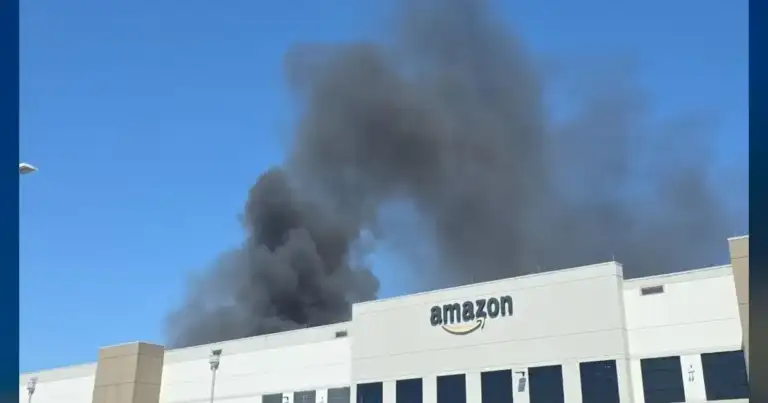
Two days ago, a fire broke out at Amazon’s fulfillment center in West Jefferson, Ohio, forcing the evacuation of all 1,200 employees. The blaze was contained within hours, and no serious injuries were reported. But this incident exposes dangerous corporate safety lapses and the precarious economic reliance of a small town on a single employer.
Fire at Amazon Facility: Safety Failures, Not an Accident
The suspected cause—a possible electrical malfunction or overheating equipment—is not just bad luck. It points to systemic neglect. Amazon’s West Jefferson warehouse reflects a nationwide pattern where safety protocols are often sacrificed for productivity. Behind Amazon’s polished image lies a warehouse culture that routinely risks worker safety.

“Our top priority is the safety of our employees and the community,” an Amazon spokesperson said.
That claim rings hollow. Amazon has faced repeated criticism for punishing work quotas, inadequate emergency procedures, and spotty maintenance. How many more “preliminary reports” will come before Amazon invests in real safety audits and equipment upgrades?
West Jefferson: Economic Lifeline or Time Bomb?
Amazon’s facility is the economic backbone of West Jefferson. With 1,200 employees in a town of 5,300, the warehouse’s operations directly affect the community. When it shuts down—even briefly—the impact is immediate:
- Workers face uncertainty over pay and job security.
- Local supply chains and logistics stall.
- Small businesses dependent on Amazon feel the financial strain.
West Jefferson’s mayor said, “We are grateful no one was seriously hurt. We will work with Amazon and emergency services to ensure safety and economic stability.”
But words aren’t enough. What emergency plans exist beyond platitudes? How long will West Jefferson risk its future on a single corporate giant whose priorities lie elsewhere?
Fire Department Response: Skilled but Overmatched
The West Jefferson Fire Department responded swiftly—arriving in under 10 minutes and containing the fire. Yet, fighting fires in sprawling, automated warehouses is a daunting challenge. Complex layouts, flammable materials, and machinery create hazards that state regulators have yet to address effectively.
Is Ohio’s industrial fire code strong enough? So far, no. Amazon’s history of fire incidents tied to electrical or mechanical faults demands stricter oversight—not just corporate reassurances and cursory inspections.
Public Reaction: Complacency or Quiet Desperation?
The local and online response has been muted. No viral outrage. No protests. Just quiet acceptance. Why? Because in 2026, a fire in an Ohio warehouse is just another day—no fatalities, no toxic disaster, no headline-grabbing drama.
But that is the real danger. When safety failures become routine and invisible, the public loses the power to demand change. Industrial fires should not be shrugged off—they should spark accountability.
What Comes Next for West Jefferson?
The Amazon facility remains closed as investigations continue. No timeline for reopening or concrete employee support plans have been announced. The critical question: Will this incident lead to meaningful reform, or will it fade away like so many before it?
Ohioans must stop accepting corporate lip service and demand transparency, accountability, and safer working conditions. Otherwise, the next fire could be a catastrophe waiting to happen.
West Jefferson’s fire is not just an accident—it’s a warning. The question is: will anyone heed it?
Source: Google News