
Alaska’s Lifeline: Why Rural Stations Must Survive
In Alaska, connection isn’t a luxury; it’s the bedrock of our existence. For hundreds of thousands of Alaskans, especially those in rural and Bush communities, the ability to connect is the difference between thriving and merely surviving. When we talk about “stations connecting communities,” we’re not just whispering about buildings; we’re shouting about the vital infrastructure—be it airports, ferry terminals, or digital hubs—that bridges the immense distances separating our towns and villages. Right now, a crucial piece of this Alaskan network is fighting for its life, and its struggle lays bare a deeper, statewide vulnerability that we simply cannot ignore.
The Invisible Threads We Can’t Afford to Lose
Imagine a community where the nearest road ends hundreds of miles away, where winter storms can sever all but air travel, and where a medical emergency demands a flight in whiteout conditions. This is the harsh reality for countless Alaskans. For these communities, local air strips aren’t just patches of asphalt; they are the literal gateways for everything—food, essential supplies, mail, and life-saving medical evacuations. Without them, these villages are cut off.

The Alaska Marine Highway System, with its intricate network of ferry terminals, forms a maritime highway essential for coastal residents and the commerce that keeps them afloat. These are the “stations” that knit Alaska together, often across hundreds of miles of unforgiving terrain and treacherous waters. To underestimate their importance is to misunderstand Alaska itself.
The 21st century has introduced another indispensable station: the broadband hub. Reliable internet access is no longer a mere convenience; it’s a fundamental requirement. We’re talking education, telemedicine, economic development, and the ability to maintain family ties across our vast distances. Federal and state initiatives, often fueled by Bipartisan Infrastructure Law funding, are pouring resources into expanding fiber optics and improving satellite access. They recognize that digital connectivity is every bit as crucial as any runway or ferry dock. To neglect it is to condemn entire communities to an outdated existence.
This Isn’t Just a Fight for a Station; It’s a Fight for Alaska’s Future
When any specific “station” faces an existential threat, the fallout isn’t contained; it ripples outward. Whether it’s an airport scrambling for funding for essential upgrades, a ferry terminal facing devastating service cuts, or a local radio station battling to keep its signal alive, the impact is devastatingly similar. Reduced capacity means delayed supplies, harder access to critical healthcare, fewer economic opportunities, and, worst of all, increased isolation.
The story of a station “fighting to survive” isn’t some abstract concept; it’s the story of Alaskans fighting to maintain their connection to the wider world, and crucially, to each other. Our state’s commitment to these critical nodes of connectivity must be unwavering. Investment in infrastructure—both physical and digital—is not merely an expenditure; it’s a non-negotiable investment in the resilience, health, and future prosperity of Alaska’s diverse communities.
We simply cannot afford to let these lifelines fray, let alone snap. The survival of these stations isn’t just about local economies; it is about upholding the very fabric of life in rural Alaska. It’s about ensuring that every Alaskan, no matter where they live, has a fighting chance. What kind of Alaska do we want to build if not one where every community is connected and thriving?
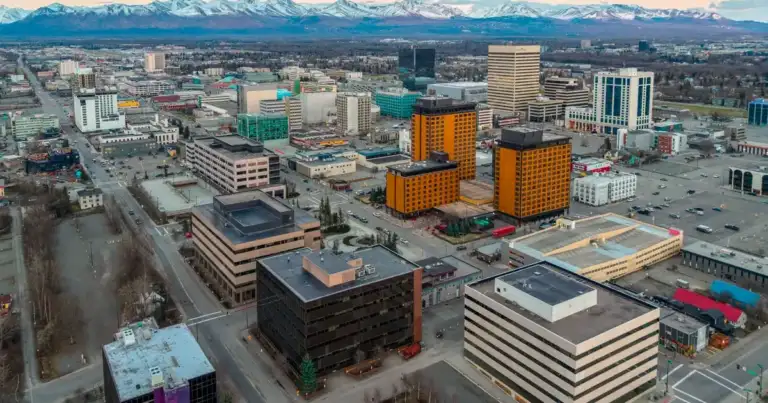
Photo: Photo by Jasperdo on Openverse (flickr) (https://www.flickr.com/photos/66733752@N00/50524927062)
Source: Google News