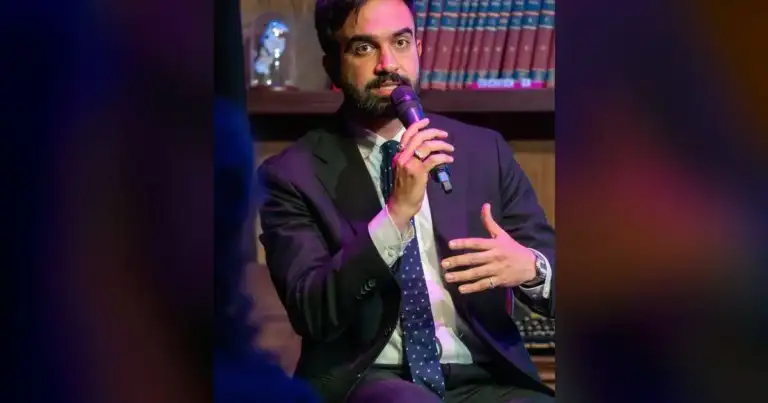

New York City’s food deserts are a crisis, leaving millions of our neighbors without easy access to healthy, affordable groceries. This demands real solutions, not political stunts. Yet, Assemblyman Zohran Mamdani is back, once again pushing his pet project: taxpayer-funded, state-owned grocery stores.
His A.4999 legislation, a blueprint for this costly fantasy, has resurfaced in budget talks. The chorus of critics rightly calling it a “wasteful distraction” is growing into a roar.

The State’s Grocery Store Fantasy
Mamdani and his progressive allies pitch this as a bold stroke against corporate greed and a direct path to food equity. The vision they paint is certainly appealing: government-run supermarkets focused on community needs over profit, offering fresh produce and staples at accessible prices, perhaps even creating unionized jobs.
It sounds good on paper, a direct intervention to serve the 3 million New Yorkers struggling with limited food access and the 1 in 8 facing food insecurity. But let’s be honest, pretty visions don’t feed families; practical realities do.
But let’s pull back from the idealism and face the cold, hard numbers. Running a grocery store isn’t a social experiment; it’s a brutal business, operating on razor-thin margins of 1-3%.
Private enterprises, armed with decades of experience and cutthroat efficiency, routinely struggle to stay afloat. Does anyone genuinely believe New York State – notorious for its bureaucracy and cost overruns – can possibly do better? It’s not just naive; it’s delusional.
A Billions-Dollar Burden for New Yorkers
Experts, from seasoned economists to urban planning veterans, aren’t mincing words; they’re sounding the alarm. They see this for what it is: an epic misallocation of precious resources.
The capital investment alone – acquiring prime real estate, building out stores, stocking shelves, staffing dozens of locations – would run into the hundreds of millions, quite possibly billions, of your taxpayer dollars. This is before considering inevitable, staggering operational losses.
This isn’t just opening a few community pantries; it’s asking the state to jump headfirst into a hyper-competitive retail sector where it has zero expertise and even less chance of success. It’s like asking a DMV clerk to run a Michelin-star restaurant.
What’s the real cost here? It’s far more than just the direct financial drain; it’s market distortion that would inevitably crush existing small businesses and independent grocers.
Many of these grocers are already fighting tooth and nail to survive. There’s also the unforgivable opportunity cost: what could those billions actually accomplish if invested in proven, targeted solutions?
Imagine expanding SNAP/EBT benefits significantly, subsidizing healthy options at existing local stores, or bolstering community farmers’ markets. Robust incentives for private grocers to open in underserved areas are also an option. These aren’t glamorous solutions, but they are pragmatic, effective, and they work.
Don’t kid yourselves. This isn’t about solving food insecurity; it’s about political posturing and expanding government control into an industry it has no business being in.
Assemblyman Mamdani’s “public grocery” dream is a shiny object, a costly distraction designed to divert attention from the harder, less photogenic work of fixing systemic issues.
It’s a classic political maneuver: propose a grand, expensive gesture that sounds progressive, ignores economic realities, and ultimately saddles New York taxpayers with a massive bill for an inefficient, unproven experiment. The real motive here isn’t feeding the hungry; it’s feeding a particular political narrative, consequences be damned.
Source: Google News