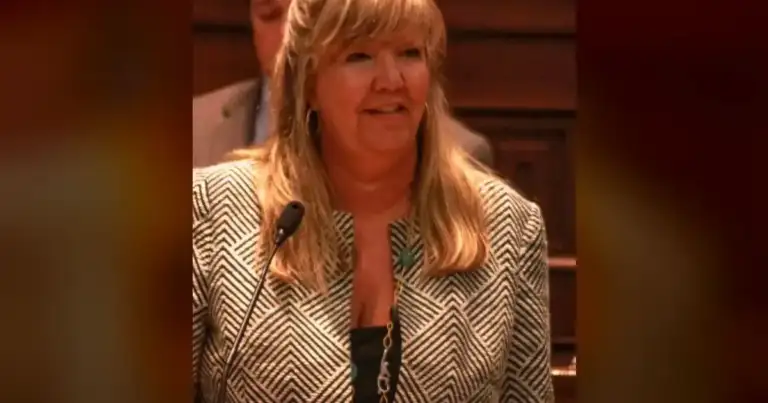

Governor Bill Lee’s reappointment of Dr. Sharon Griffin to the Tennessee State Board of Education isn’t just a nod to “continuity” or “proven dedication,” as his office would have you believe. Let’s be clear: while Dr. Griffin is an undeniable force in Memphis education, this move is a calculated political maneuver in a state still grappling with the fallout from the audacious 2022 redistricting, particularly the radically reshaped 9th Congressional District.
A Familiar Face in a New Political Landscape
Dr. Griffin, who’s been on the board since 2022, is undeniably qualified. Her background includes leadership roles in Memphis-Shelby County Schools (MSCS) and the Achievement School District. Supporters in Memphis and Shelby County are rightly breathing a sigh of relief, knowing a voice with a genuine understanding of their urban education challenges remains at the table. After all, MSCS serves over 100,000 students and faces a laundry list of issues, from absenteeism to literacy rates. Having someone who knows the territory is critical.

“I am deeply honored to continue serving the students, families, and educators of Tennessee on the State Board of Education, particularly those in the newly configured 9th Congressional District,” said Dr. Sharon Griffin. “My commitment remains unwavering: to advocate for policies that ensure every child, regardless of zip code, has access to a high-quality education that prepares them for success.”
But let’s not be naive. This isn’t some altruistic move from the Governor’s mansion. This reappointment arrives hot on the heels of the 9th District’s boundaries being drastically redrawn. The district, once almost exclusively Memphis, now stretches to encompass parts of Tipton County, introducing a distinctly rural demographic into the equation. Is this merely an administrative tweak? Absolutely not. It’s a fundamental, strategic reshaping of representation and influence.
The Governor’s Gambit
Governor Lee’s office can trumpet Dr. Griffin’s “unwavering dedication” all they want – and yes, she has it. But let’s zoom out for a moment. The 2022 redistricting wasn’t some benign administrative exercise; it was a ruthless statewide power play, meticulously carving up districts to solidify Republican dominance. The brazen splitting of Nashville’s traditionally Democratic 5th District was just one egregious example. While Memphis’s 9th District wasn’t bisected, its new boundaries were undeniably woven into that grander strategy. Make no mistake: appointments to state boards are inherently political, and this one screams it.
Lee isn’t just playing nice; he’s ensuring his administration’s core educational priorities – namely, school choice and a laser focus on fundamental literacy – have an unobstructed path forward. By keeping experienced, respected leaders like Dr. Griffin on crucial boards, he maintains a veneer of stability. Crucially, these leaders, while well-regarded locally, must also grasp the state’s broader political currents and the Governor’s overarching vision. This isn’t merely about addressing Memphis’s needs; it’s about cementing a unified front for the Governor’s agenda across a profoundly reconfigured state map.
“While Dr. Griffin is an exemplary educator, this reappointment under the new district lines serves as a stark reminder of how redistricting fundamentally reshapes political representation, even on non-partisan-leaning boards,” commented Dr. Brenda Smith, an education policy analyst based in Nashville. “It’s imperative that the board remains attuned to the unique needs of all communities within these new boundaries.”
The Red Marker Verdict
The mainstream narrative will focus on Dr. Griffin’s qualifications and the “continuity” she brings. Her experience is valuable, but the real story is Governor Lee playing 3D chess. He reappoints a highly qualified Black woman from Memphis, which appeases a critical urban base.
However, this reappointment occurs within a new district framework designed to dilute the purely Memphis-centric focus. The state board is tackling literacy standards and learning loss, issues that differ between urban Memphis and rural Tipton County. Dr. Griffin will now represent a more diverse set of priorities, potentially diffusing singular advocacy for Memphis.
This is not a mere PR stunt; it has real policy implications. It’s a strategic move to ensure stability for his administration’s vision while subtly managing the political fallout from a deliberately redrawn map. The “continuity” is a convenient cover for the ongoing re-alignment of power in Tennessee education.
While the Governor’s office touts “continuity,” this is a masterclass in political engineering. Dr. Griffin’s reappointment is a strategic move, designed to project inclusivity while reshaping educational advocacy in Tennessee.
The question for citizens isn’t just who sits on the board, but whose voices truly get amplified—and whose are subtly muted—under these new, politically charged lines. Pay attention, Tennessee, because the red marker has left its indelible mark, and its consequences are just beginning to unfold in our classrooms.
Photo: MICHAEL VADON 201-790-7758
Source: Google News