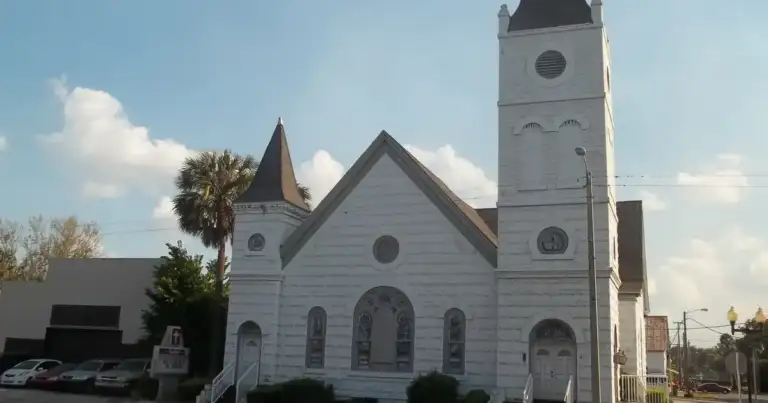

Wilmington woke up Sunday to a gaping hole in its skyline and a piece of its history reduced to ash. The devastating three-alarm blaze that ripped through Grace United Methodist Church on N. Washington Street wasn’t just another fire; it was an inferno that consumed 137 years of tangible history, leaving behind a smoking ruin and a city reeling. Let’s be clear: this isn’t just a story about a building; it’s about the cold, hard questions now facing Delaware’s largest city.
The Smoke Clears, The Questions Linger
Emergency crews arrived around 1:30 AM EST Sunday to find the Romanesque Revival landmark fully engulfed. Over 70 firefighters battled the blaze, but the age and construction of the 1889-built structure meant it was a losing fight. The roof caved, the interior gutted, and that iconic steeple, though still standing for now, is severely compromised.
No injuries, thankfully, but the building itself is a near-total loss. Forget the flowery eulogies for a moment; what’s left is a multi-million dollar problem, a void in the community’s fabric, and an investigation that’s just getting started.
Grace UMC wasn’t just a Sunday sermon spot. It was a lifeline for hundreds of families, a hub for food drives and outreach. Mayor Mike Purzycki called it a “heartbreaking loss,” and he’s not wrong. But beyond the grief, the reality is a significant disruption to vital services and a massive cleanup bill.
Arson: The Unspoken Elephant in the Rubble
Here’s where the rubber meets the road. While the congregation talks of resilience and rebuilding, the Wilmington Fire Marshal’s Office isn’t just sifting through embers for sentiment. They’re working hand-in-glove with the federal Bureau of Alcohol, Tobacco, Firearms and Explosives (ATF) on a meticulous forensic examination.
And they’ve been explicit: all potential causes, including arson, are on the table and have not been ruled out. When a historic structure of this magnitude goes up in flames in the dead of night, the community doesn’t just mourn; it whispers. Was it faulty wiring? A forgotten candle? Or something far more sinister?
The official line is that the investigation is thorough, but the mere mention of federal agencies and the word “arson” casts a long shadow over the incident. This isn’t some back alley shed; this is a landmark, and if foul play is involved, the implications for community safety and public trust are profound.
Wilmington Fire Chief Anthony Goode: “Fires in structures of this age and construction type are incredibly challenging. Our firefighters did an outstanding job containing the blaze and preventing further spread, but the damage is extensive. The investigation into the cause is our top priority.”
Red Marker
The immediate outpouring of grief from city officials and church members is predictable and understandable. “The church is the people,” they say, and that’s true in spirit. But the brutal reality is that a massive, historic asset just vanished in a flash, and the city is now staring down a multi-million dollar demolition and investigation tab.
While everyone’s busy talking about “resilience,” the critical question of *how* this happened, and *who* might be responsible if it wasn’t an accident, is being carefully managed. The true cost isn’t just spiritual; it’s financial, legal, and potentially criminal.
And until those questions are answered, all the talk of rebuilding is just that – talk. The delay in finding a definitive cause, especially if it points to arson, creates an uncomfortable vacuum that breeds speculation and real anxiety about what happens to other beloved, aging institutions in this city.
Source: Google News