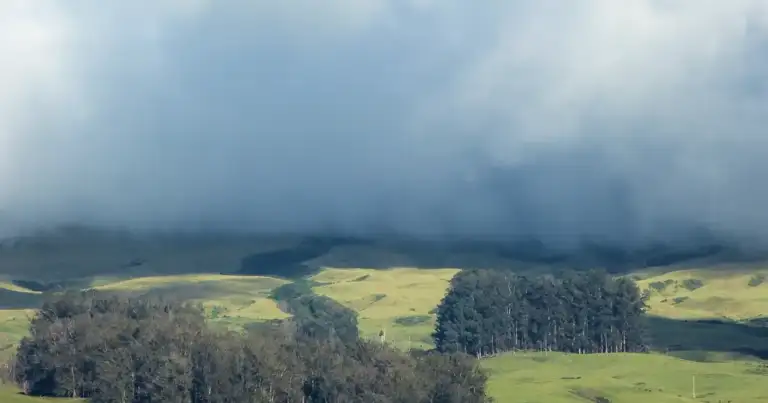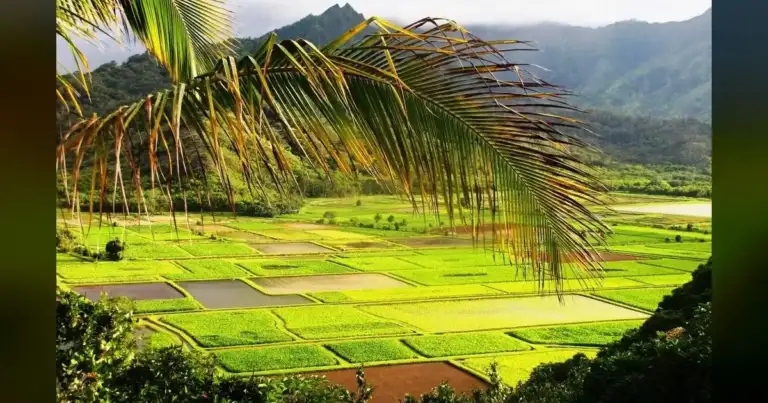

The mud is still drying, but the damage is already done. Hawaii just endured what officials are blandly labeling the “worst flooding in 20 years” – a slow-moving Kona Low system that unleashed over 12 inches of rain in 24 hours on Oahu, Maui, and the Big Island from May 14th to 17th. But don’t let those sanitized headlines mislead you; for the very heart of our local food supply, this isn’t just a setback. It’s a devastating gut punch, threatening to drown the fragile dream of food security for good.
Fields Washed Away, Futures Drowning
While many of us tracked flash flood warnings from the safety of our homes, our farmers stood by, helpless, as their entire livelihoods literally dissolved into a sea of mud.
“We’ve lost everything. Our entire season’s work is gone, just mud and water,”lamented Keoni Pua, a taro farmer from Windward Oahu, his voice heavy with despair. And Keoni’s story is tragically common.

The Hawaii Department of Agriculture (HDOA) confirms that over 150 farms, spanning hundreds of precious agricultural acres, suffered catastrophic damage. We’re talking crop losses that will undoubtedly soar into the tens of millions of dollars – a devastating blow no preliminary estimate can truly capture.
Let’s be clear: these aren’t corporate giants with bottomless reserves. These are our neighbors, small, family-owned operations, many already barely clinging on with razor-thin margins. Kalani Souza, a farmer from Waimanalo, articulated the raw truth:
“For many of us, farming isn’t just a business; it’s our heritage. To see it washed away like this is heartbreaking.”
This isn’t just about lost produce or a hit to the economy. It’s about generations of culture, tradition, and a sacred, direct link to the ‘āina being severed, time and again, by both the elements and our own collective neglect. How many more times can these families rebuild before they simply give up?
The Price You’ll Pay
So, what does this mean for you? Brace yourself. Head to your local farmers’ markets, and you’ll find shelves noticeably emptier, produce scarce. And your grocery bill? Local staples like lettuce and tomatoes have already seen a jarring 15-25% price hike.
This isn’t a temporary blip; it’s a chilling preview of what’s to come. Hawaii already imports a staggering 85-90% of its food. This latest catastrophe will only deepen that crippling reliance, inevitably pushing prices even higher for residents already suffocating under the nation’s highest cost of living. Can we truly afford to be this dependent?
Phyllis Shimabukuro, Chairperson of the HDOA, offered the familiar refrain:
“This event is a stark reminder of our vulnerability. We are working tirelessly to support our farmers and ensure the resilience of our food supply.”Let’s call these what they are: carefully crafted, lofty words. “Resilience” is a hollow promise when the fundamental infrastructure to protect our farms simply isn’t there.
We’ve witnessed this tragic cycle before: the devastating floods of 2006, the Kauai deluges in 2018. After each disaster, we hear the same assurances of improved flood mitigation and agricultural insurance. And each time, our dedicated farmers are left holding the empty bag – or, more accurately, staring at their empty, mud-choked fields.
The state will, without fail, trot out officials to utter the familiar buzzwords: “resilience,” “food security.” But let’s be blunt: these are just empty syllables until real, substantial money is invested – not just pledged – in protecting our local farms.
The inconvenient truth is, for too many politicians, it’s simply cheaper to pay lip service, issue press releases, and wait for federal disaster aid. This avoids funding robust, climate-resilient infrastructure that could actually prevent these recurring catastrophes.
So, who truly pays the price for this systemic inaction, this chronic neglect? You do, every time you push a shopping cart through a grocery store with dwindling local options and soaring prices. Our local farmers also pay, watching their generational livelihoods literally wash away.
Until we demand more, this tragic cycle will continue. The dream of a food-secure Hawaii will remain just that – a dream, slowly drowning in the mud.
Source: Google News