
They want you to drink it. The bureaucrats are at it again, pushing New Mexico toward a future where “toilet-to-tap” isn’t a dystopian warning, but state policy.
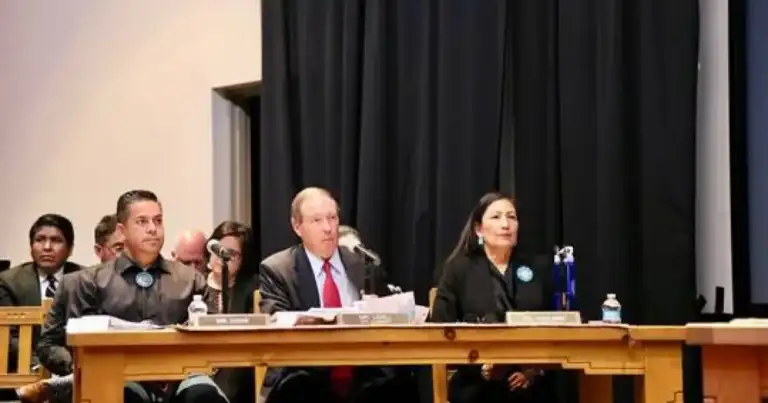
This isn’t some far-off sci-fi plot; it’s the “Direct Potable Reuse” (DPR) rule, back before the Water Quality Control Commission (WQCC). They just wrapped their latest hearings on May 10th and 11th, 2026, in Santa Fe.
Don’t fall for their spin about “innovation” or “water security.” This is about ignoring the people, dodging real solutions, and passing the buck straight to your kitchen tap.
This “toilet-to-tap” scheme is being aggressively peddled by the usual suspects. Rebecca Roose, Director of the New Mexico Environment Department’s Water Protection Division, insists it’s “resilient” and “incorporates the latest science.”
Mayor Tim Keller of Albuquerque echoes her, calling it “crucial.” They sound so confident, so reassuring.
But don’t be fooled. What they’re really pushing is a multi-million-dollar gamble with your health, your trust, and your wallet.
The Unseen Dangers and Unbearable Costs
Let’s strip away the jargon and talk about what these “advanced treatment technologies”—reverse osmosis and advanced oxidation—actually mean for your water.
Sure, they claim it’ll make water “equal or higher quality” than what we have now, a slick talking point designed to soothe your fears. But let’s be blunt: what about the insidious threats they can’t filter out?
We’re talking pharmaceuticals, pervasive microplastics, and the terrifying specter of “forever chemicals” like PFAS. These aren’t just scientific buzzwords; they’re silent, insidious contaminants that stubbornly persist in treated water, even in states boasting “cutting-edge” systems. Are we truly willing to gamble our health on a promise?
And who, precisely, pays for this grand, untested experiment? Estimates for a single medium-sized city facility range from a staggering $50 million to $200 million.
That’s just the initial investment. Then come the “significant ongoing operational costs”—a polite way of saying your monthly water bill is about to skyrocket.
This isn’t free. This colossal bill lands squarely on New Mexico taxpayers, disproportionately hitting low-income communities already struggling with rising costs.
The “economic benefits” they so eagerly tout will flow directly into the coffers of the utilities and the corporations building these plants, not to the average family just trying to keep their lights on and their bills paid.
“While we acknowledge the need for water solutions, this rule rushes into a technology with too many unanswered questions regarding long-term health impacts and the equitable distribution of costs. We urge the WQCC to prioritize a truly precautionary approach.”
Ignoring the People, Poisoning the Sacred
The public doesn’t want this, and their voices are being actively ignored. A damning 2023 University of New Mexico study revealed that a staggering 40% of New Mexicans are “uncomfortable” drinking treated wastewater.
That’s not just “public perception” to be managed by a PR firm; it’s a massive, legitimate distrust rooted in fear for their families’ health.
Indigenous communities, who rightly view water as sacred and a living entity, have voiced profound concerns about the spiritual and health implications. They’ve unequivocally called this scheme “colonial poison,” a “false greenwashing” effort designed to exploit resources while disregarding ancient wisdom and well-being. Their message is crystal clear: extreme caution isn’t just needed, it’s morally imperative.
But “caution”? That word seems entirely absent from the NMED’s vocabulary. They are relentlessly pushing forward, deaf to the clear public outcry against similar wastewater schemes across the nation.
Remember the backlash for trying to pawn off toxic oilfield “produced water” for other uses? The sentiment is identical, and just as dangerous: the state appears determined to force risky, expensive “solutions” down our throats, regardless of the devastating long-term consequences for our environment and our people.
If the WQCC, against all common sense and public will, rubber-stamps this by late 2026, don’t expect to be drinking reclaimed sewage overnight. Oh no, it’ll take years—a staggering 3 to 7 years—for any municipality to even get a facility running.
During that time, they’ll bombard us with soothing rhetoric about “rigorous permitting,” “multi-barrier treatment,” and “continuous monitoring.” They’ll promise “transparency,” “community engagement,” and all the right buzzwords.
But these are just words, a carefully constructed smokescreen designed to lull you into a false sense of security while they push through a plan that blatantly puts corporate profits and political expediency over the fundamental right to public health.
Red Marker Verdict: The Water Barons’ New Cash Cow
Let’s be unequivocally clear: this “Direct Potable Reuse” rule isn’t about genuinely solving New Mexico’s water crisis for its people.
It’s a cynical maneuver to create a new, incredibly lucrative market for powerful water treatment corporations and to hand municipal utilities a “drought-proof” excuse to relentlessly raise rates.
The mainstream narrative, spoon-fed by those who stand to profit, spins this as a necessary, high-tech answer to climate change. But the stark reality? It’s a desperate, costly gamble that shifts the entire burden of risk and astronomical expense onto everyday New Mexicans, particularly the most vulnerable, while shamefully sidestepping genuine conservation efforts and utterly disregarding the true, sacred value of water.
They are not saving our water; they are selling us a dangerous, diluted version of it, and we must refuse to drink their poison.
Source: Google News