

Mark my words: When Governor Brian Kemp put his pen to House Bill 873 on May 2, 2023, he didn’t just sign a bill; he detonated a political bomb under the very foundations of local democracy for millions of Georgians. For anyone living in Fulton, Gwinnett, and Cobb counties, this isn’t some abstract legislative maneuver. This is a direct assault on voter clarity, a calculated power grab aimed at who controls our communities and how they intend to keep those reins.
The “Nonpartisan” Façade
The bill’s official narrative is deceptively simple: county commissioners, commission chairs, and school board members in these populous metro Atlanta counties will now run in “nonpartisan” elections. Sounds like a noble pursuit of unity, doesn’t it? A move to strip away divisive party labels and focus purely on local issues?
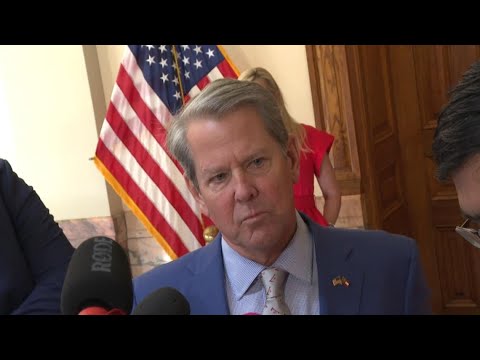
Don’t be fooled. That’s the shiny veneer they want you to see. The reality, as any seasoned political observer knows, is far less innocent and far more calculated.
For generations, these local races were partisan. Voters knew, at a glance, where a candidate generally stood, what platform they likely represented. Now? That critical clarity has been deliberately obliterated.
In its place, a thick political fog has descended, and in that fog, only the most well-funded, the best-connected, or the already-established incumbents will truly thrive. This isn’t just a political strategy; it’s a cynical playbook straight out of the Machiavellian handbook: complicate the process, obscure allegiances, and make it prohibitively difficult for the average voter to make an informed choice without extensive, time-consuming research into every single candidate.
Who Benefits When Labels Disappear?
Let’s be absolutely clear: this isn’t about ushering in some mythical era of bipartisan harmony or “kumbaya” governance. This is raw power consolidation, laid bare for anyone willing to see it.
Metro Atlanta’s undeniable demographic shifts have increasingly delivered victories to candidates from one side of the aisle in recent years. By deliberately stripping away party labels, the architects of HB 873 are gambling on a few key outcomes:
- Voter fatigue and confusion.
- A greater emphasis on name recognition, which disproportionately favors incumbents or those with significant financial backing.
- The ability for candidates to run on vague, feel-good platforms without being tied to a broader party agenda that might be unpopular in certain areas.
This isn’t a strategic move; it’s a tactical fortress, built to insulate certain positions from the undeniable political currents that have been reshaping the very landscape of Georgia’s most populous and rapidly growing regions. They aren’t making politics less partisan; they are simply making the partisanship harder to discern, especially for the everyday voter who doesn’t have time to research every single name on the ballot.
The “nonpartisan” label is a political sleight of hand, designed to confuse voters and tilt the playing field.
The Red Marker Verdict
Let’s cut through the manufactured noise and get to the core truth. This bill isn’t about fostering good governance or magically lifting local issues above partisan squabbles. It is, unequivocally, a calculated maneuver by the state’s dominant party to strategically dilute the electoral power of their opposition in Georgia’s most rapidly transforming urban and suburban centers.
By rebranding these crucial races as “nonpartisan,” they aren’t eliminating partisanship; they are simply making it a clandestine force, far harder for voters to identify, scrutinize, and ultimately challenge.
The carefully curated mainstream narrative will preach that this is about “focusing on local issues.” The stark, inconvenient truth is, it’s about making it exponentially harder for voters to hold elected officials accountable to a broader political platform, thereby dramatically increasing the odds for candidates who would undoubtedly falter under a clear party banner.
This isn’t just an attempt; it’s a desperate gambit to slow the unstoppable tide of political change by deliberately obscuring the markers on the ballot. And here’s my final word: Don’t you dare fall for it. Your local democracy depends on your vigilance.
Photo: Paulo Guereta
Source: Google News