
Haleakala’s Sacred Waters: Tainted by the Invisible Threat
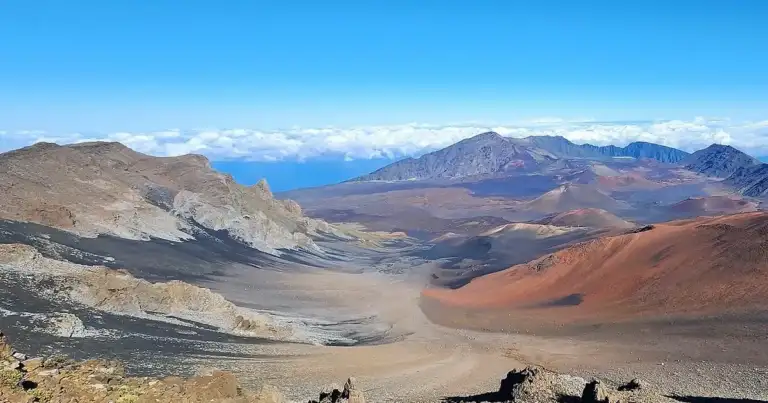
Haleakala, the sacred ‘House of the Sun,’ stands as a beacon of Hawaii’s pristine beauty and spiritual heart. But a betrayal runs deep beneath its surface. An invisible poison now taints its very waters, confirmed by recent tests.
Water samples collected from within Haleakala National Park and its surrounding watershed on Maui have tested positive for “forever chemicals” – per- and polyfluoroalkyl substances, or PFAS. This isn’t merely an environmental blip; it’s a direct hit to the heart of what makes Hawaii, Hawaii.

A collaborative research effort by the University of Hawaii and the local environmental non-profit, Malama Aina, confirms the insidious presence of several PFAS compounds, including PFOA and PFOS, at detectable levels. Some of these concentrations brazenly exceed the U.S. EPA’s proposed maximum contaminant levels of 4 parts per trillion (ppt).
These are man-made chemicals linked to cancers, immune suppression, and developmental issues. They are found not in some industrial wasteland, but in Haleakala, a place considered one of the most pristine on Earth, for crying out loud.
The Official Shuffle and Public Outcry
The Hawaii Department of Health (DOH) was predictably quick to issue a statement acknowledging the report. They emphasized their ongoing process of “reviewing data” and “coordinating with agencies.”
The DOH was equally swift to reassure the public that “existing public drinking water systems are regularly monitored,” and no “immediate widespread public health advisory” has been issued. Translation, straight from the bureaucratic playbook: Don’t panic, we’re looking into it, and your tap water might be fine for now.
But what about the springs, the streams, the very essence of the land that feeds our culture and sustains our ecosystem? Are we to simply trust that the DOH’s glacial pace will protect what’s truly sacred?
Environmental advocacy groups like the Sierra Club of Hawaii and the Surfrider Foundation aren’t falling for the DOH’s cautious approach. They are rightly demanding immediate, comprehensive statewide testing and real, decisive action to identify and stop these sources.
Local community leaders on Maui are not just alarmed; they are heartbroken. They voice profound concerns about the long-term health implications, the viability of traditional practices, and the devastating symbolic loss of purity.
When a place as revered as Haleakala falls victim, it signals a deeper, more pervasive problem across all our islands. This crisis demands more than just “reviewing data.”
The Red Marker: The Price of Ignorance
Let’s cut through the bureaucratic fog. The DOH’s measured response, the “we’re reviewing the data” line, is a classic deflection, a tactic to buy time. This isn’t just about ‘monitoring’; it’s about acknowledging a pervasive crisis that agencies have been slow-walking for years. We’ve seen PFAS near military bases, but in Haleakala? That points to atmospheric deposition, widespread runoff, or even forgotten firefighting foam incidents in an area that should be untouched, pristine. The real motive behind the cautious language? The astronomical cost of true remediation. Identifying and cleaning up PFAS contamination isn’t cheap; it’s billions of dollars nationwide. By downplaying the “immediate widespread public health advisory,” they’re hoping the public’s outrage doesn’t translate into an unbearable financial burden on the state. They’re hoping you’ll forget this happened in Hawaii’s most sacred backyard. Don’t let them.
This isn’t just about water samples; it’s about the soul of Hawaii. The fight for Haleakala’s purity is a fight for all our islands.
It is a demand for accountability and a solemn promise that we will not stand idly by while our sacred spaces are systematically poisoned. What will it truly take for our leaders to act with the urgency this crisis demands?
More importantly, what will it take for us to demand nothing less?
Source: Google News