

Nevada’s Quake Country: Tonopah Jolt Exposes a Deeper Tremor of Neglect
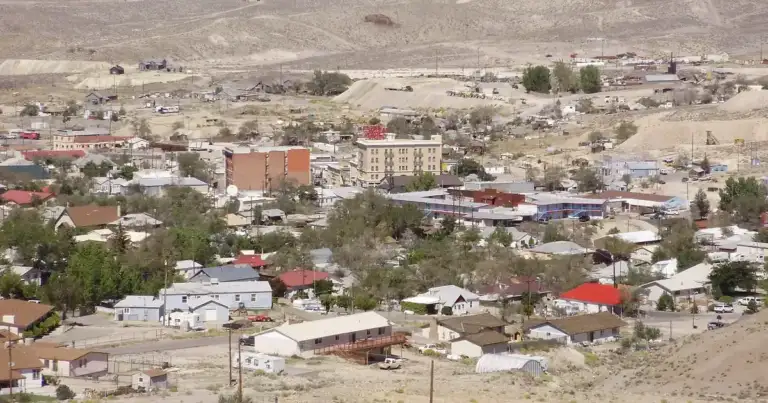
Another tremor, another official shrug. On May 8th, 2026, just after 7:15 AM PST, a Magnitude 4.5 earthquake tore through the Tonopah region, roughly 30 miles southeast of the town. Shaking from a shallow 5-kilometer depth, it was enough to wake the dead and send a jolt through Nye and Esmeralda counties. Local news outlets, including KLAS 8 News Now, rightly highlighted the event—it certainly got people’s attention. Yet, the predictable official line quickly followed: “no significant damage, no injuries.” Don’t be fooled. While the state may want us to simply dust ourselves off, the truth is far more unsettling.The Ground Beneath Our Feet: A Constant Reminder
For residents like Sarah Jenkins in Tonopah, it was a familiar jolt. “It was enough to wake me up and rattle some things off the shelves,” she told a local reporter. David Thompson echoed that sentiment, “It was a quick, sharp jolt, but nothing fell over. We’re used to it out here, but it always makes you pause.” And they absolutely should. Nevada isn’t just a casino state; it’s a seismic hotbed, ranking third nationally for earthquake activity, behind only Alaska and California. We live on a knife’s edge, whether Carson City wants to admit it or not. Dr. Maria Rodriguez, a seismologist at the Nevada Seismological Laboratory, dutifully delivered the standard line: a 4.5 is moderate, not unusual, merely a reminder. “Nevada experiences hundreds of earthquakes annually, most of which are too small to be felt. This one was just strong enough to get everyone’s attention.” Emergency services in Nye County activated their protocols, confirmed no public safety threats, and then, predictably, told everyone to review their earthquake preparedness plans. It’s the standard playbook, trotted out every time the ground decides to grumble.Is Nevada Shaking More? The Reality Behind the Rumbles
We get the question constantly: “Is Nevada experiencing more earthquakes lately, or is this just normal?” Here’s the blunt truth: Nevada is always shaking. The Tonopah area sits squarely in the Walker Lane structural zone, a geological pressure cooker that’s been active for millennia. We’ve seen the big ones: a terrifying 7.2 in 1932 near Cedar Mountain, a devastating sequence of M7.1 and M6.8 in 1954, and the more recent M6.5 in the Monte Cristo Range in 2020. This 4.5 is just another tick on a very long, very active timeline—a stark reminder of the immense forces at play beneath our feet. While seismic monitoring technology is better than ever, detecting even the smallest tremors, there’s no definitive trend indicating a significant increase in major earthquake frequency. What we’re seeing is consistent, relentless activity in a state built on fault lines. It’s not about if the next big one hits, but when.“Nevada is an earthquake country. Events like this 4.5 are a normal part of our geological landscape. It’s an excellent opportunity for residents to check their emergency kits and family plans.” — Dr. Maria Rodriguez, Seismologist, Nevada Seismological Laboratory.
Beyond the Official Line: The Real Cost of Complacency
Here’s the truth nobody in power wants to talk about: when a 4.5 hits a sparsely populated area like Tonopah and there’s “no significant damage,” the takeaway isn’t that our infrastructure is robust. It’s that there’s simply less to break. The state’s official response—”review your plans”—is a cheap dodge, a bureaucratic shrug designed to deflect responsibility. It pushes the burden of preparedness squarely onto individual citizens while doing little to address the systemic vulnerabilities in rural Nevada. Where are the substantial investments in resilient infrastructure, advanced early warning systems, or even dedicated emergency resources that mirror what’s allocated to the state’s urban centers? The answer is deafening: there aren’t any. The real motive here is to maintain a facade of control and competence, issuing empty platitudes without committing the serious capital required to genuinely brace for the next major event. It’s not preparedness; it’s passing the buck, plain and simple.Photo: Dinesh Kumar
Source: Google News