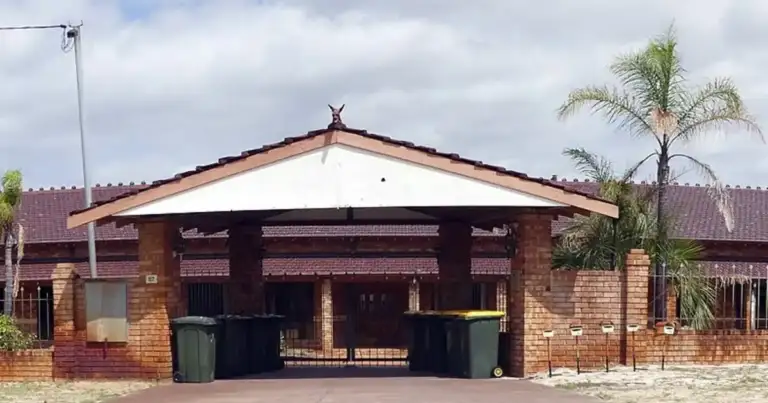

Forest Avenue, Portland – another address, another death, another layer of official platitudes attempting to obscure a grim reality. Portland police are currently picking through the wreckage of a life lost at a Shalom House group home, an incident that, for anyone truly paying attention, isn’t an isolated tragedy. It’s a blaring alarm, flashing red, on Maine’s broken commitment to its most vulnerable citizens.
The call came in early on May 3, 2026, at approximately 8:15 AM. Officers arrived at the residential facility to find a deceased individual.

Lt. Jessica Hayes of the Portland Police Department has confirmed an active investigation, delivering the predictable line about awaiting autopsy results from the State Medical Examiner’s Office. “No immediate signs of foul play,” they declared.
The identity of the deceased remains under wraps, pending family notification. The usual bureaucratic dance, start to finish.
Shalom House: A Legacy Under Scrutiny
Shalom House is no fly-by-night operation. Established in 1972, it has long been touted as a pillar in Maine’s mental health services, a long-standing provider of residential care and support for adults with severe mental illness.
Executive Director Mary Anne LaMarre issued the predictable boilerplate: “We are deeply saddened by this loss and our thoughts are with the individual’s family and loved ones. We are fully cooperating with the Portland Police Department in their investigation to understand the circumstances.”
“We are deeply saddened by this loss and our thoughts are with the individual’s family and loved ones. We are fully cooperating with the Portland Police Department in their investigation to understand the circumstances.” – Mary Anne LaMarre, Executive Director, Shalom House
And so, the grim ritual unfolds: a death, an investigation, a statement of sadness and cooperation. But for those of us who actually live here, who bear witness to the gaping holes in the system, the cracks are not just glaring – they’re rupturing.
Maine’s Department of Health and Human Services (DHHS) oversees around 150 licensed residential care facilities for adults with mental health conditions. These facilities are responsible for hundreds, if not thousands, of Maine’s most vulnerable citizens.
Too many of them rely on perpetually understaffed rosters and shoestring budgets, stretched thinner than a politician’s promise.
The Cracks in the Compassion Facade
This isn’t just about Shalom House, not really. This is about the entire, often failing, mental health care system in Maine.
When a death occurs in a facility explicitly designed to protect and support, it is criminal to simply investigate the immediate circumstances and move on. It demands an unflinching, brutal look at the broader picture: the chronic underfunding, the critical staffing shortages, the toothless oversight, and the utter lack of political will to truly invest in preventive, quality care rather than the endless cycle of reactive damage control.
How robust are these DHHS inspections, *really*? Are they anything more than perfunctory checklists, or do they genuinely assess the grinding daily pressures and systemic failures that so often lead to such tragedies?
The truth is, many of these facilities are financially starved operations, constantly battling to recruit and retain any qualified staff they can find.
When resources are stretched to their absolute limit, corners don’t just get cut; they’re gouged out. This isn’t out of malice, but from the desperate struggle to simply keep the doors open and the lights on.
RED MARKER VERDICT
Let’s be blunt: this incident, “tragic” as official statements will inevitably label it, is a symptom, not a cause.
The mainstream narrative will dutifully focus on the police investigation, the individual, and Shalom House’s cooperation. They will, predictably, miss the point entirely.
The real story here is the consistent, systemic underinvestment – no, *neglect* – in mental health infrastructure across Maine. We talk a good game about caring for our vulnerable, but our budget allocations tell a damningly different story.
It is demonstrably cheaper for politicians to offer hollow condolences after an incident than to properly fund the facilities and robust oversight that could prevent them.
This death, regardless of the autopsy’s clinical findings, shines a harsh, undeniable light on the hypocrisy of public sentiment versus actual financial commitment.
We haven’t just built a system; we’ve allowed a broken, reactive machine to fester, designed to respond to crisis rather than prevent it. The most vulnerable among us, time and again, pay the ultimate price.
How many more alarms must blare before Maine truly listens?
Photo: Wikimedia Commons (query: Shalom House)
Source: Google News