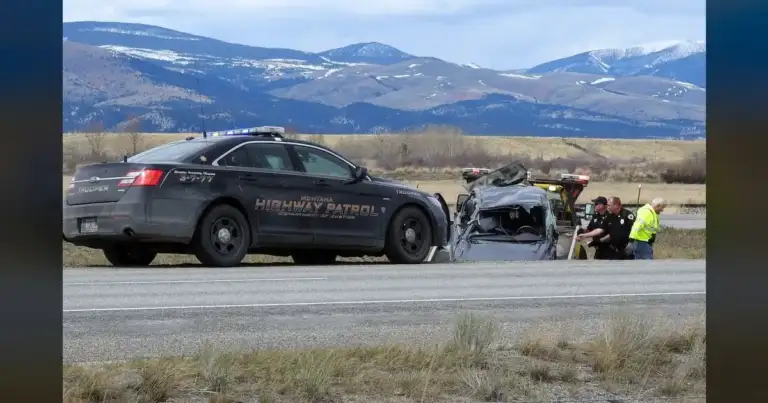

The Montana Highway Patrol just issued a chilling public advisory, a stark reminder that our beloved wide-open spaces, those endless horizons we cherish, can also harbor a terrifying vulnerability. This isn’t just about enjoying the solitude; it’s about surviving its shadows.
Just yesterday, April 30, 2026, the MHP dropped a bombshell warning for every driver traversing our remote roads: a clear, actionable guide on what to do if you suspect you’re being followed. This isn’t a theoretical exercise; it’s a critical safety bulletin. Captain John Davies of the MHP didn’t mince words, stating plainly, “While these incidents are not widespread, we want to empower drivers with knowledge to protect themselves.”

When the Rearview Mirror Tells a Story
The advice from the MHP is stark, practical, and frankly, something every Montanan needs to engrave in their mind. If you feel that gut-wrenching suspicion:
- Do not drive directly home. Your house is your sanctuary; don’t lead trouble there.
- Seek a public, well-lit place. Think police station, fire station, a busy gas station, or any 24-hour establishment. Safety in numbers and light.
- Call 911 immediately. Give your location, direction, and a detailed description of the suspect vehicle and occupants.
- Avoid engagement. No honking, no yelling, no staring contests. Your goal is to get to safety, not escalate.
- Gather information safely. If you can, note the license plate, make, model, and any distinguishing features.
Is This a Real Threat, Or Just a Warning Shot?
Is this just a precautionary measure, a ‘better safe than sorry’ bulletin? Absolutely not. The MHP’s message is unequivocally clear: this is a response to a tangible, unnerving threat.
They’ve cited a “slight uptick” in reports of suspicious vehicles tailing drivers across our vast landscape. While specific incident numbers remain under wraps – a common tactic to avoid public alarm – the MHP felt compelled to issue a statewide public warning.
They also confirmed increased patrols, especially in Eastern Montana. This isn’t some generic safety reminder; it’s a direct countermeasure to a worrying trend of genuine, escalating incidents.
“While these incidents are not widespread, we want to empower drivers with knowledge to protect themselves,” stated Captain John Davies of the Montana Highway Patrol, emphasizing the department’s proactive approach to public safety. “Vigilance is key, especially on Montana’s vast network of remote highways and rural roads.”
Let’s be absolutely blunt: the MHP’s advice isn’t just solid; it’s a survival manual for anyone who drives our solitary roads. That “slight uptick” without hard numbers, however, is a flashing red light.
It’s how authorities acknowledge a burgeoning problem without triggering full-blown panic. More critically, it avoids exposing the brutal strain on law enforcement resources in a state as geographically vast as ours.
Montana’s thin blue line isn’t just stretched; it’s threadbare across thousands of miles. Response times in our most remote areas aren’t measured in minutes; they’re often clocked in agonizing hours.
This advisory, while empowering drivers with critical, actionable steps, carries a heavier subtext. It subtly, yet undeniably, shifts a significant portion of the immediate safety burden onto the individual.
It’s an admission, stark and unvarnished, that the state simply cannot be everywhere, all the time. This isn’t about a sudden, dramatic crime wave; it’s about managing a persistent, unsettling undercurrent of vulnerability that thrives in our vast, unmonitored spaces.
It’s a pragmatic, almost desperate, plea that says, “We recognize the danger, now here’s how you stand guard over yourself while we scramble to cover what we can.”
Montanans pride themselves on a rugged self-reliance, a spirit forged by the land itself. This advisory isn’t just a reminder; it’s a clarion call.
On our beautiful, solitary roads, that vigilance isn’t just a virtue—it’s your first line of defense. Don’t just drive smart; drive like your safety depends on it.
Because out here, in the heart of Big Sky Country, it absolutely does.
Source: Google News