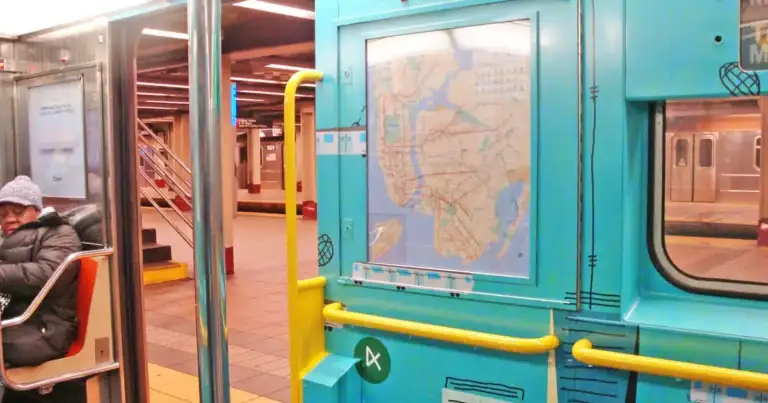

Another Monday morning, another wave of terror on the tracks. At 8:15 AM on April 27, 2026, a 15-year-old boy was shot in the leg on a northbound A train at Hoyt-Schermerhorn during the peak of rush hour.
It wasn’t just a statistic; it was a brutal reminder for millions of New Yorkers that their daily commute, the very pulse of our city, can shatter into a crime scene without warning.

The victim is stable, the suspect vanished into the labyrinth, and the NYPD, with a weary predictability, is “actively seeking information.” But what about the information New Yorkers are really seeking: when will this stop?
The Echo Chamber of Empty Promises
Mayor Adams, Governor Hochul, MTA brass – they all rush to the cameras after these incidents, their faces a familiar mix of concern and practiced resolve. The script is always the same, a tired refrain that offers little comfort. Mayor Adams declares,
“Unacceptable act of violence.”NYPD Chief of Transit Michael Kemper echoes,
“Safety of our commuters remains our top priority.”And MTA Chairman Janno Lieber, ever so eloquently, offers
“thoughts and cooperation.”But New Yorkers, jaded by repetition, are asking: despite all the talk, all the increased police presence, why does this keep happening? Why do these pronouncements ring hollow?
The hard truth, one our leaders seem reluctant to confront head-on, is that the system is simply too vast, too sprawling, too alive. We’re talking about 472 stations, 665 miles of track, operating 24/7, serving millions upon millions of souls.
You can flood every platform with uniforms, but you cannot put a cop in every single car, every single minute of every single day. That’s where the strategy breaks down.
The current approach leans heavily on visible deterrence, a performative show of force, but it’s proving woefully inadequate to stop spontaneous disputes, the desperate acts of individuals in crisis, or those simply determined to cause harm. We see the uniforms, yes, but are they actively preventing crime, or merely reacting to the inevitable aftermath?
Then there’s the inconvenient, uncomfortable truth about what’s truly driving a significant portion of this violence. It’s not just “subway crime” in a vacuum; it’s a festering symptom of deeper societal rot that our city has allowed to spread.
Unaddressed mental health crises, the visible despair of homelessness, the horrifying ease of access to firearms – these aren’t problems the MTA can magically solve with a new turnstile or another patrol car. They are city-wide failures, systemic cracks that bleed inevitably into the transit system, turning our shared spaces into arenas of conflict.
And while major crimes are, statistically speaking, rare compared to the sheer volume of riders, one shooting, especially involving a teenager during rush hour, blows a gaping hole through public confidence faster than any “safety first” slogan can ever hope to mend. It’s not about numbers; it’s about the feeling of dread.
The Unvarnished Truth: Beyond the Headlines
Let’s cut through the official platitudes and PR spin. When Mayor Adams talks about
“ensuring our subways are safe for everyone,”what he’s really saying, beneath the surface, is “we need ridership numbers to recover, and fear is devastating our bottom line.”
When the MTA pledges to
“enhance safety measures,”it’s fundamentally about maintaining an illusion of control, desperately trying to avoid a full-blown crisis of public trust that would utterly devastate farebox revenue.
The hypocrisy isn’t in their stated goal of safety, which is noble, but in their laughably narrow definition of how to achieve it. They chase quick fixes – more uniformed bodies, more cameras – because it’s politically expedient, visibly reassuring, and allows them to sidestep the actual, complex, and politically challenging issues that truly plague our city.
The raw truth is, these incidents aren’t just isolated
“unacceptable acts of violence”; they are a searing indictment of a city that has failed to address its most vulnerable populations and allowed illegal firearms to flood its streets.
This isn’t about one bad actor; it’s about a broken system that keeps patching foundational cracks with more police tape and uniformed bodies, instead of undertaking serious, structural repairs.
Until our leaders get serious about comprehensive solutions that extend far beyond the platform edge – addressing mental health crises, pervasive poverty, and the relentless tide of gun violence as interconnected, urgent issues – New Yorkers will continue to hold their breath, not just on the A, C, or G train, but every single time they step into the public sphere. The question isn’t just if another shooting will happen, but when and who will be next to pay the price for our collective inaction.
Source: Google News