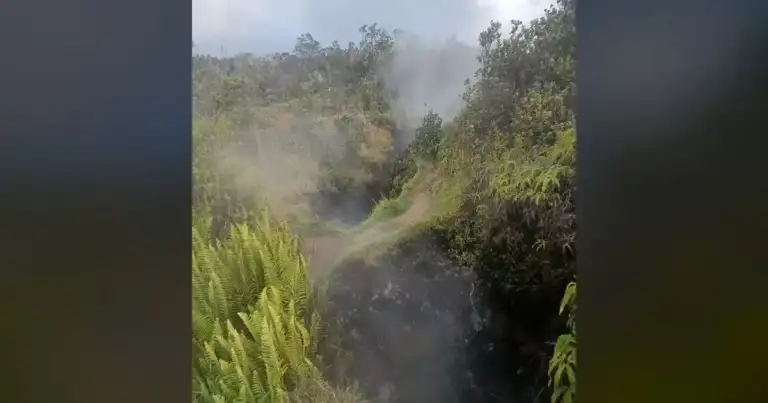

Listen up, because Kilauea is about to unleash its 46th act, and if you think this is some kind of raw, unpredictable natural disaster, you haven’t been paying attention to the Big Island’s most consistent, fiery performer. From May 3rd to the 7th, HVO is forecasting another show, and honestly, the only real surprise is how unsurprising it all feels. For the discerning traveler, this isn’t a deterrent; it’s a scheduled appointment with the sublime, if you know where to look.
The U.S. Geological Survey’s Hawaiian Volcano Observatory has been tracking the usual suspects: increased seismic activity under the summit caldera, ground swelling, all the classic precursors. They’ve got it on “WATCH” and “ORANGE” for aviation, which sounds dramatic, but for anyone who lives here or visits with any regularity, it’s just Kilauea doing its thing, like clockwork. The real story isn’t the eruption itself, but how we’ve all become so… accustomed to the spectacle.
The Big Island’s Most Reliable Show
Forget the notion of a chaotic, untamed beast. Kilauea, with its dozens of eruptions over the past few decades – including several significant events in just the last few years – has become Hawaii’s most dependable, if fiery, attraction.
Locals shrug. Volcano nerds on Reddit treat it like a Netflix release: ‘Episode 46? Yawn, fountains hit 1000ft last time, park stayed open.’ There’s no doomsday panic, no viral freakout.
Just a quiet acknowledgment that the earth is breathing, on a fairly predictable schedule. Who needs a drama series when you have a live volcano performing on cue?
For those looking for a truly unforgettable, premium experience, this predictability is actually a gift. It means you can plan. It means safe viewing areas are already established, and tour operators are primed to guide you to the sweet spots, far from any real danger, but close enough to feel the primal energy. We’re talking about witnessing creation and destruction simultaneously, without the kind of crowds that usually plague such natural wonders, simply because most tourists are too naive to understand the rhythm.
Managing the Tourist Flow
The tourism industry, predictably, is watching like a hawk. While some timid souls might shy away, a different breed of traveler is drawn to it. The challenge isn’t the lava; it’s the “lava influencers” who will undoubtedly clog the trails, chasing that perfect glow shot. My advice? Go early, go late. Find a guide who understands the terrain and the flow, not just the latest Instagram trends. This is about respectful engagement with nature, not a photo op for the masses.
Practical Insight for the Sophisticated Traveler:
- Best Viewing: Hawaiʻi Volcanoes National Park is the primary access. Focus on the Kaluapele (Kīlauea caldera) area.
- Timing: Early morning before sunrise or after sunset offers the most dramatic visual impact.
- Gear: Sturdy closed-toe shoes, layers of clothing (it can get chilly), rain gear, and a good headlamp are essential. Pack water and snacks.
- Stay Informed: Always check HVO updates (www.usgs.gov/hvo) and Hawaii County Civil Defense advisories. Safety first, always.
The Red Marker
Let’s call it what it is: Kilauea’s eruptions have evolved into a kind of performance art, a precisely timed natural phenomenon that feels almost… scripted. Why else would the fountains reliably peak at 3 AM HST, perfectly ready for the webcams and the early morning news cycles? Is it pure coincidence, or a masterclass in natural showmanship?
The cynical truth? This “46th episode” isn’t just about geology; it’s about the undeniable economic leverage of maintaining a world-class, active volcano attraction that brings in global attention.
The USGS, with their spot-on forecasts, are essentially the stage managers, ensuring that the show goes on, safely and predictably, for both the locals and the lucrative tourism machine. It’s not a conspiracy; it’s just damn good business, framed as scientific vigilance – and a stunning display of Earth’s power.
So, when Kilauea lights up the sky between May 3rd and 7th, understand that you’re not just observing nature; you’re witnessing a carefully managed, breathtaking spectacle. And for those with the foresight and taste to experience it authentically, it’s an unparalleled opportunity to connect with the raw, beating heart of our island home. Don’t just watch the news; come see the fire.
Source: Google News