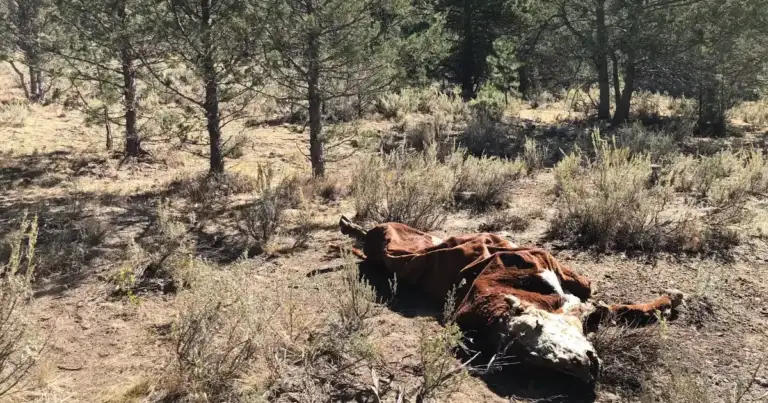

Let’s cut right to the chase: Oregon’s public lands are not your personal dumping ground. Near Powell Butte, a shocking discovery of five to ten cow carcasses rotting on Bureau of Land Management (BLM) property has once again exposed a rancher’s brazen disrespect. Their pathetic excuse? A “misunderstanding” of proper disposal rules. Give me a break.
Oregon’s public lands are not a free landfill for agricultural waste. This isn’t some innocent mistake. This is blatant disregard for our shared environment and a calculated gamble to avoid costs.

“Misunderstanding” or Deliberate Disrespect?
The rancher claims they “genuinely believed” natural decomposition in a remote area was acceptable. That’s a lie.
Oregon law, ORS 603.045 and OAR 340-096-0080, is crystal clear. Dead livestock must be disposed of within 72 hours through burial, composting, rendering, or incineration.
Burial needs to be at least three feet deep, far from water sources. These aren’t suggestions; they are non-negotiable rules. They are designed to protect our water, prevent disease, and maintain public health.
The Bureau of Land Management (BLM) and the Oregon Department of Environmental Quality (ODEQ) claim they are “investigating” this mess. Their stated priority is the swift, safe removal of these carcasses and holding the responsible party accountable.
ODEQ, for its part, is rightly worried about groundwater contamination and disease spread. But let’s be clear: local environmental advocates are, and should be, absolutely disgusted. Our public lands are not a dumping ground for someone else’s negligence.
The Real Cost of “Convenience”
Cleanup isn’t cheap. Removing and properly disposing of multiple large animal carcasses from a remote location can easily run into thousands of dollars.
Who pays when a rancher decides to cut corners and treat public land like a private trash bin? Often, it’s the taxpayer. This isn’t just an eyesore; it’s a financial burden on every single Oregonian.
Violations can carry fines up to $500 per day per violation under ODEQ rules, or even more for federal land infractions. But if these fines aren’t actually enforced with an iron fist, what’s the deterrent?
This rancher gambled the remote location meant natural decomposition, no questions asked, no costs incurred. It’s about dodging the real price of doing business, plain and simple.
Red Marker Verdict: The Cost-Cutting Con
Let’s be brutally honest. This isn’t some innocent “misunderstanding.” This is a classic move: dump your problem where you think no one’s looking to save a buck.
This rancher wasn’t confused by “bureaucratic bullshit”; they were trying to skip the expense of proper carcass disposal. They thought they could get away with it, treating public land like their personal back forty.
The mainstream narrative will inevitably soften it to a “misunderstanding.” But the truth is, this is a calculated act of environmental negligence motivated by pure financial convenience. It’s a cheap, lazy way out, and it makes a mockery of every other rancher who actually follows the law.
Oregon needs to make an example here. These aren’t just “violations”; they’re desecrations of our shared heritage.
The rancher responsible needs to pay every single cent of the cleanup and then face the maximum possible fines. Anything less is a signal that our public lands are open season for those too cheap or too lazy to follow the rules.
This isn’t just about dead cows; it’s about holding power accountable and fiercely protecting what belongs to all of us.
Source: Google News