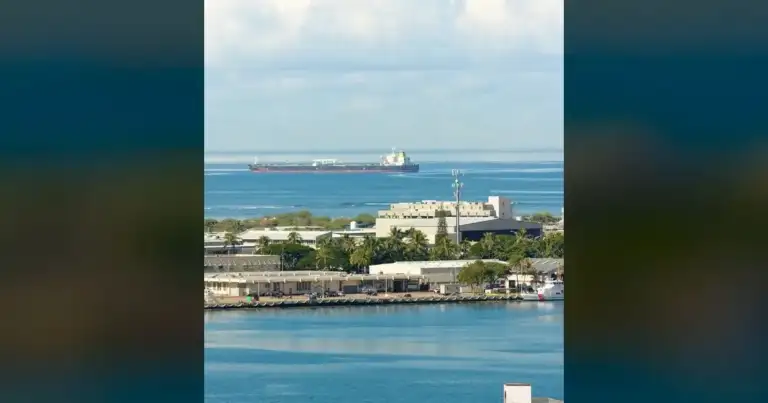

Don’t let the poetic pronouncements fool you. When Honolulu officials gathered yesterday to formally dedicate what was once Sand Island by its proper Hawaiian name, Mauliola, meaning “breath of life” or “health,” the air was thick with talk of “cultural revitalization” and “environmental healing.” Sounds beautiful, doesn’t it? Almost too beautiful for a place that, for generations, has been anything but a picture of health.
For too long, “Sand Island” was a gritty, honest name. It conjured images of rusting hulks, forgotten military bunkers, and the raw, often heartbreaking reality of our houseless neighbors living on the fringes. Now, overnight, it’s Mauliola. The official ceremony at the newly minted Mauliola State Recreation Area entrance was a parade of smiles and well-meaning speeches. But let’s cut through the pomp: a name change, no matter how profoundly meaningful in ‘ōlelo Hawai’i, is nothing more than pretty words if the toxic legacy beneath remains unaddressed.
From Sand Island to Mauliola: More Than Just a Word?
Yes, the push for Mauliola has been years in the making, a hard-won victory for advocates like the Mauliola Community Alliance. It’s a welcome, long-overdue acknowledgment of Hawaiian identity and the power of our language. The name itself is a defiant roar against decades of neglect and exploitation.
Historically, Mauliola wasn’t just a fishing village; it was a vibrant hub, a breadbasket, a vital artery of ancient Hawaiian life, teeming with aquaculture and traditional practices. Its brutal transformation into a municipal dumping ground, a sprawling military base during WWII, and a relentless industrial zone isn’t just a “stark reminder.” It’s a gaping wound left by colonial impact and unchecked development.
So, is this name change just a step? A symbolic one, absolutely. But it should be more.
It must signal an unwavering commitment to reconnect with the land’s original spirit, to breathe true health and vitality back into an area choked by sickness and neglect.
The real question, the one that keeps me up at night, isn’t whether this gesture is symbolic. It’s whether our leaders have the guts and the will to translate this symbolism into tangible, lasting change on the ground.
The Real Work Begins Now
Those who stood on that podium yesterday, waxing poetic about “environmental healing,” now need to put their money—and their political will—where their mouths are.
Mauliola isn’t some pristine canvas for ceremonial speeches; it’s a battle-scarred landscape, a living, breathing record of decades of abuse.
The concrete legacy of industrial activity, the remnants of military occupation, the sheer, crushing volume of human impact—these aren’t just “marks.” They are deep, festering wounds.
Real healing demands not just serious investment in restoration, but a relentless, transparent cleanup of lingering toxic pollution. It also requires a management strategy that *truly* honors this ancient name, not just pays lip service to it.
“The name Mauliola demands a commitment beyond rhetoric. It’s not enough to call it ‘breath of life’ if we don’t actively work to restore that breath—for the land, and for our people.” — Auntie Puanani Akana, respected elder and longtime advocate for Mauliola.
Red Marker Verdict
Let’s strip away the layers of good intentions and be crystal clear about the real play here. The renaming of Sand Island to Mauliola isn’t *just* about cultural respect – though that’s the convenient, palatable public narrative.
This is, first and foremost, about prime real estate and the strategic rebranding of a singularly valuable piece of Honolulu’s waterfront.
By invoking “health” and “life,” by cloaking it in the sacred mantle of environmental healing, the state is expertly polishing a historically tarnished asset.
It makes future luxury development, high-end tourism initiatives, or even further industrial refinement (now under a “greener,” more palatable guise) far easier to sell.
This appeals to a public wary of past abuses and eager investors alike. Who wants a million-dollar condo overlooking “Sand Island,” a name synonymous with grit, hardship, and toxic waste?
But “Mauliola”? That sounds like an investment opportunity, a clean slate. This isn’t just a name change; it’s a carefully orchestrated PR coup.
It’s cleaning up the *perception* long before the hard, expensive, and often inconvenient work of cleaning up the *land* even truly begins. It’s a brilliant political and economic maneuver, yes.
But we, the people of Hawaiʻi, deserve to know the full price of this “breath of life.” Will we demand more than just a new name? Or will we let another precious piece of our heritage be rebranded for profit?
Source: Google News