
Forget the whispers. Despite the breathless texts and the gut-wrenching scenarios that plague our collective consciousness every spring, let me be clear: there has been no fatal propeller accident on Lake Geneva involving a Wisconsin woman in the last 48-72 hours.
Not this week. But don’t mistake that absence of immediate tragedy for an absence of danger.

The ice is melting, the boats are launching, and the annual dance with disaster on our waterways is just beginning.
DNR’s Annual Sermon: Same Lake, Same Risks
As predictably as the ice recedes from our shorelines, the Wisconsin Department of Natural Resources (DNR) has unfurled its “Safe Boating Starts with You” campaign.
Their press release from April 18, 2026, rings with a familiar, almost weary, tune: more patrols, more public awareness.
They’re telling you—again—to use your kill switch lanyard, stay vigilant, and keep passengers seated. It’s the same advice, year after year, aimed squarely at popular spots like Lake Geneva, Lake Winnebago, and the Chain O’ Lakes.
They tout it as a proactive stance, anticipating a busy season. But let’s be blunt: what they’re truly doing is meticulously laying the groundwork for accountability when, not if, things inevitably go south.
While today’s headlines might not scream about a fresh tragedy, the data speaks volumes.
The DNR’s own 2025 Boating Accident Report reveals a harrowing truth: 14 fatal boating accidents last year across our state.
A chilling three of those were directly tied to propeller strikes or falls overboard that ended in propeller contact.
Beyond the deaths, 27 non-fatal propeller incidents scarred lives, ranging from minor scrapes to life-altering lacerations. The financial toll of a severe propeller injury, let’s just say, is often enough to sink even the most financially stable Wisconsin family.
The Real Stakes: Who Wins, Who Loses, Who’s Ignored
On one side, you have the DNR, content to pat itself on the back for a “renewed focus.” They, naturally, benefit from fewer incidents to investigate and cleaner statistics.
Safe boaters and their families win by not becoming a statistic. Emergency services certainly hope for a quieter summer.
But who truly loses when the focus is so frustratingly broad? The reckless boater, yes, who might face a stiffer fine or a suspended license.
But the real, often forgotten, losers are the victims of past accidents—their individual horrors reduced to mere bullet points in an annual report. Their emotional and financial wreckage rarely, if ever, makes it into these sanitized campaigns.
And what about the boat manufacturers? The ones who could, and frankly should, integrate truly advanced safety features beyond a simple, easily ignored lanyard?
Their role in this ongoing tragedy is conspicuously absent from the official narrative.
Red Marker Verdict: Let’s call the DNR’s “Safe Boating Starts with You” initiative exactly what it is: less about genuine, systemic change and more about shrewd liability management.
It’s the classic bureaucratic maneuver: put the onus entirely on the individual, issue some well-worn warnings, and then shrug when preventable accidents still happen.
This isn’t a commitment to eradicating propeller deaths; it’s a carefully crafted public relations exercise designed to keep their statistics looking palatable and to conveniently shift blame from institutional shortcomings to individual carelessness.
Until boat manufacturers are held to a significantly higher standard for integrated safety features and we truly acknowledge the very real, often ignored, human cost beyond the cold, raw data, these annual “safety campaigns” are nothing more than whistling past the graveyard.
It’s a flimsy band-aid on a gaping, bleeding wound, and anyone paying attention knows it.
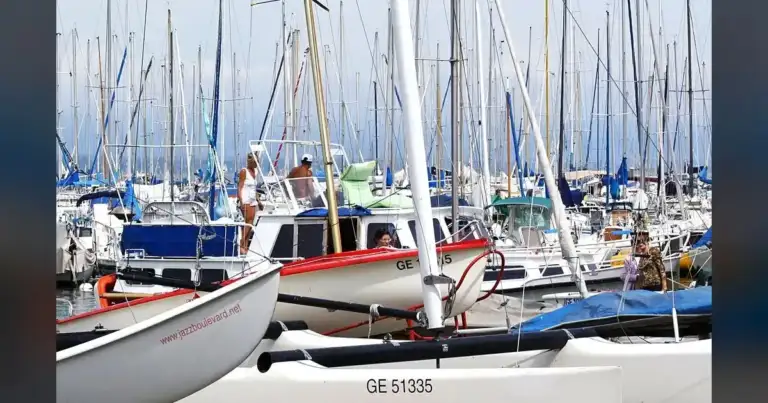
Photo: Photo by Dimitry B on Openverse (flickr) (https://www.flickr.com/photos/61533954@N00/11149734896)
Source: Google News