
Forget the postcard-perfect images of Palm Beach opulence for a moment. Because even here, amidst the gilded estates and ocean breezes, not every story is as pristine as it seems. Case in point: a 1920s landmark hitting the market for a staggering $157 million, accompanied by a narrative so dramatic it demands scrutiny: “barely saved from ruin.”
This isn’t merely a real estate transaction; it’s a masterclass in market manipulation, a meticulously crafted comeback story designed to justify an astronomical price tag for the ultra-elite.

The Enduring Allure of a Palm Beach Pedigree
There’s no denying the raw power of a 1920s Palm Beach estate. These aren’t just homes; they are living testaments, infused with the architectural genius of Addison Mizner and the lingering grandeur of the Gilded Age. Buyers aren’t simply acquiring square footage; they’re purchasing a tangible slice of history, a legacy carved in stone and wrought iron.
But in today’s frenzied market, a property’s heritage isn’t enough to command nine figures; it demands a compelling, often embellished, myth.
We’ve seen these battles play out repeatedly across town, perhaps most notably with “Villa Serena” on Ocean Boulevard. That 1927 estate, while not officially landmarked, still ignited a furious debate between ambitious new owners, their sweeping renovation plans, and the vigilant Palm Beach Preservation Foundation.
The tension is always palpable: how do you gut and modernize for today’s tech billionaire while simultaneously claiming to honor the irreplaceable craftsmanship of yesterday? Original fenestration patterns, intricate tile work, the very scale of a room—these aren’t mere details; they are the battlegrounds where the soul of Palm Beach is fought over, often behind closed doors.
The market’s insatiable appetite for prime real estate doesn’t just intensify this conflict; it monetizes it, making every “preservation” decision a high-stakes gamble.
The $157 Million Narrative: “Saved from Ruin”
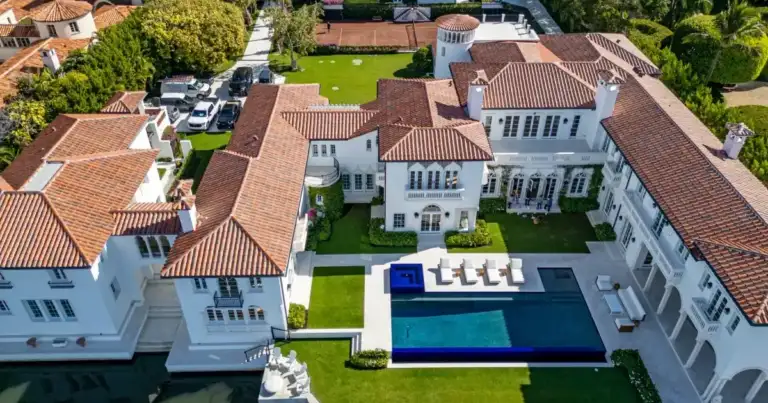
Now, let’s turn our attention to the South County Road landmark, a 1920s gem now commanding $157 million, brazenly marketed with the dramatic tagline: “barely saved from ruin.” A compelling story, indeed – a property supposedly on the brink, snatched from the jaws of decay by heroic visionaries, now presented as the pinnacle of restored grandeur. This isn’t just marketing; it’s a narrative engineered to inflate its value far beyond mere bricks and mortar, to infuse it with a manufactured sense of triumph and exclusivity.
But let’s be brutally frank. In Palm Beach, “ruin” is a relative term, often meaning nothing more than “outdated by a decade or two.” It means marble that’s no longer the fashionable shade of beige, or a kitchen that hasn’t hosted a celebrity chef in residence for a few seasons. The Herculean effort to “save” such a property, while undeniably demanding significant investment and impeccable taste, is not some philanthropic endeavor. It’s a cold, calculated, high-stakes investment, pure and simple.
The Red Marker Verdict: A Manufactured Myth
Here’s the unfiltered truth, stripped of the glossy brochures: The “saved from ruin” narrative plastered onto this $157 million Palm Beach mansion is less about historical preservation and more about a cynical masterclass in market psychology.
It’s not about genuine peril; it’s about justifying an astronomical price in a segment that, even for the ultra-rich, is showing signs of a long-overdue cooling.
“Barely survived” reeks of Zillow bait, a transparent ploy to rationalize immense post-restoration costs and, crucially, to manufacture a sense of scarcity and unique value that compels a very specific, ego-driven buyer.
The financial motive is not just clear; it’s glaring: by weaving a tale of dramatic rescue, the sellers aren’t just selling a home. They’re selling a monument to a buyer’s discerning taste, their perceived heroism in acquiring a “phoenix,” and, let’s be honest, their sheer financial muscle.
This isn’t preservation for preservation’s sake; it’s preservation repackaged as a premium commodity, a luxury good with an artificially inflated backstory.
This narrative plays directly into the hands of those who view historic properties not just as homes, but as ultimate trophies—meticulously polished, exquisitely presented, and complete with a heroic backstory. The “ruin” was likely nothing that a few tens of millions couldn’t fix, and the “saving” was, at its core, simply shrewd business, a strategic investment with a hefty return in mind.
Ultimately, Palm Beach isn’t just a zip code; it’s a high-stakes theater where the past and the future of luxury real estate are constantly clashing. This $157 million listing isn’t just a price tag; it’s a stark declaration about the manipulative power of a well-spun narrative to elevate value, regardless of the gritty, often mundane, reality underneath. It’s a chilling demonstration that in Florida’s most exclusive enclaves, even a property’s history can be meticulously engineered for maximum market impact, its truth sacrificed at the altar of profit.
So, as you gaze upon this magnificent mansion, don’t just ask yourself if you’re buying a piece of history. Ask if you’re buying into a perfectly crafted legend—and if the price tag truly reflects the stone and mortar, or the elaborate fiction woven around it.
Source: Google News