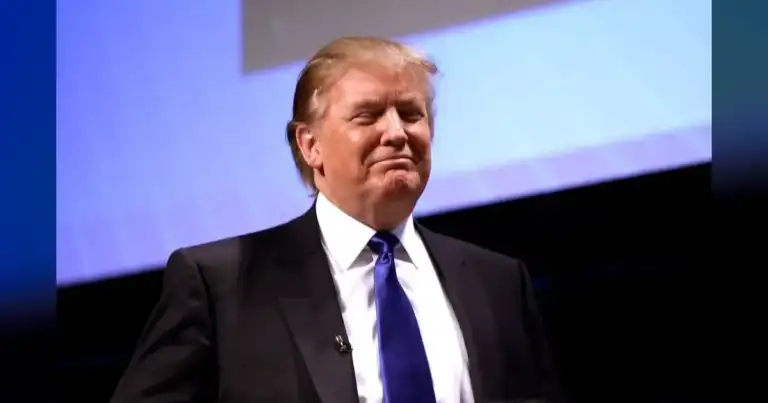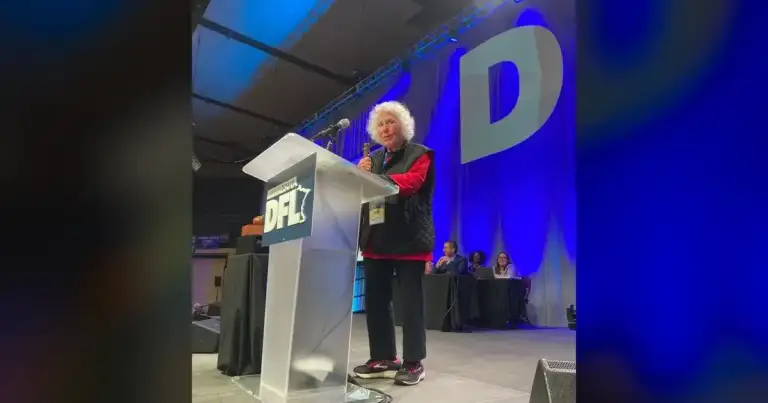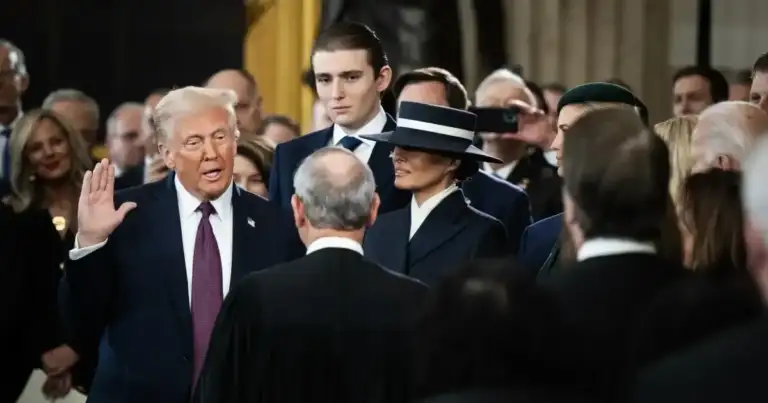

Minnesota isn’t just bracing for 2026; it’s already caught in the gravitational pull of Donald Trump, whose shadow stretches long over every Republican primary. The buzzword echoing through our state’s political chambers – ‘de-escalation’ – isn’t some benign call for a smaller government, especially not after incidents like the tragic Pretti shooting in August 2023.
Make no mistake: this is a calculated, cynical play for power, a slick repackaging of old grievances for a new election cycle. Minnesotans deserve to see this for the political maneuver it truly is.

Trump’s Long Shadow Over the North Star State
Forget the polite disclaimers about direct quotes. While Donald Trump hasn’t explicitly uttered “government will de-escalate” in a Minnesota-specific context, his themes are already dictating the very rhythm of our state’s political discourse.
When the former President talks “de-escalation,” he’s certainly not envisioning peace talks or a kumbaya circle. He’s prescribing a very specific, strategic retreat: gutting federal regulatory power, slashing what his base decries as overreaching state mandates, and empowering local control – almost always in ways that disproportionately benefit specific, loyal factions.
And that’s where incidents like the Pretti shooting become a brutally convenient cudgel for this rhetoric. Suddenly, the vague call for “de-escalation” isn’t abstract; it’s packaged as the urgent solution to perceived chaos, a solemn promise to restore order by simply getting ‘government’ out of the way. But out of the way of what, precisely? And whose ‘order’ are we truly talking about? Lars Lindgren demands answers.
The Minnesota Angle: What ‘De-escalation’ Really Means Here
In Minnesota, a state cleaved by deep blue urban cores and starkly red rural stretches, “de-escalation” isn’t a neutral term; it’s a loaded weapon.
For many, it’s an undeniable dog-whistle for gutting environmental protections, loosening business restrictions, and a wholesale rollback of social policies denounced as liberal overreach. For others, it’s a dangerously simplistic slogan, willfully ignoring the complex, often critical issues government intervention genuinely seeks to address – from public safety to economic equity.
Trump’s sway here isn’t about issuing direct orders; it’s about establishing the undisputed rhetorical playbook. Aspiring GOP candidates across Minnesota understand this stark reality: speak his language, or watch your primary ambitions wither.
Let’s be clear: this isn’t merely a political philosophy; it’s a ruthlessly effective campaign strategy. By invoking “de-escalation,” candidates don’t just align themselves with a national figure; they expertly tap into raw local frustrations, from spiking crime rates in our cities to the relentless burden of property taxes. It’s a potent, deceptively vague promise that hooks voters who feel utterly ignored or actively harmed by current policies. The crucial nuance, as always, is deliberately sacrificed on the altar of the soundbite.
Red Marker Verdict: Let’s be unequivocally clear. When the siren song of “de-escalation” emanates from the Trump camp and reverberates across Minnesota, it is absolutely not a sudden, newfound embrace of pacifism or small-government purity. It is, in fact, a meticulously crafted electoral weapon.
The true, cynical motive is to galvanize a specific voter base by relentlessly framing government as the enemy, blaming it for everything from soaring crime to persistent economic woes, and then offering a deceptively simple solution: less of it. This isn’t about fostering peace; it’s about ruthlessly consolidating political power by promising to dismantle the very structures that opponents rely on.
This isn’t a blueprint for a better Minnesota; it’s a playbook designed to win elections, not to genuinely solve our state’s pressing problems. The ‘de-escalation’ they’re pushing is nothing more than a strategic withdrawal from inconvenient oversight, not a sincere commitment to calm or progress.
Source: Google News