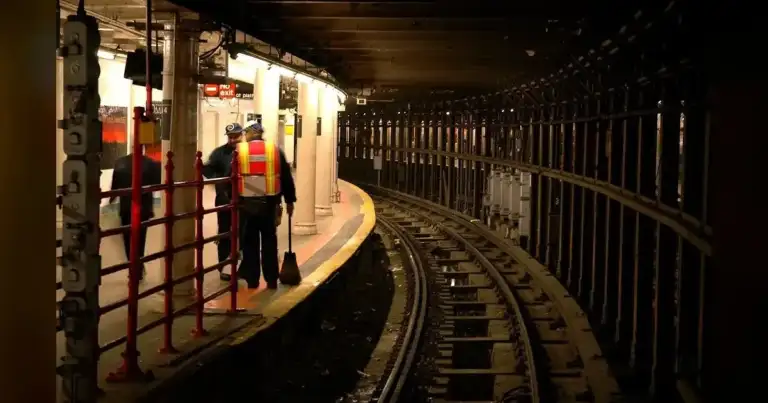

New York City’s subway system, a lifeline for millions, became a scene of terror once again. At Grand Central Terminal, 44-year-old Anthony Griffin, reportedly screaming “Lucifer,” unleashed a machete on three elderly New Yorkers – ages 65, 70, and 84 – before NYPD detectives shot him dead. The official narrative calls this a “victory,” but don’t you dare believe it.
Griffin, who ignored 20 commands to drop his weapon, was killed. His victims, despite severe wounds including skull fractures, are thankfully stable. This isn’t a win; it’s a gaping, bloody wound in the heart of a system that promises safety but delivers only consequences for its own failures.

The NYPD’s Self-Serving Narrative
The official line from City Hall and 1 Police Plaza is as predictable as a delayed F train: NYPD detectives acted decisively, de-escalating until forced to shoot. This isn’t just a narrative; it’s a carefully crafted deflection, pushed hard by officials desperate to control the story.
The public, understandably fed up, often buys it. On X, one user cheered,
“Finally, cops doing their job. No more bail-revolving-door BS.”
But this praise, however well-intentioned, conveniently buries the real questions. It glosses over the fundamental, infuriating truth: How did Anthony Griffin, a man with three prior arrests, even get to Grand Central, machete in hand, ready to terrorize commuters?
A System Ripe for Failure
Anthony Griffin wasn’t an unknown. He was a known quantity, a ticking time bomb the system repeatedly failed to defuse. Three prior arrests aren’t just statistics; they represent three distinct interactions with our justice system.
These were three chances to intervene. Three opportunities squandered, leaving him free to stalk our subways. This isn’t about one “rogue individual.”
This is about systemic, criminal neglect. The “revolving door of justice” isn’t a metaphor; it’s a terrifying reality that puts every single New Yorker directly in harm’s way.
Our elected officials love to talk tough, to promise safety from behind their secured desks. But their actions, or lack thereof, allow repeat offenders to roam free, turning our public spaces into potential crime scenes.
Mayor Adams’ Empty Promises on Subway Machete Attack
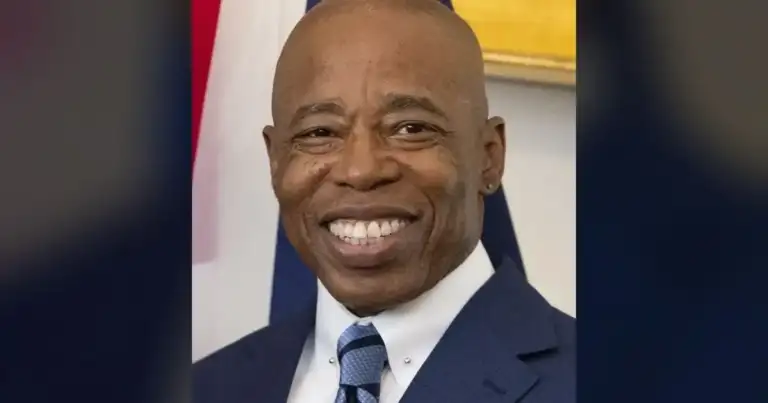
Mayor Eric Adams, ever the showman, constantly touts his “all-hands-on-deck” approach to subway safety. He boasts of increased uniformed officers, plainclothes patrols “enhanced,” and an MTA camera network now exceeding 10,000 cameras. Impressive numbers, right?
Except they mean absolutely nothing when a man with a machete can still terrorize Grand Central, leaving three elderly New Yorkers bleeding on the platform. These statistics are hollow. These deployments are a smokescreen.
They fail the most basic test of public safety. The Mayor’s administration gleefully funnels millions into surveillance and policing, prioritizing more officers and more cameras.
But where is the equivalent investment in addressing the root causes of such desperation and violence? Mental health crises, rampant housing instability, addiction – these critical issues are consistently ignored, sacrificed at the altar of flashy tech and performative policing.
The Cynical Public Isn’t Buying It
While official channels parrot praise for the NYPD, the public’s cynicism is palpable, their distrust a festering wound. Online, the snark is rampant, reflecting a profound lack of faith in anything the city says. One Reddit user didn’t mince words, theorizing:
“Staged deep-state op to justify subway cops? Griffin’s priors scream fed plant.”
Another, mocking the city’s predictable “mental health crisis” angle, quipped:
“Erratic Lucifer? NYC’s new mayor on bath salts.”
These aren’t just internet trolls; they are New Yorkers who see through the official spin. They question the timing, the convenient narratives, and the city’s warped priorities.
They see the unmedicated, the desperate, the truly broken individuals wandering our streets and subways. And they see the city’s only consistent answer: more guns, more cameras, and less actual care.
What About the Victims?
Let’s cut through the noise and focus on what truly matters: the victims. These three elderly New Yorkers endured severe injuries – skull fractures, deep stab wounds. Their lives are irrevocably changed, their sense of safety shattered.
Their trauma is not some abstract concept; it is agonizingly real. While their stable condition offers a measure of relief, it is *not* a justification for this horror. It does not erase the terror they faced, nor does it excuse the system’s colossal failure.
These aren’t just statistics to be filed away; they are our neighbors, our elders. They deserve more than empty platitudes. They deserve more than a city that consistently prioritizes political optics and performative policing over their actual safety and well-being.
Yes, the NYPD’s swift action in a crisis is commendable – once the crisis has already exploded. But crisis management is not prevention. We must stop the bleeding *before* it starts.
That demands profound accountability for how Anthony Griffin, a known threat, was ever allowed on that train with a machete. This was no victory; it was a desperate, bloody consequence of a system that is not merely broken, but actively failing us.
So, who truly benefits from this convenient narrative of police success? Not the victims, whose lives are forever scarred. Not the terrified commuters, who now look over their shoulders with renewed fear.
Only the politicians who can point to a body count and brazenly declare our subways ‘safe’ while the underlying rot festers. It’s time to demand more.
Demand real solutions, not just tactical responses. Demand accountability for systemic failures, not just applause for cleaning up the mess. Demand a city that truly protects its people, not just its image.
Photo: Photo by jpmartineau on Openverse (flickr) (https://www.flickr.com/photos/75565659@N00/502316919)
Source: Google News