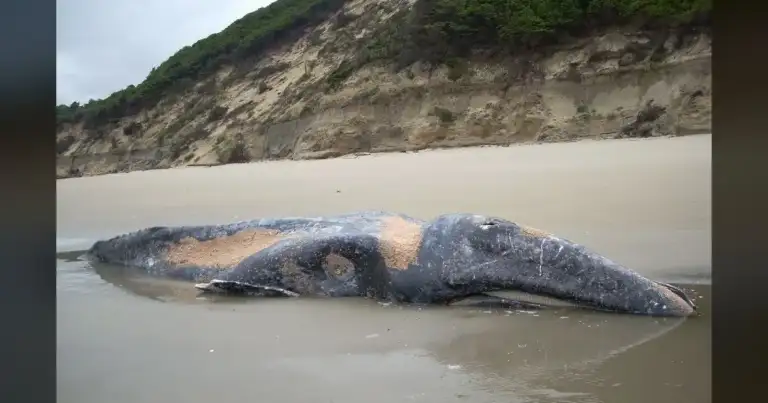

Seven Dead Gray Whales Along Washington Coast: A Dire Warning for Our Marine Ecosystem
In an alarming development that has sent shockwaves through environmental circles, seven dead gray whales have been found washed ashore along the coast of Washington in just the past 48 to 72 hours. This startling surge in gray whale fatalities is far from an isolated incident—it signals a troubling pattern that threatens not only the health of our marine ecosystems but also the economic and cultural fabric of coastal communities dependent on the ocean’s bounty.
Unprecedented Mortality Raises Red Flags
Gray whales, known scientifically as Eschrichtius robustus, have long been considered a resilient species, adept at navigating the dynamic and often harsh conditions of the Pacific Ocean. Yet the discovery of seven carcasses in such a short span—spread across areas including Long Beach and Westport—shatters any illusion of invulnerability. These deaths come on the heels of a disturbing trend of elevated strandings and mortalities observed over the past several years, notably the 2019 event when NOAA declared an Unusual Mortality Event (UME) following over 200 strandings along the West Coast.
Preliminary necropsies point to multiple factors potentially at play: starvation, disease, and the effects of toxic algal blooms. Experts from the Washington Department of Fish and Wildlife (WDFW) and NOAA Fisheries are urgently collaborating to pinpoint the causes and assess the broader implications for the gray whale population, which hovers near 20,000 individuals in the Eastern North Pacific. While this number may seem robust, spikes in mortality rates—even small clusters like this recent one—can significantly affect population recovery trajectories, especially if such events become more frequent.
Climate Change and Ecological Imbalance: The Underlying Drivers
Scientists widely agree these deaths are not random but symptomatic of deeper ecological distress. Ocean warming, driven by climate change, is disrupting the availability and distribution of gray whales’ primary food sources—small crustaceans known as amphipods. Warmer waters also foster the proliferation of harmful algal blooms, particularly those producing domoic acid, a potent neurotoxin. In Washington’s waters, such blooms have increased by over 30% in frequency during the last decade, a trend that correlates strongly with rising ocean temperatures.
This toxic environment jeopardizes marine life at multiple levels and may be contributing directly to the starvation and disease observed in these whales. The gray whales serve as an ecological barometer, reflecting the cumulative stresses inflicted on the marine environment.
Community and Economic Consequences
The human dimension of this crisis cannot be overlooked. Coastal fishing and tourism industries depend heavily on a healthy ocean ecosystem. Declining whale populations and deteriorating marine conditions pose threats to livelihoods, public safety, and regional economies. Fishermen fear that continued ecosystem degradation will reduce fish stocks and alter marine biodiversity, compounding already existing pressures.
State officials have responded swiftly, ramping up monitoring efforts and launching public awareness campaigns focused on marine health and conservation. Yet, their efforts need to be bolstered by decisive, broad-based policies aimed at climate mitigation and pollution control.
Why This Matters: The Broader Implications
“Gray whales are more than just majestic creatures—they are keystone species that help maintain the balance and productivity of marine ecosystems. Their health is intricately linked with oceanic conditions that ultimately impact human societies.”
– Dr. Emily Johnson, Marine Biologist
The deaths of these seven whales are a clarion call. They underscore an urgent need for collective action to address climate change, strengthen marine protections, and curb pollutants that exacerbate harmful algal blooms. Every strandings’ report, every investigation, adds to an accumulating body of evidence that our ocean’s health is in peril.
As stewards of the environment, we must heed these warnings. Protecting gray whales and the ecosystems they symbolize is not a luxury—it is a necessity for the future of our oceans and the communities that depend on them.
In the face of such stark evidence, complacency is no longer an option. The fate of Washington’s gray whales may well be a bellwether for the fate of the Pacific Northwest’s marine environment—and of our collective response to the climate crisis.
Photo: Photo by Oregon State University on Openverse (flickr) (https://www.flickr.com/photos/33247428@N08/3534468636)
Source: Google News