
New England’s Panda Predicament: More Than Just Bamboo and Diplomacy
The geopolitical currents, it seems, are shifting once more in the grand, global game of giant panda diplomacy. While our New England shores have yet to welcome these monochrome ambassadors, the recent stirrings from distant zoos offer a fascinating, and at times, perplexing look at how international relations play out, even in the animal kingdom. Forget the dry pronouncements of diplomats and the sterile communiqués; the real theater unfolds when a pair of pandas are caught, as reports from CNN suggest, “flirting” through a window – a seemingly innocuous act that sends ripples across the diplomatic ocean.
The Geopolitics of Cuteness: A Shifting Tide
For decades, China’s strategic loaning of giant pandas has been less about zoology and more about raw soft power, a kind of geopolitical charm offensive. We’ve watched these magnificent creatures traverse the globe, often on fixed ten-year terms, their very presence a living barometer of international goodwill. The recent exodus of pandas from American zoos – the National Zoo’s beloved Mei Xiang, Tian Tian, and Xiao Qi Ji sailing back to China in November 2023, with Atlanta Zoo’s residents soon to follow – felt like a chill wind, signaling a distinct frost in U.S.-China relations. It was, for many, a stark visual representation of a deepening diplomatic chill.
But just when we thought the last bamboo curtain had fallen, news drifts in of potential new arrivals. The San Diego Zoo, it’s now confirmed, will welcome new pandas as early as this summer. This ebb and flow of furry emissaries reveals a truth often obscured by official statements: the relationship is complex, ever-shifting, and can pivot on something as seemingly innocuous as a panda’s romantic overture. Is this “flirting” merely a serendipitous moment for conservation, or a carefully orchestrated signal that the winds of diplomacy are shifting once more, perhaps towards a thaw? The question hangs heavy in the salty air, much like the fog off Nantucket.
New England’s Missing Link: A Costly Omission?
Here in New England, our zoos stand ready, their enclosures pristine, yet empty of these particular black-and-white icons. And perhaps that’s where the deeper question lies, one that cuts through the sentimental appeal of a panda. While the conservation story is undeniably paramount – the reclassification of giant pandas from “endangered” to “vulnerable” is a genuine triumph – the financial and political strings attached to these loans are undeniable. Millions of dollars annually flow to China, ostensibly for conservation, but also serving as a tangible cost of maintaining diplomatic ties through adorable, high-maintenance mammals. It’s a hefty tariff on cuteness, paid in cold, hard cash.
One must ask: are we, as a region, missing out on more than just a tourist draw? Are we, by not hosting pandas, signaling a lack of engagement in this unique, albeit peculiar, form of international dialogue? Or are we, perhaps, wisely sidestepping a system where biological wonders become pawns in a larger, often opaque, geopolitical game? Is the absence of pandas in New England a strategic oversight, or a principled stand against a system that commodifies nature for political gain?
“The cost of a panda isn’t just in bamboo; it’s in the delicate dance of international relations, a dance that New England has yet to join, perhaps by choice, perhaps by circumstance.”
The allure of a panda is strong, undeniable, a siren song for many. But as we watch from our rocky shores, the movement of these creatures across the oceans reminds us that even the most innocent-looking animal can carry the crushing weight of nations on its broad shoulders. The question for New England isn’t if we can host pandas – our institutions are certainly capable – but if we truly want to participate in a diplomatic charade where the price of cuteness comes with such a complex and often costly political tariff. It’s a high stakes game, and New England, for now, remains on the sidelines, observing the currents of global power from a distance. Is it time to hoist our own sails, or are we better off charting a different course?
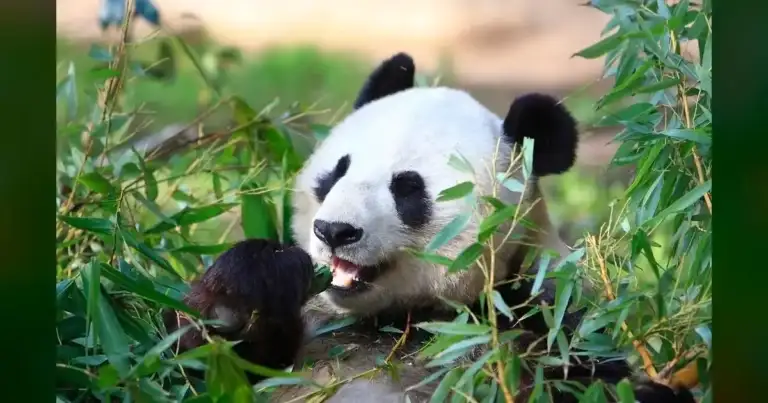
Photo: Photo by fortherock on Openverse (flickr) (https://www.flickr.com/photos/29925020@N03/3898359035)
Source: Google News